Full article about Vilar da Veiga: River Homem & Saints in Gerês
Vilar da Veiga, Terras de Bouro, hides a 17th-century riverside romeria, Brazilian-gold church, 120 butterfly species and a flood-scarred seven-arch bridge
Hide article Read full article
The River Homem slaps the stones of the bridge with a report that has sounded for centuries—low, unhurried, metronomic. It is July, and the granite of the six visible arches drinks the late sun while barefoot pilgrims file across, heading for the hilltop shrine of São Bento da Porta Aberta. Their Pentecost romaria is the oldest documented in the Minho: a 1640 charter from the collegiate chapter of Terras de Bouro records the erection of a chapel “at the Gate of Gerês”, the obligatory portal for anyone leaving Braga and climbing toward the sierra. Vilar da Veiga perches at 1 132 m, where a fertile riverside plain justifies the Latin tag “Villa de Vega”—the village of the flood-meadow—and where ninety per cent of the parish lies within Peneda-Gerês National Park, the highest protected ratio in Portugal.
Stone, tile and gilt
The parish church anchors the settlement, its 1784 blue-and-white azulejos framing a gilded high-carved altarpiece paid for by Brazilian gold shipped home by Veiga sea-captains. Higher up, the tiny Chapel of Santa Eufémia commands the ridge; on 16 September the faithful climb in slow procession, shoulder-borne biers wobbling through wax and incense that cannot mask the damp mountain air. The road bridge that links the village to Gerês town is locally called the Ponte dos Sete Arcos. Between 1890 and 1893 municipal engineer António Rodrigues de Sousa replaced the medieval predecessor mentioned in 1527 mint-house ledgers. The “seventh submerged arch” is in fact a dry relic: the river gouged a new course during the 1909 flood, marooning one arch on the near bank like a broken tooth.
Butterflies and wild ponies in Portugal’s largest sitting-room
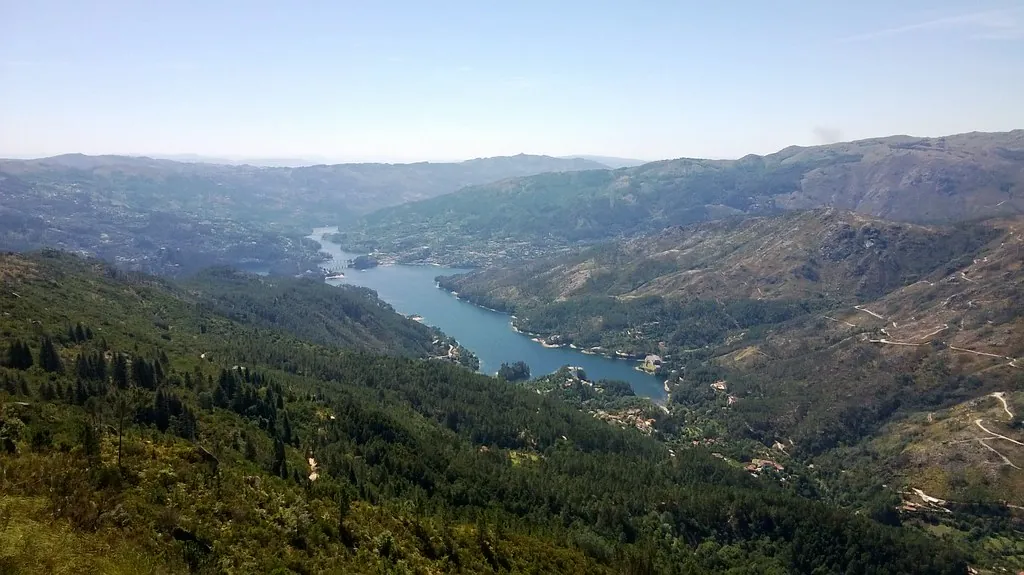
A four-kilometre trail threads oak and birch woods to the Cascata do Arado, where more than 120 species of butterfly—wood white, Spanish gatekeeper, Gerês argus—stitch erratic flight paths through filtered light. Roots and loose schist demand attention, but children manage it in trainers. At the head of the gorge the river drops in a white blade against dark shale, the roar ricocheting round a natural amphitheatre. From the Pedra Bela lookout the Caniçada reservoir lies far below, a shattered mirror between granite walls. Built between 1947 and 1955, the dam drowned crofts in Veiga, Vezeira and Carvalheira and forced the realignment of the old N-308. On the thermals comes the distant whinny of garrano ponies—semi-feral herds known by their markings: the Veiga stocking, the Portela blaze, the Gralheira star.
Trout, honey and the honesty of a wood-fired oven
Kid goat emerges from a wood oven crackling-skinned and spoon-tender; at O Abocanhado, housed in a 19th-century fieldstone farmhouse since 1987, the dish shares menu space with Homem river trout grilled whole and served unadorned but for a wedge of lemon. Sarabulho rice—dark with pig’s blood, cumin and smoked sausage—arrives in clay bowls, balanced by sweet pumpkin mash and a glass of Gerês vinho verde sharp enough to cut fat. For pudding the local sponge, once pocketed by shepherds on transhumance, vies with rich “heaven’s bacon” egg-yolk cakes, yet both surrender centre-stage to Mel das Terras Altas do Minho DOP: amber, slow-granulating honey from heather and furze that crystallises over winter into something you can stand a spoon in.
Pentecost, folklore and a beach without a sea
On the last Sunday of August Our Lady of Deliverance is carried through streets strung with bunting and gunpowder fog. The feast was transferred from hilltop to town centre in 1954, replacing the older Santa Eufémia observance. Eleven July and Pentecost Sunday still pull thousands up to São Bento, many barefoot, fulfilling vows made in childbirth or sickbed. In mid-February the municipality warms winter with São Brás parish fairs—since 1987 framed by the Smoked-Meat Festival where alheira game sausages and peppery chouriço are sliced straight from the chimney hook. Down on the river, Vilar da Veiga’s Blue-Flag fluvial beach opened in 2011, the council’s first: stand-up paddlers glide over quartz-sand banks that could pass for Atlantic dunes—until you notice the granite escarpments reflected in the water.
At dusk, when the last pilgrims descend and the parish bell tolls the Ave Maria, the note rebounds off granite walls and returns slower, deeper, as though the sierra itself were answering the call.