Full article about Granite chapels & Barrosã oxen in Anissó e Soutelo
Vieira do Minho’s chestnut woods, Iron-Age walls and vinho verde poured straight from the fridge
Hide article Read full article
The Granite Wall
Granite rears up without warning, a blunt cul-de-sac at the end of a switch-back lane. Inside the cleft, someone has scooped out a pocket of air and called it Nossa Senhora da Lape, a chapel grafted into the rock since 1694. No foundations were laid; masons simply tidied the cavity the mountain had already punched. Light slips in sideways, grazes the quartz veins, and the temperature inside never shifts – August or February, you still shiver the sweat off your shirt.
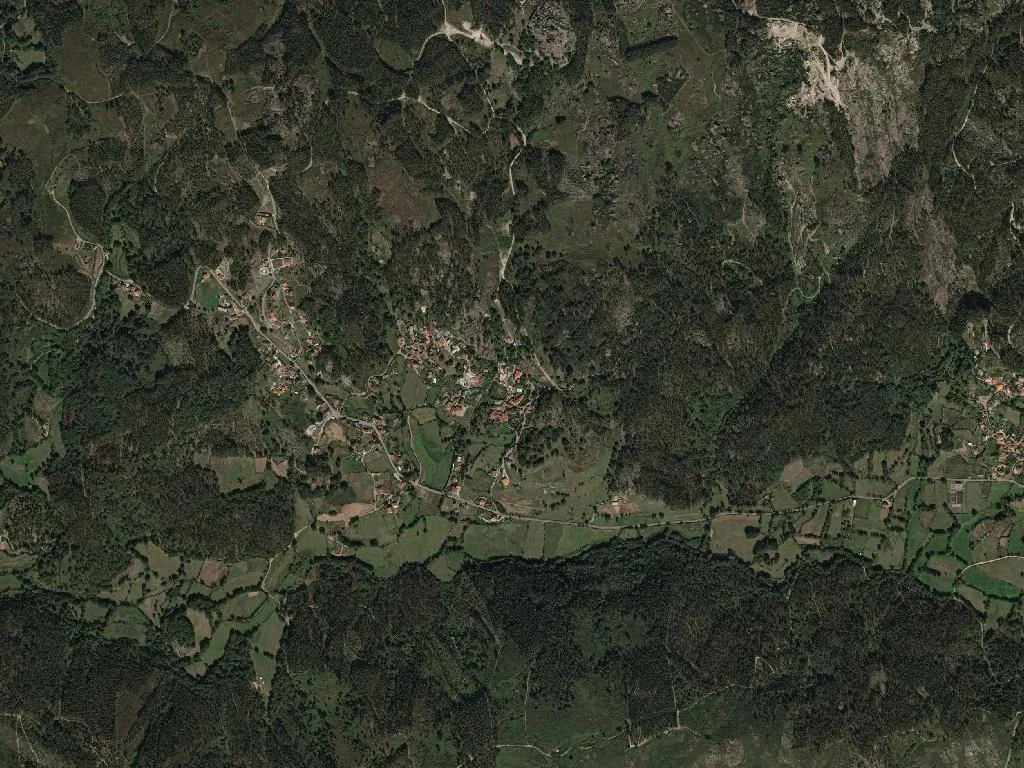
The civil parish of Anissó e Soutelo climbs to just over 500 m, threading between sweet-chestnut woods that in October look like scatter-cushions of green hedgehogs. In the open pastures Barrosã oxen graze as though calendars were abolished: mahogany hides, horns like handlebar moustaches, temperament of retired philosophy dons. Their grass- and hay-fed meat turns up later as “bitoque à moda da terrinha” – a seared steak that arrives with a jug of vinho verde poured from the fridge in the back room, no label, no ceremony.
Three stone girdles above the Ermal
Above the treeline the Iron-Age castro of Anissó sits at 732 m, its triple walls pulled on like winter long-johns one atop the other. People have been watching the same sheet of water from here since the first century BC; today it’s the Ermal reservoir, but the viewfinders are still the same schist and granite blocks. Footpath PR7 zig-zags up through eucalyptus that smells of Wrigley’s gum and oaks that haven’t noticed the Roman Empire ended. Half-way, the valley unbuttons – the logical place to unpack the cheese you pocketed at breakfast.
In Soutelo village the domed church of Nossa Senhora do Alívio went up in 1798, yet the place appears in 954 as “Sautello”, a toponym for chestnuts packed so tight they seem to be whispering. Every October the husks still split and carpet the lanes like burst party poppers no one can be bothered to sweep.
Honey, stone, and the annual round
Local heather, chestnut and bramble honey doesn’t run; it folds over itself like slow lava. Rub a drip between finger and thumb and it lingers, tasting faintly of walking-boot leather at the end of a long day.
Four pilgrimages pace the year – Lapa, Alívio, Fé, Conceição – fixed to saints’ days the way kick-off times are fixed to football. On 11 November the magusto bonfire is lit: chestnuts crack, red wine is mulled, and an uncle inevitably recalls the year the procession had to be rowed across the flooded fields because it wouldn’t stop raining.
Three hundred and forty-five people occupy eight square kilometres – quiet you can almost weigh. When the bell in S. Miguel’s tower tolls, the sound rolls down the valley like a long-distance call. Stone here isn’t backdrop; it is ledger, bench, boundary, memory. At dusk the castro’s blocks throw shadows that still point to the old cattle track to Vieira do Minho market, mirrored now in the still water of the Ermal dam where clouds rehearse their slow-motion drama.