Full article about Anjos & Vilar do Chão: Where Bells Beat Phone Clocks
Anjos e Vilar do Chão, Vieira do Minho, Braga: 760 m plateau parish where 17th-century cedar processions, corn smokers and zero-light-pollution nights outn
Hide article Read full article
The Bell’s Echo
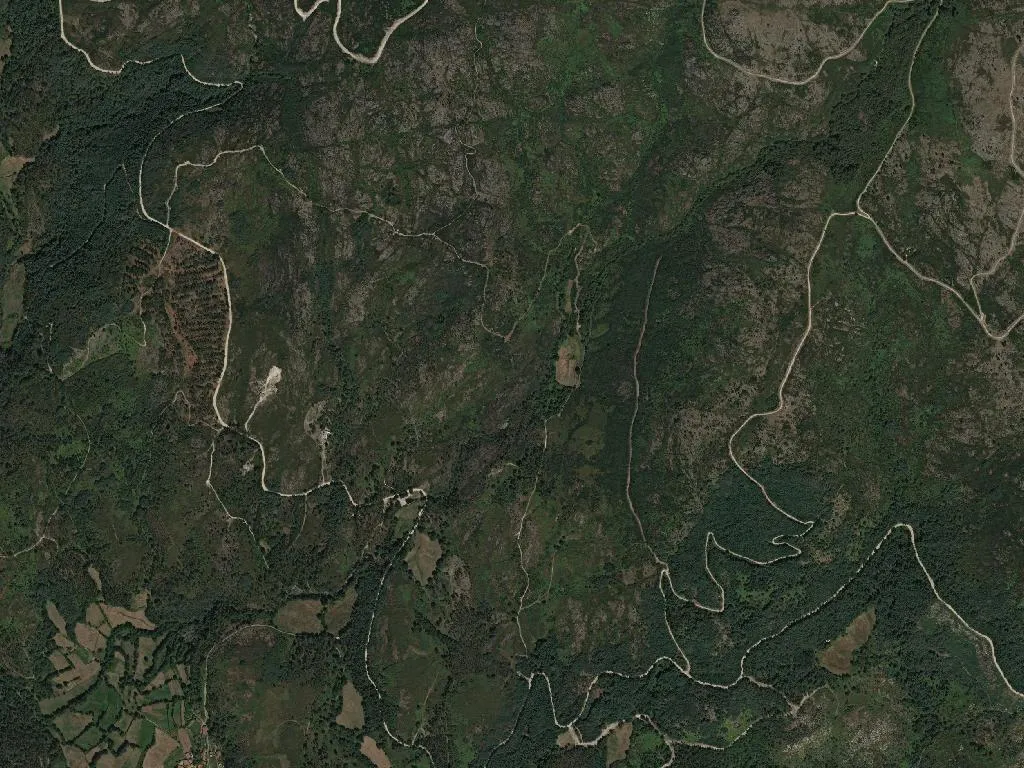
A single bell cuts through the morning hush. At 760 m the air is thin enough to sting, even in August, and the plateau dissolves into milk-coloured mist. Granite cottages appear as bruises on the meadow-green, while one thread of wood-smoke rises straight up until the sky swallows it. This is the joint parish of Anjos and Vilar do Chão, 565 souls spread across 25 km² of slope and tabletop in Vieira do Minho, Braga district — a place where time is measured by church bells, not phone chargers.
Two hamlets, one heartbeat
The 2013 municipal re-organisation stitched the villages together on paper, but the landscape had already done it in practice. Anjos owes its name to the 18th-century chapel of SS Cosmas and Damian — physician twins later promoted to “guardian angels” by local devotion; the present building is 1887. Vilar do Chão sits on the rare flat patch (“chão”) that interrupts the saw-tooth ridges of the Serra do Gerês foothills. Each keeps its own rhythm: stone lanes, corn-shuck smokers dangling from eaves, grandmothers who still call the wind by name.
Demography reads like a mountain elegy: 180 residents over 65, forty children, more oak than roofline. Yet the arithmetic is shifting. Since 2018 five granite houses have reopened as b&b’s, their bookings filled by Lisbon architects and Porto designers who come for the cold dawns and the 360-degree star inventory.
Saints’ days, village days
The liturgical calendar still programmes public life. Last Sunday in May: Senhora D’Orada, when the fields are blessed for hay. First Sunday in July: Senhora da Fé in Vilar do Chão, followed by a brass-band baile in the sports hall. First Sunday in August: Senhora da Lapa in Anjos, whose procession circles the chapel at dusk carrying a 17th-century carved cedar. 8 December: Senhora da Conceição, the Immaculate Conception observed with roast kid and vinho tinto served from enamel jugs. On these four weekends emigrants fly in from Paris and Neuchâtel, the closed schoolhouse briefly reopens for reunions, and the village smells of church incense and bay-leaf barbecue.
Taste at altitude
High-country cooking is stubbornly territorial. Barrosã beef, DOP-protected and corn-fed, arrives as slow-roasted shoulder or as rojões — cumin-scented cubes seared in pork fat until the edges caramelise. Minho Highland honey, gathered from heather, gorse and sweet chestnut, sets almost solid in winter and tastes like the moor itself. The local loureiro grapes give green-wine with enough acidity to slice through the fat. There are no restaurants; instead you eat in kitchens where hams age from ceiling hooks and the coffee is brewed on a wood-burning stove. Saturday is communal-bake day: neighbours still slide trays of corn bread into the wood-fired oven beside the chapel in Anjos.
Walking the tabletop
The territory is best approached on foot. Old mule tracks link the villages through corridors of loose-stone wall, tunnel under wind-twisted oak, then break out onto granite balconies that gaze north to the Spanish Sierra de la Cabrera. Signage is minimal; the logic is medieval — follow the contour, avoid the scree, trust the spring. Three kilometres south the GR22 “Oak Trail” skirts the parish, but here the paths belong to wood-gatherers and the Barrosã cattle that wear cowbells like bronze medals. After rain the schist turns slick; when cloud collapses onto the plateau temperatures drop ten degrees in minutes. Evening brings compensation: low sun ignites the stone to old gold and every thistle head becomes a spark. The bell tolls once more, deeper now, as if weighted by the oncoming night — a sound that needs no answer, only witness.