Full article about Caniçada–Soengas: Echoes Across a Flooded Valley
Hear granite churches, kayak drowned hamlets and picnic on river-dark sand in Caniçada–Soengas, Vieira do Minho.
Hide article Read full article
The Sound Arrives First
A wooden door thuds against its granite frame. Water laps the lip of the reservoir. One bronze bell swings in the tower of São Mamede and rolls its note between granite shoulders until the green absorbs it. Only 517 people live in the civil parish of Caniçada–Soengas, yet the acoustic footprint feels larger than the map. Sound travels upwards here: every click of heel on schist, every oar drip, is handed from valley to ridge like a relay baton.
A Lake Rewrites the Valley
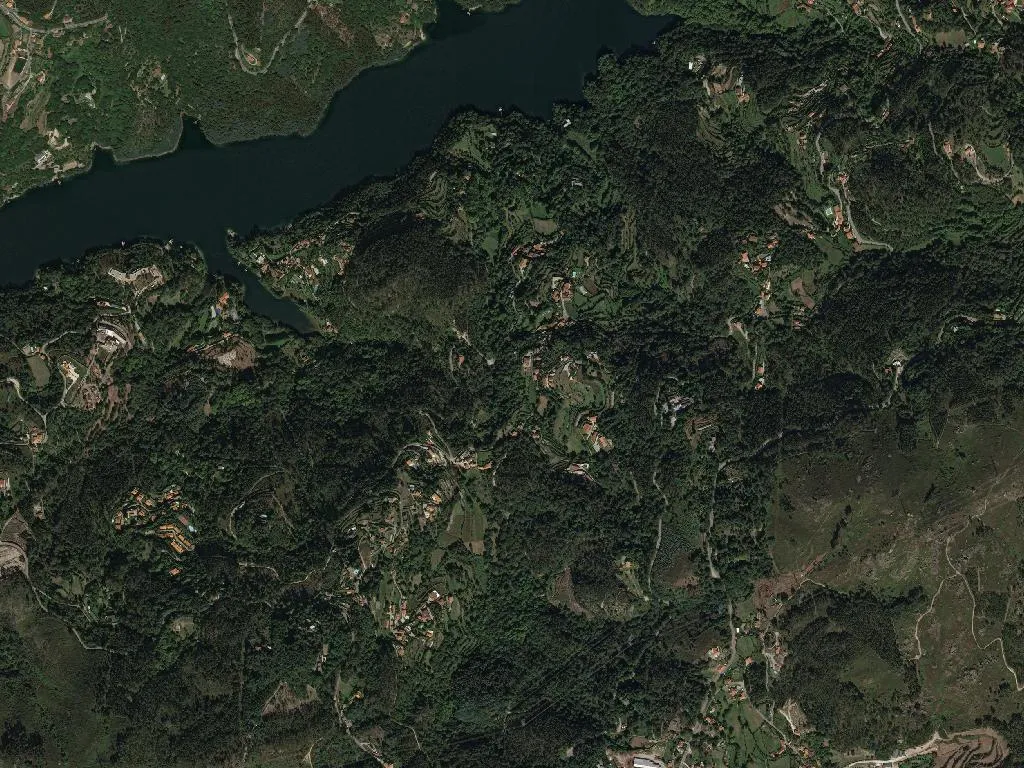
Completed in 1954, the Barragem da Caniçada drowned six kilometres of the River Cávado and created a liquid frontier between Vieira do Minho and Terras de Bouro. Engineers came for hydro-electric gain; what remains is a 682 ha mirror that flips the sky and lets ospreys practise dive-bombing their own reflections. On windless mornings kayaks leave a calligraphy of ripples that seal behind the hull within seconds, restoring the page to blank.
The riverside beach at Canedo—imported sand, a floating pontoon, no lifeguard—fills with extended families from Braga on July Sundays. Children sprint into tannin-dark water, surface gasping, then lie belly-down on sun-warmed concrete to dry. When the last car parks, buzzards reclaim the thermals above the dam wall and the bell of São Mamede drifts across, muffled by distance and the slow gulp of water against stone.
Between Granite and Lime-Wash
The parish church has stood at the valley’s waist since 1220, when the royal surveyors of Afonso II noted “De Sancto Thome de Canizada”. Eighteenth-century refurbishments smothered the Romanesque bones in white lime, but the doorway kept its sober tympanum and the original granite ribs inside still carry the chill of five winters. Three hillside chapels—São Miguel, São João Batista, Nossa Senhora da Glória—once served the scattered hamlets; only São Miguel keeps its slate roof intact. The recently restored mortuary chapel stores the scent of damp stone and carnations in equal measure.
Outside the village core the territory atomises: Sanganhos, Salgueiro, Rechã, Rego, Toucedo, Vale Mau—names that translate as “wild-gum thicket”, “willow grove”, “bad valley”. Mule paths still stitch them together, paved in loose schist that moss colonises overnight. The Caminho do Arijal climbs 250 m through oak and sweet-chestnut to São Miguel, passing threshing floors carpeted with last year’s husks and granaries whose doors hang from leather hinges stiff as boards.
Taste of the Uplands
Order the Barrosã-rib-eye and you receive a plank of beef rimmed with ivory fat that renders slowly over embered oak. The colour comes from open-range grazing at 800 m in the Peneda-Gerês National Park; the flavour carries smoke, gorse and the faintest tang of wild rosemary. Minho-style pork cubes arrive dusted with paprika, sided by floury potatoes boiled in their skins. Kid goat is roasted until the skin fractures like sugar glass; caldo verde is sharpened with discs of Barrosã chorizo and poured over corn-bread still steaming from the wood oven.
Small-plot growers blend Loureiro and Trajadura for a sharp, low-alcohol vinho verde that tastes of lime skin and orchard bruise. Copper stills fire up in November for medronho, the strawberry-tree aguardente that burns amber and finishes with marzipan. Heather honey—DOP-protected—sets to the colour of barley sugar and smells of chestnut blossom. In farmhouse kitchens you may still find pumpkin jam slow-stirred for three hours, and the November bolo de São Martinho dense with crushed chestnut and muscovado.
Festivals that Climb the Hill
Four Marian shrines, four summer Saturdays. At dawn the band strikes up outside the café, tubas polished like artillery. Women in black shoulder the litter of Nossa Senhora da Fé and begin the 2 km climb to the chapel; every ten paces the procession stops, sings a verse, then hauls uphill again. By dusk the village square is cordoned off for sardines, fireworks and pimba music—Portuguese turbo-folk whose accordion riffs ricochet off granite until 3 a.m. Mid-January brings the Encontro Municipal de Reisadas, when rival groups from seven parishes trade verses of traditional epiphany songs in taverns lit by butane lamps. The winner is decided less by melody than by the speed at which the singer drains his glass of vinho quente.