Full article about Cantelães: Watermills, granite & Saturday scrubbing
Where granite chapels, water-meadows and Barrosã beef scent the Minho air above Vieira do Minho.
Hide article Read full article
Water, granite and Saturday-morning laundry
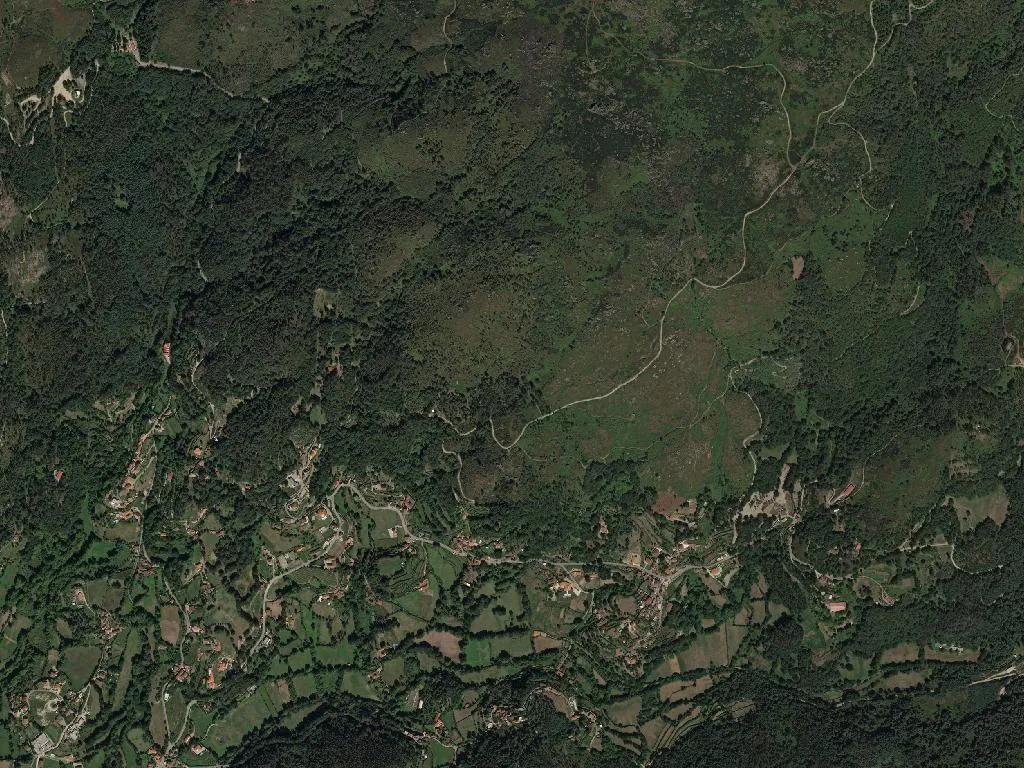
The wooden paddle of the mill wheel smacks the current, releases it, smacks it again, a wet metronome inside a corridor of granite. At 631 m the valley folds itself into a green horseshoe – pine above chestnut above oak – while rectangles of paler grass mark the water-meadows along the Ribeira de Cantelães. Granite is the local vernacular: in the crusaded village crosses, in the stone granaries that still stand on every threshing floor, in the washing tanks where women scrub sheets by hand at dawn on Saturdays.
Five chapels, five feast-day calenders
The chapel of Nossa Senhora d’Orada has been a National Monument since 1910. Inside, a fourteenth-century Virgin – carried home by Santiago pilgrims – keeps vigil in dark-polished oak. Four smaller chapels scatter across the parish, each with its own promessa: Senhora da Fé, Senhora da Lapa, Senhora da Conceição. Their processions climb dirt tracks behind brass bands; at night the churchyard bonfires light up faces and clay bowls of corn-and-bean soup. The accordionist packs up only when the first thrush sings.
A four-kilometre ledger of stone and water
The Trilho dos Moinhos threads four restored watermills along the Cantelães and its tributaries – Cortiço, Parada, Meães – names that pre-date the Romans. Slate walls squeeze the path, single-slab bridges hop the stream, and communal threshing platforms dry September maize under canvas awnings. From Cimo da Vila the view opens north to the Cávado valley and the granite ramparts of Gerês, the slopes terraced since Visigothic times.
Fireside cooking, Barrosã beef
Kitchens here are ruled by the wood-fired oven and a hanging chouriça. Caldo verde is enriched with shreds of Barrosã DOP beef that collapse at the touch of a spoon; rojões à minhota swim in paprika-laced lard; kid crackles on the spit. During the romarias you’ll find papas de sarrabulho – a cinnamon-dark pork-and-blood stew – and formigos, the Minho take on French toast made with corn bread, red wine and sugar. Amber heather honey from the Terras Altas do Minho finishes the board, chased by a chilled, faintly sparkling Vale do Ave white or a thimble of medronho firewater.
Where the valley narrows
Cantelães is one of the last Minho streams where the tarrafa – a circular casting net – still flies above the water, its retrieving rhythm learned in childhood. Between two slate walls the parish claims the smallest seven-a-side football pitch in the Braga district: the ball crosses the touchline every third pass. Dusk settles over the meadows; lights flicker on in granite windows; wood-smoke rises straight into the still October air.