Full article about Louredo’s Echoing Bell & Granite-Cooled Air
At 550 m, Louredo’s tilted lanes, Marian feasts and Barrosã stew cling to Braga’s high border.
Hide article Read full article
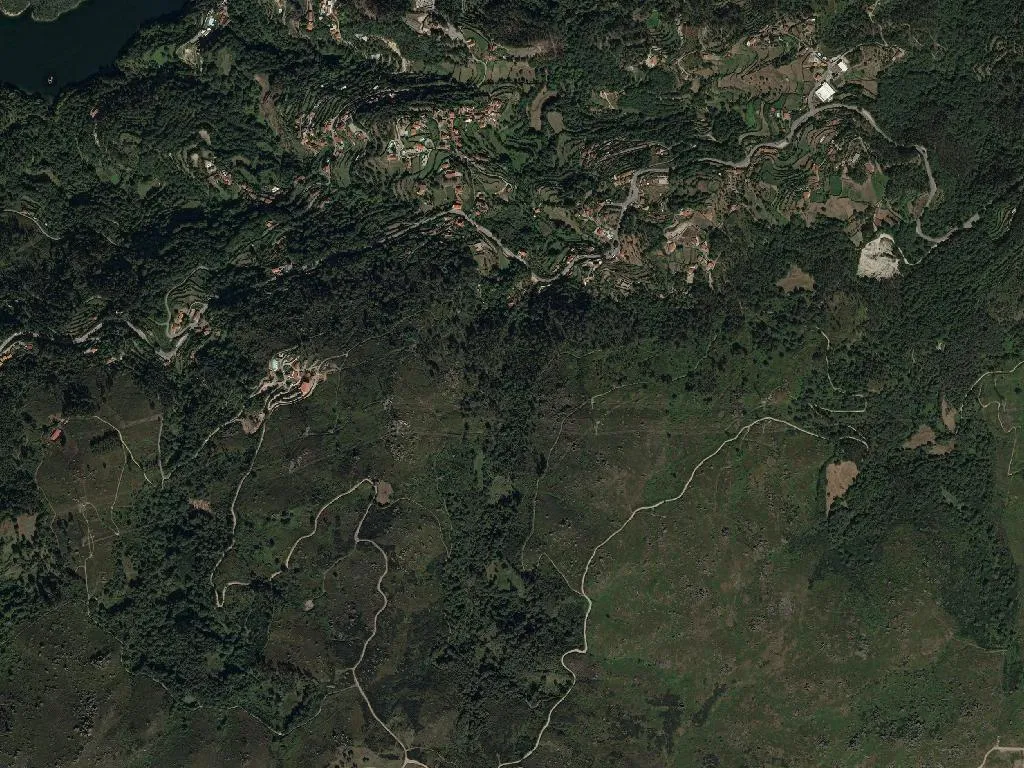
The church bell ricochets across the valley long after the rope is released, the note hanging in the air like a shouted confession in a silent bar. At 550 m, Louredo’s single-lane curve catches even August off-guard: the air slips down the granite like chilled wine from an ice bucket. Houses—whitewashed or left to the stone’s own gun-metal grey—tilt with the slope, as if surrendering to gravity after centuries of resistance. Between them, alleyways barely two shoulder-widths across invite pause: talk of yesterday’s rain, of Braga’s chances on Sunday, of whose tractor needs a new starter motor. Silence here is not absence but inventory: irrigation water ticking through the levada, Zé’s dog barking at its own echo, Adérito’s diesel four-wheeler firing at seven sharp.
Sacred topography
Four Marian feasts punctuate the year—Nossa Senhora d’Orada, Fé, Lapa and Conceição—an ambitious calendar for 394 souls. Yet each brings its own fortnight of preparation. When the gilt-and-azulejo litter is shouldered, the village doubles: grandchildren flown in from Lyon or Neuchâtel sleep on blow-up beds in stone cellars; the philharmonic band—more marches than working instruments—leads the slow climb past barns smelling of last winter’s wood-smoke. Afterwards, sardines scorched over vine prunings and vinho verde poured from white enamel jugs turn the school veranda into dining room, dance floor and, come election time, polling station.
Roots that feed
Carne Barrosã stew spurns recipe-book terminology. It contains whatever potato survived the neighbour’s horse, a carrot overlooked by the same, and a thread of olive oil the grandmother keeps “for when people come”. The meat slips into fibres of its own accord; the sauce thickens on yesterday’s broa. Honey is Serra do Gerês heather, sold in unlabelled jars at the door—one spoonful coats the throat like liquid granite. Stainless-steel churrascos may dot the patios, but the wood-fired oven still rules: goat emerges skin-crackled, the neighbour arrives with an unlabeled bottle that could shame many a listed Douro red.
Mist and mountain wine
Altitude breeds fog, moss and vineyards trained like disciplined bonsai. No one here makes wine “for the market”; they make it for the jug that shuttles between kitchen and porch, for Sunday after mass. Whether the grapes are Azal, Arinto or Trajadura matters less than the razor-edge acidity that slices through fatty pork rojão and the persuasive freshness that demands a second glass. Seek Parker points elsewhere; stay if you want the reflection of a single bunch in a cut-crystal tumbler and the story of the 1946 frost that almost ended it all.
The weight of years
Of the 394 on the parish roll, 144 can recall when Louredo supported two grocers and three cafés. Now one café-restaurant opens “if people are about”, and a single shop sells the essentials—scratchcards included. Empty houses multiply, yet 34 have been reborn as guest accommodation: some are granite longhouses with metre-thick walls and fibre-optic; others are prefab cubes that look like chocolate loaf tins dropped among the boulders. They cater to hikers on the newly way-marked Trilho da Senhora da Fé, to motor-bikers tracing the Gerês switchbacks, to anyone who wants proof that at 22.00 the only soundtrack is the bell—and even that falls silent when the bell-ringer clocks off.
When the sun drops behind the oak brush, the village gilds for the length of a cigarette glow. Then the light switches off, leaving Louredo to darkness and the yellow rectangles of windows that say: fewer residents, perhaps, but no emptiness. The place has simply reduced to its essence, like the last finger of wine in a glass that tastes of everything that matters.