Full article about Parada de Bouro: Where the Valley Forgets Time
Parada de Bouro hides a medieval river arch, 17th-century chapels and cozido born from larder luck in Vieira do Minho, Braga.
Hide article Read full article
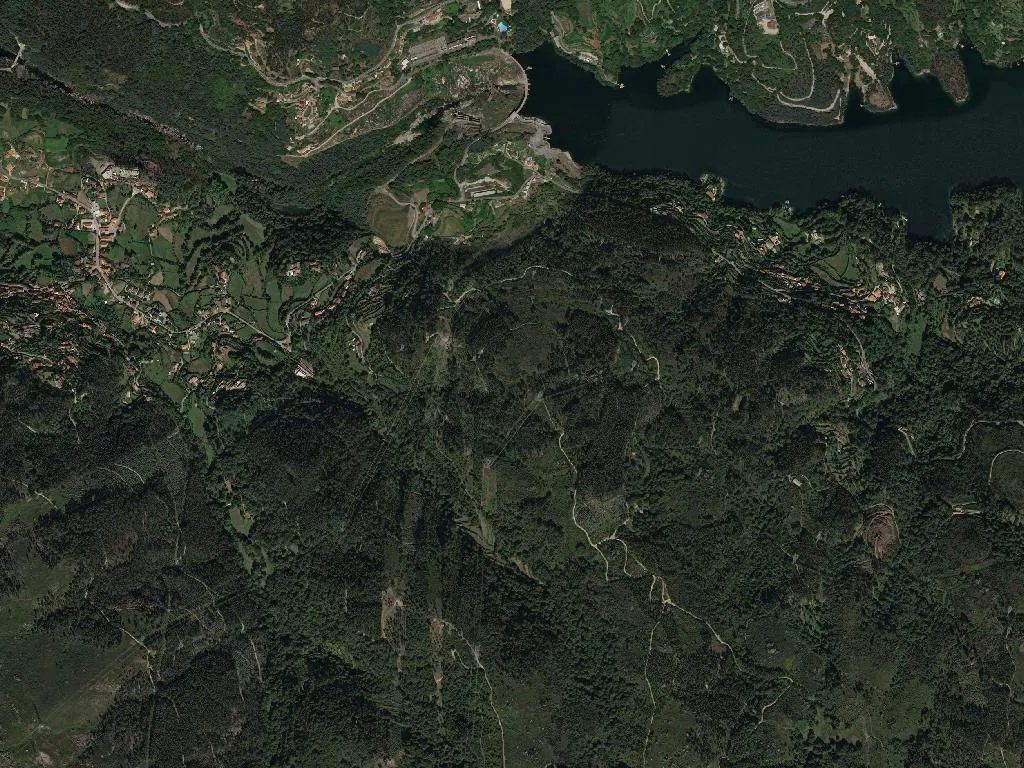
The wind slips through the Bouro valley like a relative who never knocks: it knows every slate ledge, every water meadow, every chestnut turn. Down below, the river rolls stones downstream with the patience of someone who once watched mule trains smuggle coffee and sugar under Salazar’s sentries. They say the medieval arch above the water still keeps the echo of those running boots. Parada de Bouro—400 souls, 700 hectares, 345 m above the sea—feels like the place where Portugal exhales and forgets to inhale again.
The bridge that refuses to retire
The single-span bridge has the attitude of an ageing stonemason: cracked knuckles, no intention of quitting. Listed since 1986, it still carries tractors, pilgrims and the occasional German mountain-biker who has underestimated the gradient. Beside it, the parish church of Nossa Senhora da Conceição—18th-century granite patched up in 1875—uses its granite cross to mark the village centre like a referee placing a ball: no passage without permission.
Smaller chapels explain the Ordnance-Survey geometry of local faith. Senhora d’Orada shelters a 1620 Virgin found inside an oak—pasture legend turned polychrome statue. On the second Sunday of May, villagers climb there with wicker hampers of smoked chouriço and corn bread; someone produces a concertina and Sunday dissolves into waltzes. Senhora da Fé, in September, schedules seven consecutive Masses—one for each weekday—because, apparently, even heaven appreciates a diary. Senhora da Lapa, come July, is an open-air singing contest where children dash barefoot between verses; the same children who later move to Braga for college and return speaking with the city’s clipped ‘r’, strange as a new coat.
What turns up on the table without asking
Cozido à moda de Parada is whatever the larder yields on the 29th of the month: garden kale, dried white beans, a smuggled Alentejo sausage, the last slab of smoked belly your grandmother labelled “festa only”. Kid goat is roasted in a wood-fired oven with whatever white wine Uncle Zé Manel brings back from the harvest—usually a cloudy, peach-scented Loureiro that never saw a label. The beef is Barrosã DOP, though everyone calls it “that cow my cousin keeps above the Gerês ridge”; it hits the grill with coarse salt and the luxury of time. Vinho Verde comes from terraced plots that still resist eucalyptus money—fewer each year, but enough for dinner. Finish with pumpkin-preserves sweetened by High-lands honey, stirred in copper pots older than the baker.
Footpaths, watermills and a dialect Google can’t catch
The six-kilometre Mill Trail starts at the church door, ends in Covide, and passes five granite watermills that now grind only memories and Instagram frames. Brambles arch overhead like whispering ushers; a buzzard circles slowly, checking credentials. Ten kilometres away the Caniçada reservoir has pedalos and cocktails, but here the river is for drinking and for skimming flat stones—swimming is for package tourists.
The dialect still conjugates ‘vós’ without irony and compresses “bom-dia” into a single, musical syllable that only slate and water understand. You hear it in late morning when sun warms the churchyard: benches, coffee cups, conversations that need no headline.
At dusk the light pools in the chestnut orchards; chimney smoke rises ruler-straight—no filter required. Footsteps echo on granite setts; the river carries secrets downstream; wet earth clings to boot leather. Visitors leave with all of it crammed into jacket pockets. Later, stuck on the A3 back to Porto, they wind down the window and swear the same Bouro wind is still riding shotgun.