Full article about Salamonde: where the drowned valley sings
Granite cottages, Barrosã beef and four summer processions above a humming dam
Hide article Read full article
The village you hear before you see
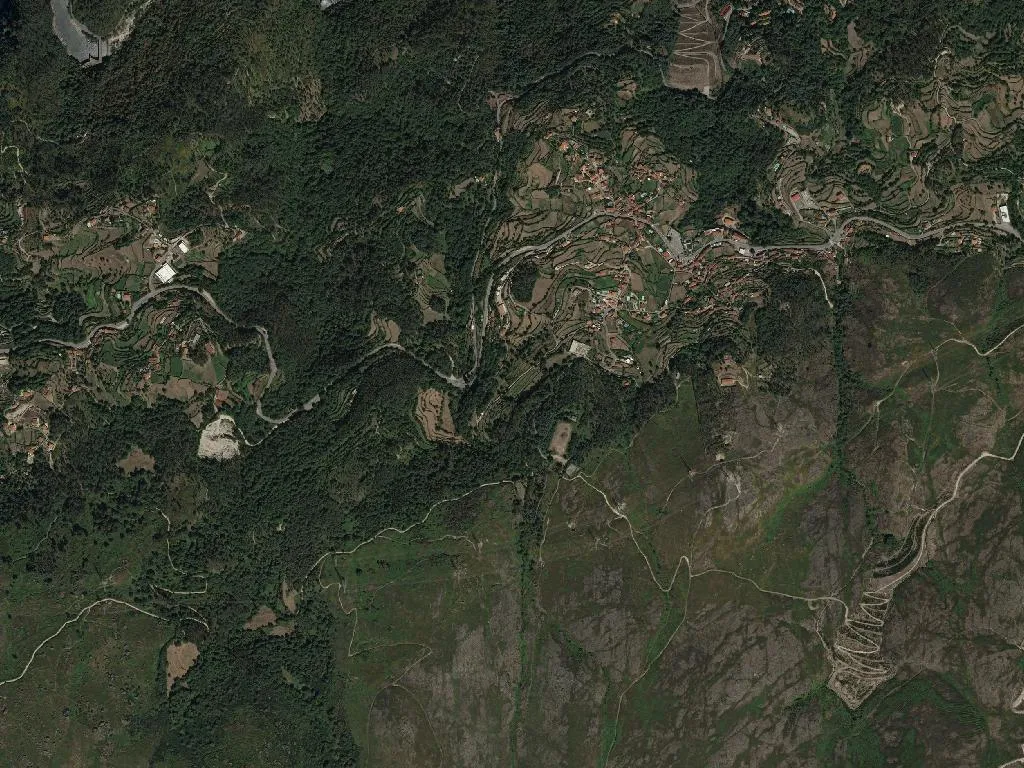
A low, guttural hum arrives first, the sound of the Cávado slipping through Salamonde’s 75-metre concrete arch. The dam, inaugurated in 1951, drowned fields, a chapel and the old mill, yet the village clings to the slopes the reservoir never managed to swallow. Population 343: 134 old enough to remember the pre-flood world, 22 impatient to leave for Braga or Porto the moment school finishes.
Friday-night traffic from those same cities noses up the 551-metre climb on summer weekends. Second-home façades—lime-green, tangerine, swimming-pool blue—flare between the granite houses that still keep a woodpile under the staircase and bake corn-bread in domed fornos. Sixteen dwellings have converted their attics into “local lodging”, proof that someone believes strangers will pay to wake up where phone coverage vanishes with the sun.
Four processions, four reunions
Each July the village calendar is paced by Marian processions: Nossa Senhora d’Orada, Fé, Lapa and Conceição, one Friday after another. Plastic cups of aguardente-flavoured água-pé circulate, smoke from grilled-ears-of-corn drifts across the churchyard, conversations resume mid-sentence as if the year had merely paused. Emigrants book flights to coincide, walking unannounced into kitchens where cousins who exist only on Instagram are suddenly chasing the same football through the lane.
What the land still gives
The menu is dictated by what the reservoir did not erase. Barrosã cattle graze the unflooded pastures; their three-hour slow-fried shoulder is lifted from the pot in collapsing sheets. Potatoes come knobbly and nail-sized, tasting unmistakably of the granite and peat they grew in. Dessert is dark heather honey—so dense it could be espresso—poured over warm broa and salted mountain butter. Vinho Verde is available lower down the valley; up here the loudest thing after midnight is water being spun into electricity for the national grid.
A shore that is not a shore
In August the level drops and the original margins reappear for a fortnight: millstones, the chapel’s low wall, the flagstones of the track children once took to school. Elderly walkers trace the route with a boot, resurrecting a map the dam thought it had erased. Evening brings mirror-calm water and a silence so complete you hear the oars of a lone fisherman a kilometre away. Stay long enough and the village rearranges its own story—one version for the drought, another for the flood, both true by morning.