Full article about Antas e Abade de Vermoim: granite, smoke & black-brick new
Walk stone-walled Caminos, taste cumin-spiked rojões, toast with loureiro in Vila Nova de Famalicão’
Hide article Read full article
Where concrete meets granite
The splash arrives before the sight: an 18th-century fountain in Antas centre announcing January’s Festas Antoninas. At eight o’clock the air is still damp with wood-smoke; someone stacks crates beside the parish church, rehearsing the street party that will fill the square for three nights.
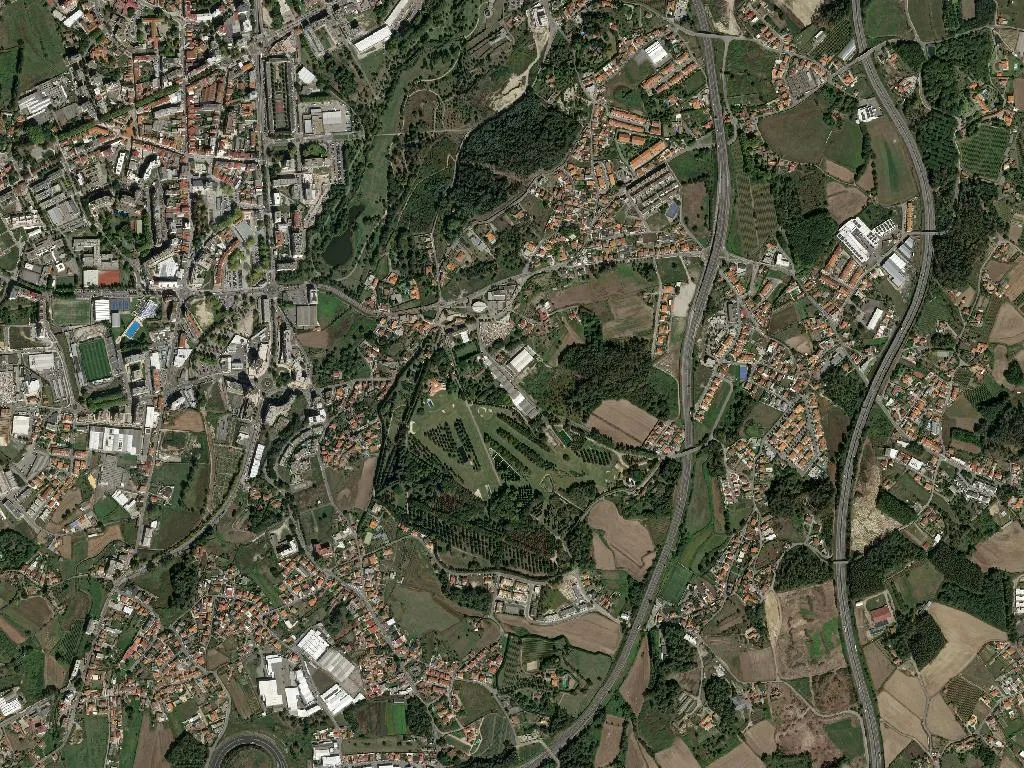
This is the civil parish of Antas e Abade de Vermoim, an 1,100-acre wedge of Vila Nova de Famalicão, 25 minutes north-east of Porto. Eight thousand residents, three-century-old stone crosses and twenty-first-century warehouses share the same grid.
From Custoias to the calendar
First mentioned in 1081 as São Julião de Custoias, the settlement morphed into “Sam Giãao do Calandayro” by 1370 while answering to the medieval court of Vermoim in Barcelos. Every time a JCB opens a trench for yet another logistics platform, Moorish potsherds surface like punctuation marks.
Black brick against the Minho sky
Antas’ old quarter keeps granite manor houses with wrought-iron balconies stepped up the slope to the mother church. In Abade de Vermoim the 15 August romaria to Nossa Senhora da Abadia still draws processions in lace head-dress. Fifty metres away, Rui Mendes Ribeiro’s new parish council offices – black brick, raw concrete and glass – frame the same view as a 1700s stone cross.
Rojões at noon, vinho verde by four
Lunch is rojões à minhota – nuggets of pork fried with liver and cumin – followed by kid roasted in a wood-fired oven. Mid-afternoon calls for a chilled glass of loureiro from the Lima valley, ideally alongside broa de milho to dunk into caldo verde. Save space for toucinho-do-céu, a yolk-rich almond slice that originated in nearby convents.
Two Caminos, one direction
Antas straddles two Saint James routes: the Central Portuguese and the Northern. Both arrive on flat stone-walled lanes past vegetable gardens before joining the leafy Devesa park, where 3 km of cycle track weave between centuries-old oaks.
When the fair outlives the loom
Textile and metal-working plants replaced the hand-looms that once clicked in every other cottage, yet the old festas refuse to die. During Antoninas the air turns thick with smoke from chouriço grills and the wheeze of concertinas; in late July the romaria of São Tiago repeats the dose, processions weaving between prefab warehouses.
When the last rocket fizzles out, the only sound left is the fountain – water falling, indifferent to the distribution centre across the road.