Full article about 1156-carved granite, maize scent, kiwi plots
In Arnoso-Sezures, Romanesque birds watch cabbiles pass scallop-shelled gates
Hide article Read full article
Granite that remembers the year 1156
The lateral door of Santa Eulália’s church is stamped with a four-digit date—1156—chiselled when Henry II was on England’s throne and Portugal itself was only seven years old. Moss colonises the joints, winter mists collect in the carved chevrons, but the numerals refuse to blur. Around the Romanesque apse, low Minho farmhouses in granite and painted white scatter across smallholdings where soil, not ceramic, forms the footpaths. A tractor coughs, a dog barks somewhere beyond the maize, and the metal latch of a gate clicks shut like a camera shutter.
A monastery erased, a church that stayed
The civil parish of Arnoso (Santa Maria & Santa Eulália) and Sezures was stitched together in the 2013 administrative shake-up, yet its pedigree reaches back to the seventh century, when St Frutuoso, Braga’s Visigoth bishop, founded the monastery of São Salvador de Arnoso. The Moors torched it in 1067; the Benedictines rebuilt. What survives is Santa Eulália herself—nationally monument-listed since 1938—her nave narrower than a London bus. Capital stones parade open-beaked birds, trotting stallions and heads that follow you like a Roussillon gargoyle. Inside, fourteenth-century frescoes of the Virgin still cling to the plaster, colours bleached to the softness of watered silk.
Where staff and boots pause
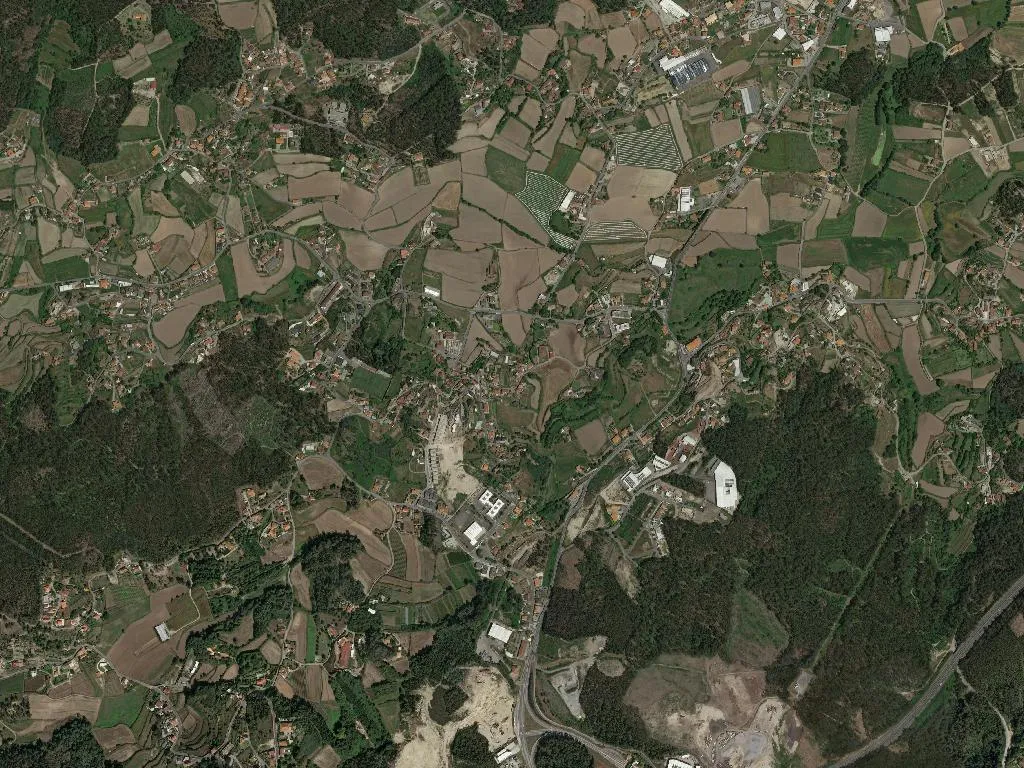
Neither Arnoso nor Sezures is a destination on the Camino; both are obligatory waypoints. The Central Portuguese and the Coastal routes converge here, funnelling hikers who leave claggy boots on the step of whichever house is doubling as a dormitory that night—five in total, identifiable only by the scallop shell nailed to the gatepost. Pilgrims step aside for a woman hauling a wicker creel of cabbages, for a boy on a moped with a chainsaw across his lap. Maize plots, trellised vines and the odd smallholding of kiwi brush the 167-metre contour; streams slip down to feed the river Este, the same water that once turned monastery millstones.
Green wine and winter stew
Vines are trained low on tar-brown posts, the traditional “latada” that lets Atlantic breezes skate overhead. Bottled Vinho Verde may carry a designer label farther south, but here the wine is poured from unmarked carafes for family consumption and barter. The kitchen repertoire is seasonal and acronym-free: rice-sarrabulho—dark with pork blood, paprika and cumin—arrives at table steaming like a hot spring; rojões, nuggets of marinated pork, fry first, then stew with chestnuts and potatoes smashed in their skins. Caldo verde, kale-shredded and potato-thick, is supper after an evening in the fields; papas de sarrabulho, a spiced porridge of meat and offal, appears only on feast days because it demands an afternoon of stirring.
Saints, sardines and census data
On the weekend closest to 13 June, the Festas Antoninas thread coloured paper garlands across Rua da Igreja. Grilled sardines crackle over eucalyptus fires, brass bands rehearse in the petrol station forecourt, and the population swells from 3,527 to whatever the surrounding hills can spare. Statistically the parish is ageing—688 residents over 65, only 500 under 25—yet local association Engenho keeps a cultural drip running all year: bread-baking workshops, communal vineyard pruning, even a monthly film night projected against the church wall.
Footpaths where history clocks in
A signed 9-kilometre loop links Arnoso to Sezures, crossing smallholdings where corn still grows tall enough to hide a deer. There are no nature-reserve gates or interpretation boards; birdlife is simply there—black redstarts on the telephone wire, serins rattling from hawthorn. Dawn fog pools between hedgerows of hydrangea and eucalyptus, and for a few minutes the only metronome is a cockerel. By late afternoon, low sun ignites the granite of Santa Eulália to amber. The church bell—cast in 1742, cracked in 1906—strikes six, a bronze note that travels across the vegetable plots and open windows to remind both residents and passing strangers that time here is still measured in seasons, in vines, and in the slow swing of a bell rope.