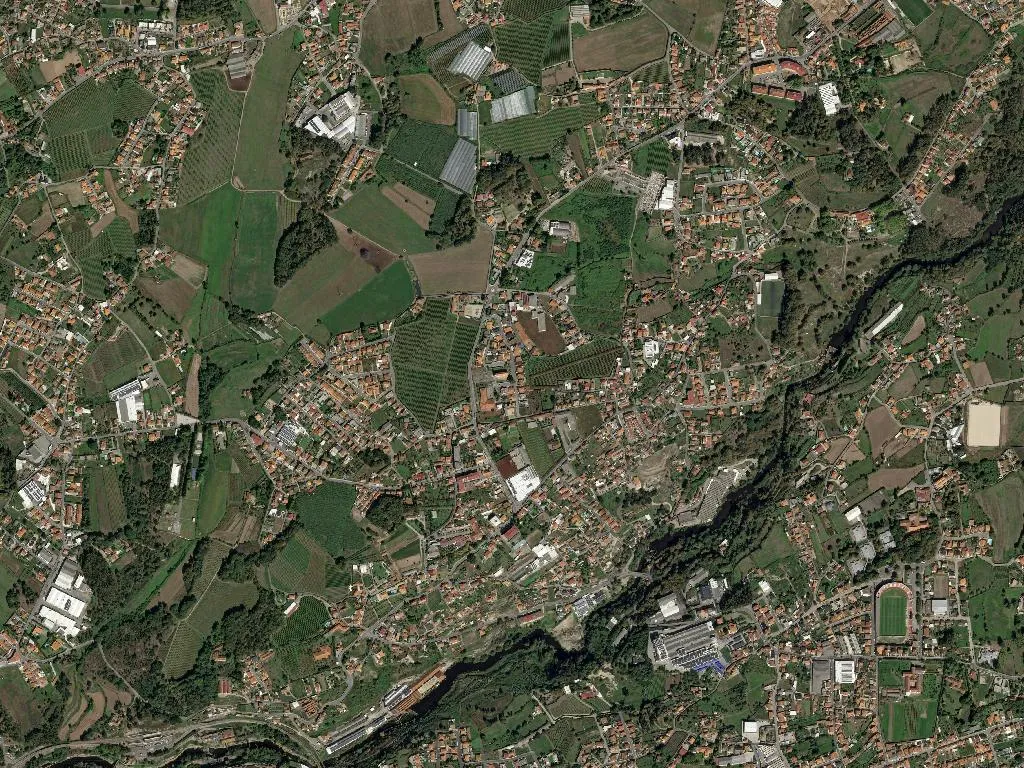
Full article about Bairro: dawn loaves, red clay, trains on the dot
Wood-smoke, potter’s bell-note, 18:02 whistle—daily life in Bairro, Vila Nova de Famalicão
Hide article Read full article
The scent of oak at dawn
Someone’s kitchen window is already glowing at five. By half past, the air smells of oak smoke and warm sponge; the neighbour’s wood-fired oven has to hit 200 °C before the first pão de ló can be slid in, ready for the 8 a.m. customers who will appear on bicycles. The lane outside is barely a car’s width, so a delivery van backing out becomes a slow-motion ballet of wing-mirrors and shouted directions. Above the roofs, the medieval route to Santiago slips past like a quiet commuter; the locals call it “the old road” and forget it predates their great-grandparents’ birth certificates.
Clay that still remembers
Bairro’s pottery quarter never bothered with tourism signage. The clay here—fine, rust-red, damp as a wrung flannel—was once shipped to Lisbon dockyards for ship’s biscuits and olive-oil jars. Two brick beehive kilns still operate behind corrugated-iron doors; inside, Antonio Carvalho taps a jug’s rim and listens for the true bell-note that says it won’t crack in the kiln. “Clay is like a guest who arrives suspicious,” he shrugs. “Talk too fast and it sulks.” Up the slope, the parish church of São Pedro carries enough gilded carving to gild a ballroom, yet the doorway is raw granite that could survive artillery.
A timetable you can set your watch to
The station at Nine (pronounced “Nee-neh”) has been announcing departures since 1875: 7:23, 12:45, 18:02. You don’t need the platform clock—each train whistles exactly on the minute, a sound that drifts over the valley like a cuckoo with a sore throat. From the ticket office, a three-kilometre waterway footpath, the Levada do Este, runs beneath poplars and 18th-century stone bridges. Kingfishers use the irrigation channel as a private runway; nobody charges admission and flip-flops are perfectly acceptable.
Calendar of small detonations
On 13 June, the eve of St Anthony, every household feeds the communal bonfire with prunings, old pallets and the past year’s gossip. Smoke columns rise above the rooftops; by midnight the air tastes of pine resin and burnt orange peel. Two weeks later, the feast of St Peter supplies bolos so hot they blister fingers—grandmothers insist you tear them open immediately, because “only invalids wait for things to cool”. The July romaria turns the parish into a pop-up town: hawkers of cast-iron cookware, travelling barbers, a brass band that plays Marcha de Braga as if the tiles might lift off.
What lunch costs in calories
Sunday’s veal enters the oven straight after Mass and reappears six hours later, the surface dark as mahogany, the juices pooled like lacquer. Midweek, rojões—pork shoulder seared in lard—are dispatched with cornmeal broa to soak up the fat. The real test of residency is arroz de sarrabulho: blood, liver and smoked pork whipped into a risotto that separates the merely curious from the devout. Locals wash it down with vinho verde from the Ave valley; at 11 %, it looks innocent, effervesces like lemonade, and has triggered more missed trains than any station strike.
For those who arrive on foot
Pilgrims following the Caminho de Santiago find the parish hall converted into an albergue: eight bunks, one shower, a honesty box. Dinner is whatever D. Rosa decides to stretch into soup; she admits walkers who can recite where they started and why. Behind the primary school, the Parque da Devesa offers 26 hectares of oak and laurel where blackcaps sing in dialect. Time loosens here: you sit on a bench intending to check your phone and surface an hour later counting dragonfly wings.
Evening prayer is the six-o’clock bell. In the pottery, Antonio is trimming the lip of his last jug, coaxing the clay to behave before he locks up. Outside, the stationmaster’s dog barks once at the 18:02, a ritual greeting rather than a complaint. The sky turns the colour of wet terracotta; the village switches on lamps the size of teacups. Nothing grand happens, yet the air feels full—like a held breath that promises, quietly, to welcome you back whenever you reappear.