Full article about Cabeçudos: the parish that vanished, then rose again
From mist-clad vines to regained signposts, Cabeçudos distils Minho identity in 330 hectares
Hide article Read full article
The parish that got its name back
Boot heels strike the uneven granite setts of the EN204 just as sparrows begin their quarrel on top of the wall. At 50 m above sea level, mist still clings to the terraced vineyards and the first wood-smoke drifts across the rooftops. Cabeçudos wakes early, the day starting as it has for centuries: water gurgling along stone irrigation channels, iron gates grating, low voices beside the churchyard cross.
Between 2013 and 2022 the village technically ceased to exist, swallowed by the neighbouring parish of Esmeriz in one of Lisbon’s cost-cutting municipal mergers. On 1 January 2023 the 1,808 residents regained their own parish council, their own signposts, their own identity. No document explains the name convincingly—some say it honours the giant papier-mâché “big-heads” that lurch through Minho festivals on masked shoulders—but the word stuck, stubborn as the vines that spider across the schist.
Vineyards caught between two routes
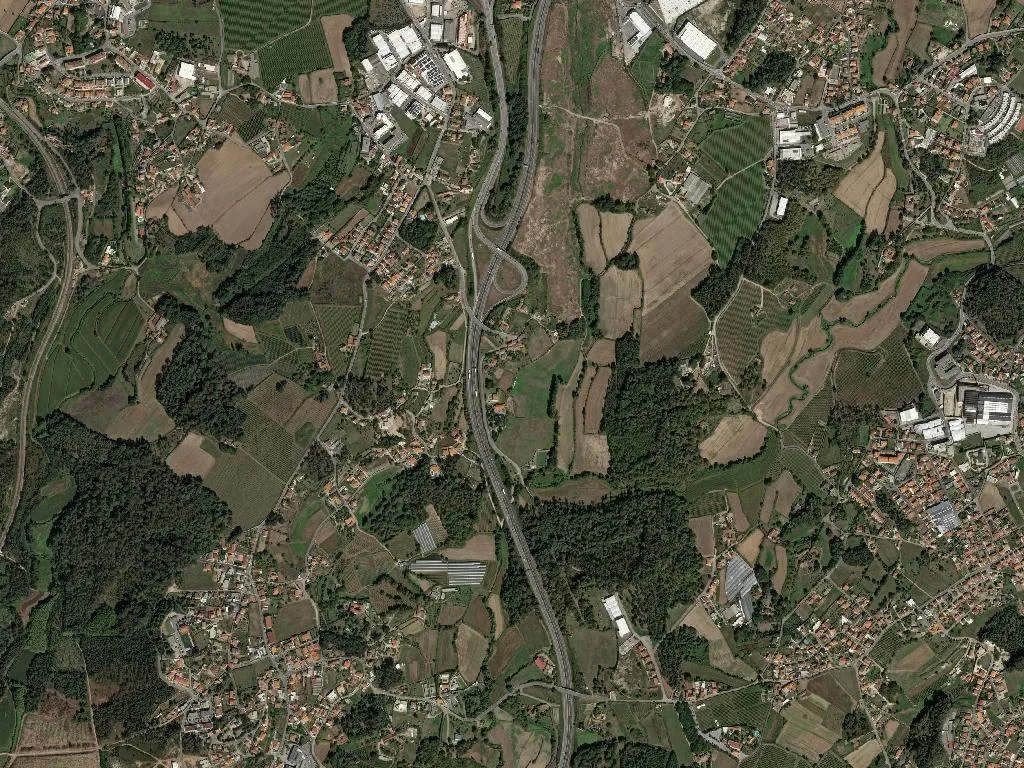
Cabeçudos covers barely 330 hectares, one of the smallest civil parishes in Vila Nova de Famalicão, yet every square metre is claimed: rows of Loureiro and Trajadura for Vinho Verde, low apple orchards, vegetable plots trimmed by laurel hedges. Small Este tributaries score the dark loam; no nature reserves interrupt the patchwork, only dirt tracks where ox-cart ruts are still visible after rain.
Two kilometres south, the converted railway line known as the Ecopista do Ramal de Guimarães slides past—13 km of asphalt for cyclists and runners shuttling between coast and hinterland. Few realise they are also crossing the Central Portuguese Way of St James, the lesser-spotted pilgrim route that links Ponte de Lima to Porto via Braga and Famalicão. In summer the giveaway is the scallop shell stitched to a rucksack, sun-burned Germans pausing beside the roadside crucifix, Italians comparing blisters outside the lone café.
Saint Anthony and the January fire
The parish church is a modest 1970s rectangle, but on 17 January it becomes the gravitational centre of Cabeçudos. The Festas Antoninas honour St Anthony the Abbot, patron of animals and firewall against wildfire. At dawn, farmers lead beribboned cows and nervous ponies around the building while a brass band negotiates the steps. Oak logs are stacked in the square after Mass; by midday the flames are roaring and chouriça fat drips onto the embers. Bowls of kale soup and chunks of corn broa circulate, poured with last year’s red Vinho Verde served in handle-less clay bowls. Bring a coat—the church sits on a rise and the January wind has teeth.
Later in the year the giants reappear. Gigantones e Cabeçudos—three-metre figures with painted papier-mâché heads—spin to the oompah of the local band, chasing shrieking children across the basketball court. Every Minho village owns a pair, but here the dance feels like a homecoming.
Granite and paprika
Cooks in Cabeçudos do not improvise. Kid goat is slid into wood-fired ovens, doused with white wine and garlic until the skin crackles. Rojões à Minhota—cubes of marinated pork—carry the smoky heat of colourau sweet paprika and bay, served with boiled potatoes and black olives. For dessert someone fetches “sapos” from the nearest convent bakery in Amarante: almond-paste crescents glazed with egg yolk. The wine arrives unlabelled, bottled in a back room; ask for “o vinho do ano” and you’ll be poured the latest release, lightly sparkling, meant to be drunk within the calendar year.
Evening light turns the granite walls honey-gold. In the vineyards the first leaves flare scarlet; a dog barks beyond the trellising; the church bell counts six. On the national road pilgrims tighten shoulder straps and head west, leaving behind the smell of damp earth, wood-smoke and the crunch of boots on stone.