Full article about Castelões: Where Vine Arches Meet Pilgrim Boots
Granite lanes, Loureiro grapes and St James arrows braid this Minho parish.
Hide article Read full article
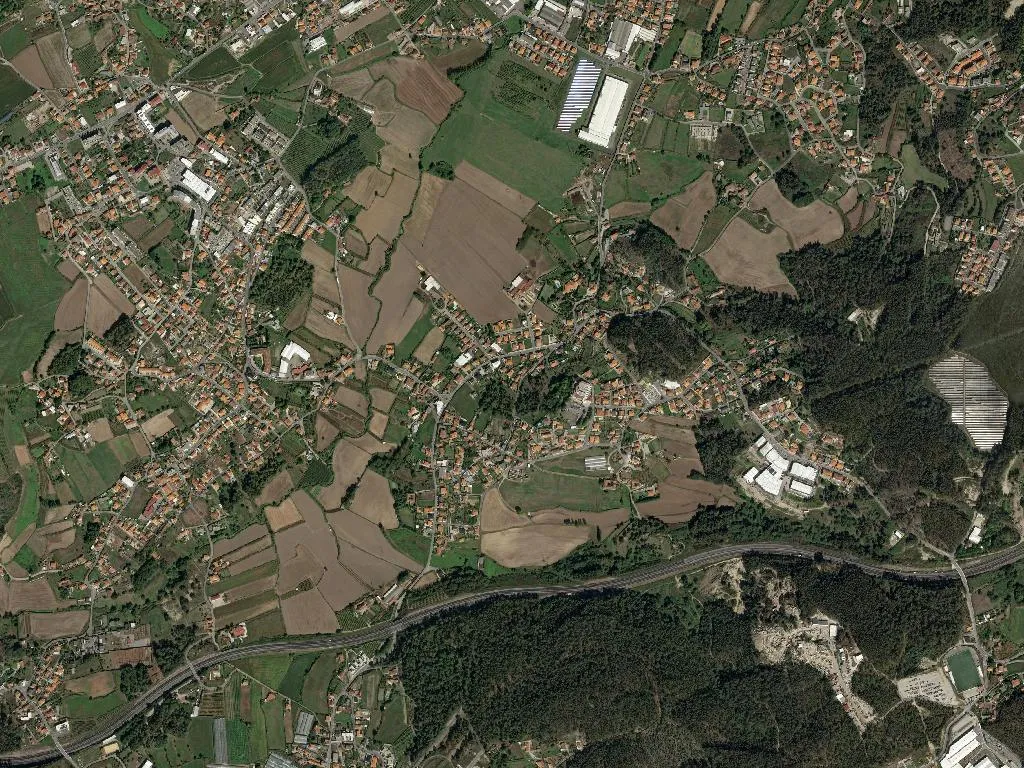
The granite lane climbs between walls quilted with moss, its greens as intricate as ordnance-survey contours. Scent drifts up of newly-turned earth and, somewhere out of sight, the first hearth-smoke of the day. At only 135 m above sea-level, Castelões spreads across 353 ha of ribbed hillsides where Loureiro and Arinto vines wrestle with Atlantic breezes and every echo carries the clipped, singsong cadence of the Minho.
Stone, faith and footfall
Three state-listed monuments dot the parish, none of them cathedrals. Instead you find squat 17th-century wayside chapels and granite crucifixes whose doorways oblige taller pilgrims to bow. Read the masonry and you trace 300 years of smallholdings: the same stone that props a terrace often frames a shrine.
Those pilgrims matter. Castelões straddles two St James routes: the Central Portuguese and the Coastal-Northern variant. From April to October yellow arrows appear on barn gables, garden gates swing open as makeshift albergues, and Vítor’s café by the EN205 doles out café abatanado—the local long black—to German trekkers with blistered heels.
Green wine and Santo António
The vineyard calendar still rules. The parish sits inside the Vinho Verde demarcation; pergola-trained vines arc over lanes like green tunnels while younger growers favour wire-trained rows that a tractor can straddle. Come mid-September the air turns syrupy with crushed Loureiro grapes and the lanes purple with runoff. The resulting wine is low in alcohol, bright with citrus, and tastes faintly petillant—built for grilled sardines or a plate of pica-no-chão pork.
June belongs to Santo António. For three nights paper marigold arches span the streets, the parish square hosts a brass band, and the smell of charred sardine skin mingles with gunpowder from Chinese-imported rockets. Emigrants fly home from Paris and Zürich; grandmothers set long tables under fairy-lights; dancing drags on until the 5 a.m. bread van arrives.
Sleep where the path rests
There are exactly two places to stay: a converted hayloft and a three-bedroom house owned by a retired schoolteacher. No chains, no reception desks—just a front-door key hung on string and breakfast brought in on a tray: warm pão de ló, butter stamped with a floury thumbprint, and orange juice from the tree outside your window. You wake to a real rooster, not an iPhone alarm, and the church bell counts the hours with Iberian disregard for punctuality.
Late afternoon wind sweeps the threshing floors, lifts dust off the packed-earth pilgrim trail and sets the vines nodding. The granite walls exhale the day’s stored heat. Castelões offers no postcard panoramas, no marquee museum—only the reliable grammar of stone, the whip-crack acidity of young wine, and the soft northern footfall of travellers who, tomorrow, will shoulder their packs and keep walking towards the sea.