Full article about Cavalões: Where Bread, Bells & Baroque Wake the Maize
Experience Cavalões’ stone chapels, bread-oven smoke and São Martinho wine under the ridge that locals swear is a sleeping horse.
Hide article Read full article
The church bell tolls eleven times, deliberate and measured, as the morning mist lifts from the maize fields. São Martinho’s Baroque façade emerges in slow motion, pale granite drinking the first sun of June. Behind it, someone feeds kindling into the communal bread oven; the smoke rises straight, windless, carrying the scent of loaves that António, the village baker since 1978, will pull out at exactly 7.30 a.m. Cavalões wakes gently, at the pace of the two streams that slip down to the Ave.
The horse in the landscape
Local legend says the parish takes its name from a horse—cavallus in Latin—because the ridge, seen from the Riba d’Ave road, resembles a horse lying down. A charter of 1515 first fixed the boundaries between valley floor and the stepped, uneven terraces that climb above it. When Baroque arrived in 1754, the parish priest Jerónimo Ferreira ordered the high altar gilded; the rural chapels—São Sebastião (1692) and Nossa Senhora da Conceição, where women once processed to beg for rain—still anchor the territory like small spiritual lighthouses. The old manor houses, Quinta do Casal and Quinta do Outeiro, have coats-of-arms eroded by Atlantic weather, yet the threshing-floor granite still feels warm underfoot.
Pilgrims and new wine
The Central Portuguese Way to Santiago cuts straight through Cavalões at kilometre 348.3. In summer, pilgrims pause at Tia Guida’s café for a milky coffee and ask if it is always this hot. Some linger for the Festas Antoninas, held on the Saturday closest to 13 June; the square—once the village laundry—hosts an all-night dance of castanholas (hand-cranked accordions) and the persistent smell of sardines grilling over charcoal. On 11 November, São Martinho brings a second romaria: blessing of the caldíceis (sweet fritters) at ten, a street market that blocks the EN308 until noon, and the scent of roasted chestnuts drifting into the first pour of vinho novo served at 11.30 in clay bowls. Vineyards stripe every slope: Loureiro planted by António in 1978 on the Casal terraces; Maria’s tiny plots above Azenha, where she still treads grapes in a granite lagar and ferments in oak that smells of centuries-old lees.
A Minho table
Cavalões’ rojão is marinated two nights in local sweet-paprika paste, then fried in lard that Ilda saved from last Christmas. Sarrabulho rice needs the pig’s blood, seasoned with cumin and bay from the garden; next-day leftovers become thick papas de sarrabulho eaten with corn bread brought by a neighbour. The local cozido à portuguesa adds rolled belly, beef chouriço and rice-black-pudding—everything the pig provides. For pudding, toucinho-do-céu follows the convent recipe from Vilar de Frades: twenty egg yolks to every kilo of sugar, beaten by hand for half an hour until the spoon stands upright.
Between valley and terraces
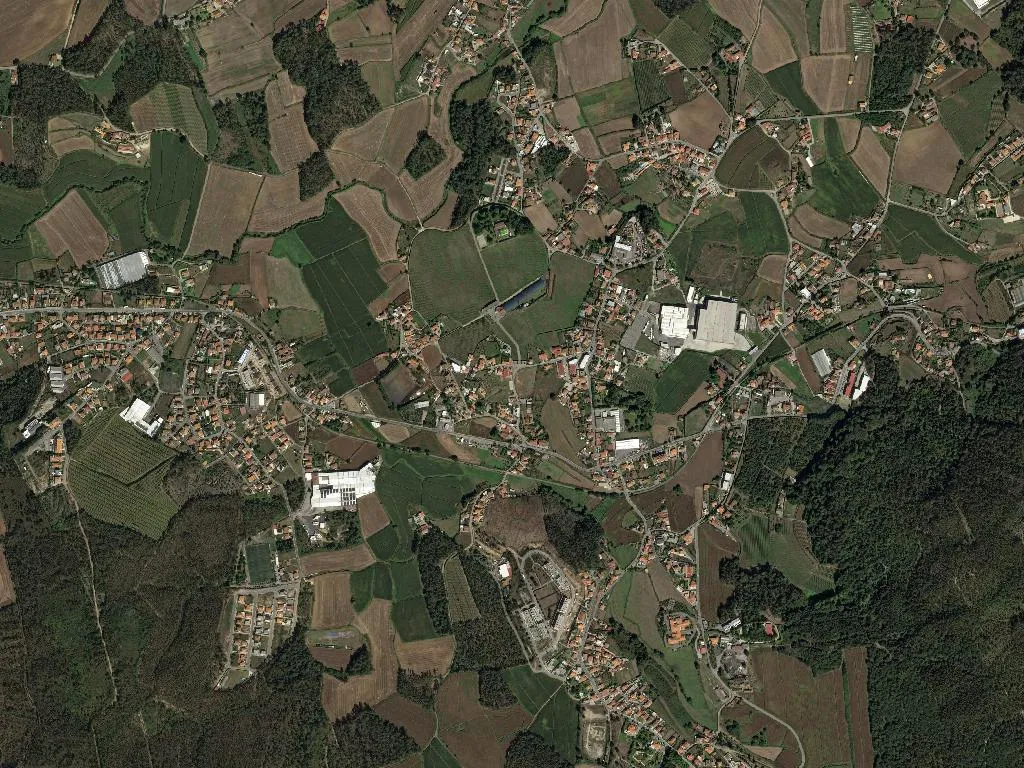
At 106 m on Monte do Outeiro you can see the Atlantic when the north wind scrubs the sky clean. The Cavalões and Azenha streams slice the maize terraces that Joaquim still plants on the same ridge his father did. On the footpaths linking chapels and farms, silence is stitched only by birds—blackbirds in the alders, sparrows in the eucalyptus, the collared dove that repeats its three-note code. When the gorse flowers in April, the village knows it is time to prune the vines.
The weight of 1,710
The population has slipped from 2,345 in 1981 to 1,710, but the census cannot record Rui coming home from Lisbon to rescue his father’s vineyard, nor Ana opening a corner café where the butcher’s shop used to be. There are still 229 children under fourteen at the primary school where Graça has taught for thirty-four years; she knows every child, their parents, their grandparents. In June the square refills with emigrants back from France, Switzerland, Porto. In November, Zé still sells the embroidered sweetheart handkerchiefs his wife stitched. At Christmas, lapinhas—miniature Nativity scenes—are mossed with greenery from the Monte, and the Reis (Epiphany) singers—Manuel, António and Zé, voices cracked but words exact—walk the streets before dawn: “Good evening, master of this house…”
When the last pilgrim tightens his rucksack and swings his staff down the 1952 cobbles at dawn, the bells keep the only time that matters. And the smell of wood-smoke never quite disappears—because Dona Fernanda, eighty-seven, still lights her kitchen range every morning, even in July.