Full article about Dawn in Cruz: Minho smoke meets Ave valley light
Vines, pilgrims and June brass bands animate this granite-knuckled parish above Famalicão
Hide article Read full article
Dawn on Rua da Igreja
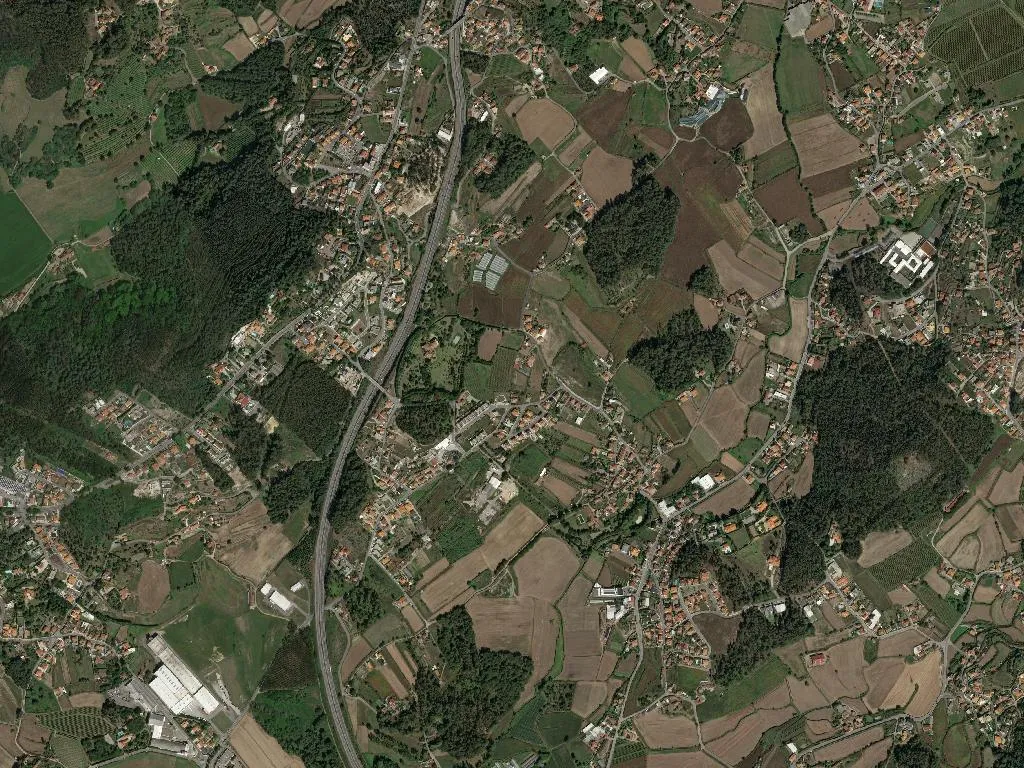
Sunlight slips through the holm-oaks and freckles the tarmac of Rua da Igreja. The air smells of damp soil, newly scythed grass and a last wisp of wood-smoke from a kitchen hearth that refuses to acknowledge morning has arrived. At 142 m above sea-level Cruz sits where the valley of the Ave begins to ripple; granite outcrops nudge between curly rows of maize and the trellised shade of kiwi orchards. This is the moment when the industrial Minho – the 7.30 Riopele whistle – collides with an older calendar still dictated by vines and tractors.
Vine rows and footpaths
Cruz lies inside the Basto sub-region of Vinho Verde country. Here vines are trained high on granite or eucalyptus stakes, throwing long shadows that keep the soil cool even in August. The landscape is practical, not pretty: vineyards are spreadsheets in green, calculated to survive between new housing estates and the boxy warehouses of the Ribeirinha industrial park.
Two overlapping pilgrim routes cut across the parish: the Central Portuguese and the Coastal Camino converge on the 18th-century mother church before climbing to the 1713 granite cross in Lugar do Cimo. They ask for nothing grand – shade, a bench, water spilling from the fountain in the square. Cruz obliges: the chapel of St Anthony propped ajar, a rain-washed 1892 cross, blackbirds threading eucalyptus groves along the Levada water channel.
Festa and neighbourhood
Every 12–13 June the Festas Antoninas tip the village sideways. The local brass band marches through the square, makeshift stalls serve blistered chouriço and ice-cold vinho verde from the Cruz cooperative, and the population of 1,651 becomes suddenly audible. For the remaining 363 days life thins out across 413 ha: Júlio’s café unlocks at seven, Dona Rosa’s bakery shuts Saturday lunchtime.
Demography is delicate – only 181 residents are under 14, while 303 have passed 65. You read the ratio in slow Sunday footsteps, in gossip outside the Minipreço, in the unhurried bell of the 1727 church (refaced 1892) that still marks time for fields rather than smartphones.
Small-scale heritage
No state-listed monuments interrupt the skyline, yet the 1713 cross is protected by the town hall and the chapel of St Anthony shelters a 1756 baroque altarpiece. The real fabric is human-scale: waist-high walls of stacked granite, a communal spring where someone fills a five-litre bottle, a granite wayside cross whose inscription – “Pelo Pároco e pelos Fiéis 1892” – is almost weathered away. Identity lies in the cumulative details: whitewashed façades, red-pantiled roofs, the forged-iron gates of Quinta da Cruz.
Cruz yields nothing to the motorway gaze. Leave the EN203, walk slowly, let the eye settle: the exact north-facing moss on Casa do Outeiro’s wall, the hush of water in the levada feeding Riopele’s finishing plant, late sun igniting the glass of strawberry tunnels in Lugar de Cima.
At dusk the foundry whistle fires again at 17.30, as integral to the soundscape as the church bell – two time signatures, industrial and ecclesiastical, co-existing without argument or hurry.