Full article about Morning Light & Soot-Stripe Baguettes in Delães
Yeasty plumes, pocket vineyards and Camino selfies in Vila Nova de Famalicão’s dense granite parish
Hide article Read full article
Sunlight slips across the churchyard at seven o’clock and strikes the granite houses that shoulder the N206. In Delães the click of heels on cobbles is answered by a low hum of conversation outside the minimercado, while the yeasty plume from Zé’s bakery drifts over the rooftops. He has been at the kneading trough since five; by eight the first baguettes are already striped with soot from the wood-fired oven.
1,500 neighbours per square kilometre
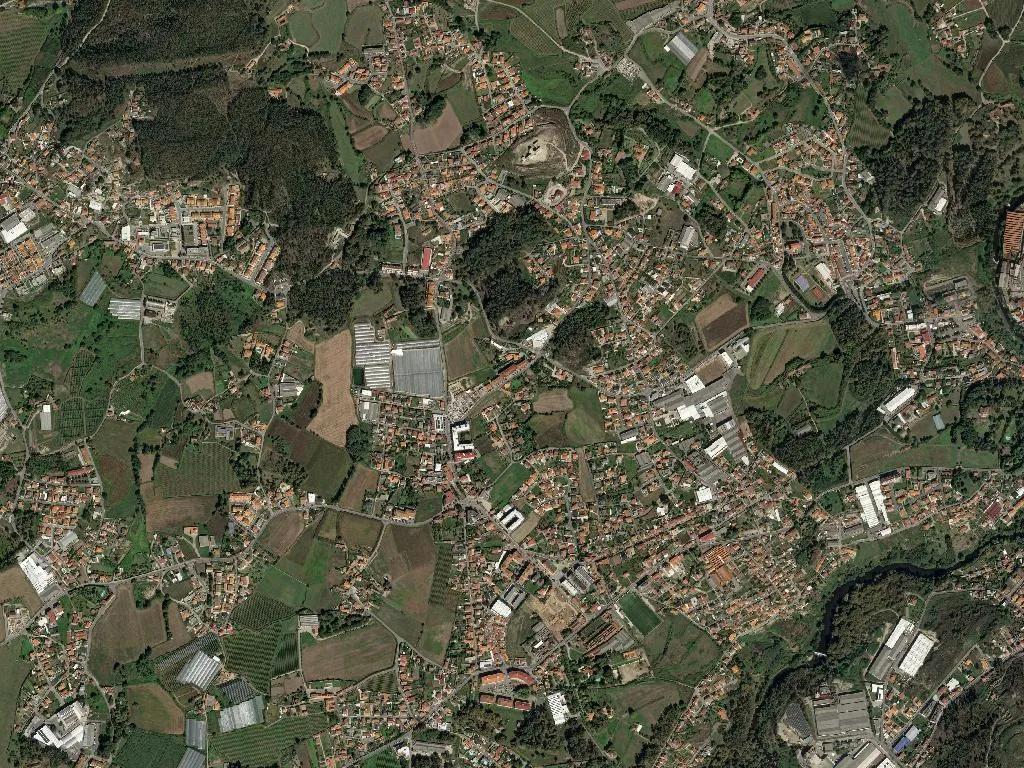
Density here is more sociology than statistic. Gable walls almost touch, back gardens share the same westering sun, and anonymity is impossible when the daily pilgrimage to the café on Largo da Igreja passes within arm’s reach of every front door. At 143 m above sea level the parish sits on a gentle roll of the Minho plateau—none of the vertiginous valleys you meet further inland, just enough gradient for rows of loureiro and arinto vines to remind you this is still Green Wine country. Most plots are pocket-handkerchief size, trapped between stone walls and worked more from stubbornness than commercial hope. Armindo, 78, still bottles a rust-coloured red each September and mails two cases to his son in Lyon, a quiet ritual of terroir and homesickness.
Two Jacobs Trails, one water spout
Both the Central and Coastal routes of the Camino fork through Delães, converging at the eighteenth-century fonte where women once slapped laundry on granite slabs. Today the fountain is selfie-bait for Norwegian backpackers who don’t realise the water still tastes of iron and yesterday’s bleach. António, whose balcony brushes the yellow arrow on the wall, claims he has “lost count of the languages asking for toilets”. Demand is light enough that most walkers push on to Barcelos, but a private house on Rua de São Torcato will take the stragglers. D. Rosa, a former primary-school teacher, offers three spare rooms, scrambled eggs with chouriço and, crucially, “a bath long enough to soak your blisters”.
When Saint Anthony takes the street
For three nights every January the parish flips its lids. The Festas Antoninas turn the church square into a smoke-hazed fairground of grilled-pork stalls and brass-band reels. Sunday is the crescendo: the Sociedade Filarmónica’s dance runs until four in the morning, starched shirtsleeves rolled to the elbow, patent-leather shoes resurrected from wardrobes for this single outing. No corporate sponsors, no LED stage—just a generator, a plywood platform and a playlist that has hardly changed since vinyl. Grandmother Fernanda starts frying filhós doughnuts on Wednesday; by Saturday she’s shifted 400, glazed with sugar and guilt.
The arithmetic of ageing
Census 2021 reads like an elegy: 483 residents under fourteen, 884 over sixty-five. The gap is visible on any bench in the municipal garden, where conversations stretch because time does. Yet Delães refuses the role of museum. The stationers still stocks wall paint and exercise books, the butcher will joint a shoulder for Monday’s cozido, and the bar on the square pours aguardente distilled by Sr. João from his own alambic—retirement hobby, 52 % proof, served in a chipped espresso cup.
Evening light tilts across the granite, long shadows stitching cobble to façade. The church bell tolls seven—morning, noon, seven again, a metronome that measures nothing urgent. Delães offers no souvenir stalls, no viewpoints, no boutique conversions. It is simply lived in, morning after morning, by people who recognise each footstep returning with the same bread-scented dawn.