Full article about Fradelos: Camino Cobbles & Vinho Verde Cloudy in Braga
Medieval monks’ trails meet farmhouse pours in this Minho parish where pilgrims pass before sunrise.
Hide article Read full article
Granite cobbles rasp beneath pilgrim boots before first light. In Fradelos, the Camino de Santiago is not a curated heritage trail; it is two converging arteries—the Central and the Northern routes—pulsing through the parish like twin veins. Staffs click on stone, tractors cough into life in the neighbouring vineyards, and the place reveals its double identity: half thoroughfare, half home.
Friars and footfalls
The name remembers the “fratres de los”, medieval monks whose legacy is topographical rather than architectural. Documents mention the settlement as early as the thirteenth century, yet Fradelos keeps its archives in the open air. On 30 June the Festa da Restauração da Freguesia re-enacts the parish’s creation with street theatre, brass bands, and caldo verde served from zinc-lined vats. No roped-off stage: actors and audience share the same jug of vinho verde.
Mid-January brings the Encontro de Reis, a choral gathering where local choirs sing old “janeiras” carols in the parish hall, finishing with a glass of fortified wine that doubles as social glue. Both events are planned in the café opposite the church, over espressos that cost eighty cents and come with a top-up of gossip.
Green wine, brown earth
Fradelos sits inside the Vinho Verde demarcation at a gentle 70 m above sea level. Atlantic air drifts inland, coaxing citrus-bright acidity from the Loureiro and Trajadura grapes. No architect-designed tasting pods here; instead, you turn into a farmhouse drive where a Labrador guards the tank room and the farmer’s wife finds a clean tumbler in the kitchen dresser. The wine is poured cloudy, still hissing from last week’s malolactic, and is chased by a wedge of corn broa still warm from the wood oven.
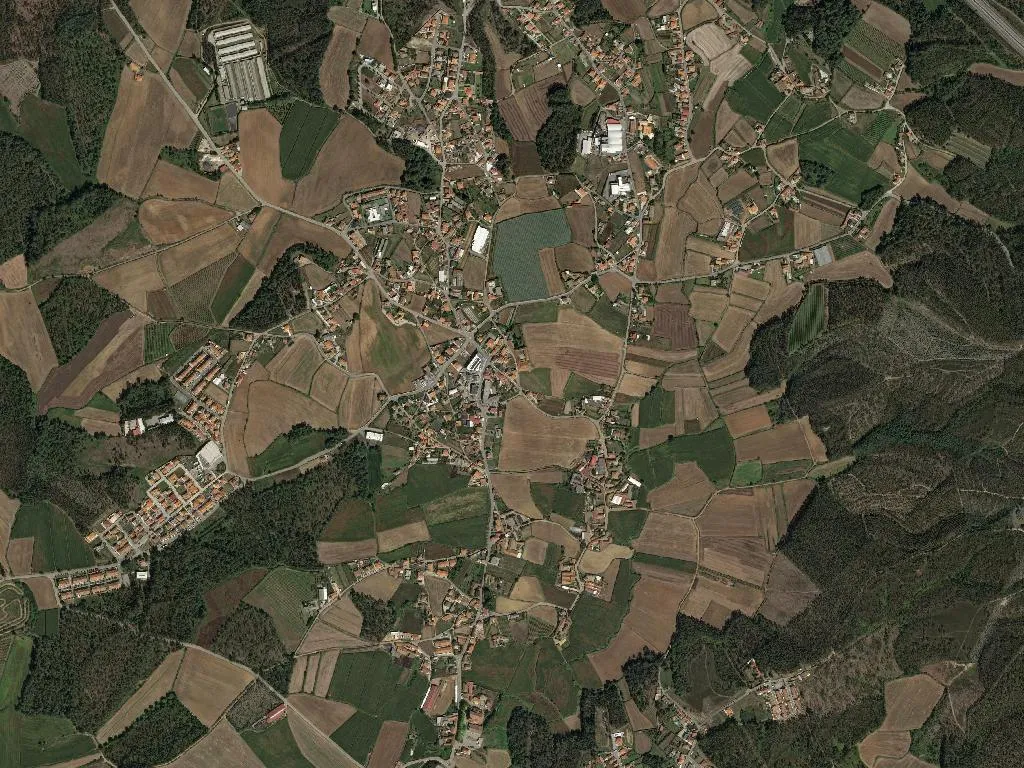
The 17 km² parish is a mosaic of trained vines, smallholdings of sweetcorn, and self-seeded eucalyptus that nobody admits planting. Population density hovers around 230 people per km²—just enough to keep the café solvent, sparse enough for silence to pool between properties.
Passage and permanence
Pilgrims step off the cobbles for coffee under the pergola vines, asking how far to Barcelos and whether the bakery opens before seven. Some accept a mattress in a back bedroom; they wake to a cockerel that refuses to honour Greenwich time and leave before the dew has burned off the grass. What lingers is not a vision of Santiago’s Baroque façade but the smell of crushed grapes rising from a stone lagar, the moment the rucksack finally sits right on the hips, and the oblique 6 a.m. light that turns the vines into a lattice of green glass.