Full article about Gavião: Where the River Pelhe Whispers Through Cornfields
Granite crosses, baroque gold and June bonfires animate this Braga parish
Hide article Read full article
The river speaks first
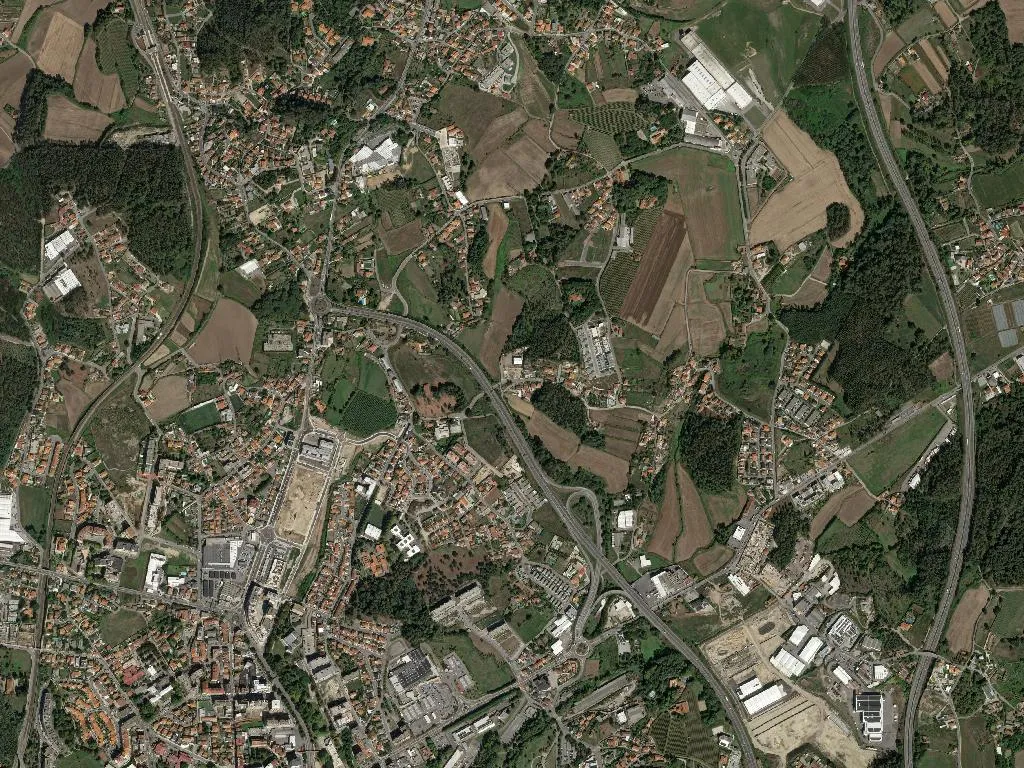
The River Pelhe announces Gavião before you see it: a low, unhurried conversation of water that has run for the best part of a thousand years. Dawn light cuts between maize plots and low-trained vines, catching on the trunks of oak that still root the valley banks. Wet-earth scent rises; swing the wind a few degrees and you’ll catch the blunt sweetness of corn-bread baking in a wood-fired oven somewhere behind the houses. Three miles south-east of Vila Nova de Famalicão’s traffic roundabouts, Gavião keeps a rare balance—one foot in the field, one in the commuter belt, with 961 neighbours per square kilometre yet enough green to breathe.
Written in stone
The place first appears in 1072 as Villa Cavilam; the modern name comes from the Latin gavialis, a nod to the hen harriers that still quarter the hillside thermals. In the Middle Ages the settlement straddled the inland route from the coast to the Minho interior; today the Central Portuguese and Northern Ways of St James cross the same territory, funnelling walkers past the parish church of São Tiago. Its eighteenth-century façade is Plain Style Portuguese—no frills—yet inside a gilded baroque retable catches candlelight in folds of old gold.
By the roadside at Marmoeiral a 1742 granite cross leans, inscriptions eroded to Braille. Below Pedra de Ouro the ruins of water-mills—dark stone, half-drowned in summer vegetation—remember when the Pelhe drove grindstones. The Chapel of São Vicente was moved bodily in the 1960s from the hamlet of Bandeirinha to the newer bairro that carries the saint’s name; inside, eighteenth-century cobalt-and-cream tiles narrate hagiographies in the Portuguese azulejo tradition.
Flames of June
Festas Antoninas turn the parish incandescent every June. Arclights zig-zag over the football pitch, folk-dance troupes parade in hand-stitched costumes, and bonfires spit until the small hours. On the night of St Anthony the air is lacquered with grilled sardine oil and the thud of bass drums ricochets off rendered walls. The local recreation group, founded 1973, layers on the Dia da Freguesia (14-22 June): a dawn fun-run, moonlit valley walk, traditional games tournament in the sports hall, and a solemn mass with the brass band in full cry. On the first Sunday of May the Romaria da Senhora da Saúde climbs Monte do Viso, pilgrims moving slowly between cork and oak to the hilltop shrine.
Tastes of territory
In the tascas kid goat is roasted over eucalyptus wood until the skin shatters like caramel; it arrives with roast potatoes and a glass of spritzy white Vinho Verde from the nearby Basto sub-region. Arroz de sarrabulho—a dark, clove-scented risotto of pork offal and blood—appears in deep bowls. Winter brings papas de abóbora, pumpkin and butter-bean porridge thick enough to hold a spoon upright. Order rojão à moda de Gavião and you get nuggets of pork shoulder marinated in smoked paprika and garlic, flash-fried then simmered until the sauce sticks. Dessert might be toucinho-do-céu, a yolk-and-almond slab that translates, with no apology, as “bacon from heaven”, or cavacas, brittle St Anthony biscuits glazed like mini-bath tiles.
River paths and pilot lights
Parque da Devesa threads cycleways through riverside allotments. Here Portugal’s transport-tech institutes are trialling SAFOOS, a cyclist-specific traffic-light sensor that flashes red if a collision is likely—sci-fi on a leafy lane, yet still blissfully queue-free. A two-hour way-marked walk follows the Pelhe to the medieval Ponte de São Tiago, brushing through oak coppice and sun-bleached maize. At 112 m above sea level the air is neither Minho-humid nor Douro-scorched—ideal for walking without drowning in sweat or tourists.
Evening slants gold across whitewash; the church bell tolls a slow, measured bim-bim that drifts down-valley to mingle with river murmur and roosting songbirds. You leave with the sense that density here has not suffocated the land’s lung, and with the minor miracle of a town centre where parking is still free—something downtown Famalicão can only dream of.