Full article about Gondifelos: where Brazilian gold meets Minho granite
São Martinho’s bell tolls over slate roofs, chestnut groves and azulejos shipped back from Rio
Hide article Read full article
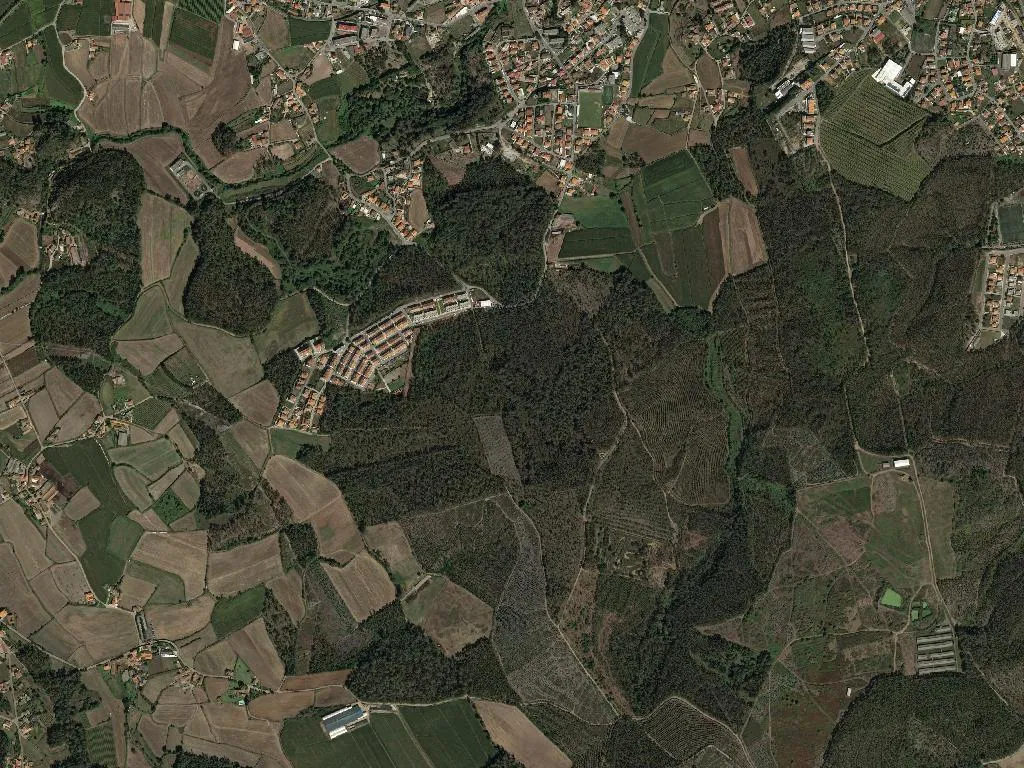
The scent of woodsmoke drifting from the bakery blends with the smell of damp earth before the sun has dried the dew on the vines. At 141 metres above sea-level, Gondifelos wakes to the slow tolling of São Martinho’s bell, its sound rolling over slate roofs and the odd canary-yellow façade paid for with Brazilian gold. Below, the Ave Valley folds gently north-west towards the Falperra ridge, streams slipping between chestnut groves and walls of stacked granite that glint silver when the light catches them.
From Gundifilius to “Brazil Village”
A 1153 charter first mentions the Germanic name Gundifilius; by 1192 King John had shortened it to “Gundifellos” in a royal decree. For seven centuries the parish belonged to Ribeirão, only passing to Vila Nova de Famalicão after the Liberal Wars. Between 1880 and 1920 so many locals sailed to Santos and Rio de Janeiro that 42 per cent of households lived on remittances. The evidence is still there: hand-painted azulejos from Santa Teresa on n°42 Rua do Outeiro, cast-iron balconies unloaded from the steamer Minho in 1903, and the nickname that stuck—aldeia dos brasileiros.
Stone, Lime and Running Water
João Carneiro, a petty noble of the Royal Household, built the three-bay Solar dos Carneiros in 1784, carving “Sub robore virtus” above the arms. Opposite, the baroque Chapel of São Sebastião (1723) served as chapel-of-ease to the village hospital until the NHS era. Downstream, the 1755 triple-arch bridge once carried the royal highway between Braga and Guimarães; the parish cross, raised in 1897 after a gale demolished its 1623 predecessor, still dominates the churchyard.
The Killing Season
On St Martin’s Day the parish slaughters eighteen pigs—down from 120 in the 1960s—then rubs the meat with sweet paprika from Esposende and red Vinhão wine, exactly as Rosa Lima directed when she opened the first female-run tasca here in 1928. Kids are roasted in the 1847 oven at Casal do Outeiro, its oak-ash embers saved for flavour. For pudding, cavacas demand a dozen eggs per kilo of flour, a recipe Vóvó Aninhas copied from the nuns of Monchique in 1934.
Vines, Water Clocks and Pilgrims
The 5.3 km Passos footpath follows the 1769 penitential procession; dry-stone walls, 1.8 m high on average, line the route, relics of the days when 180 ha of vines covered the parish (today 42 ha). Until the 1950s irrigation was strictly timetabled: Tuesdays and Fridays, 30 minutes per plot, announced at 5 a.m. by the “water-master” striking an iron can. A 1987 waymark 200 m from the mother church signals stage 11 of the Portuguese Camino, the stretch that links Barcelos and Famalicão and brings a steady trickle of boots through the village each spring.