Full article about Joane: looms, loureiro & granite breath
Joane, Vila Nova de Famalicão, fuses 1900s textile mills with loureiro vineyards, granite streets and 7,946 villagers living within 500 m.
Hide article Read full article
Joane, where the valley breathes between looms and loureiro
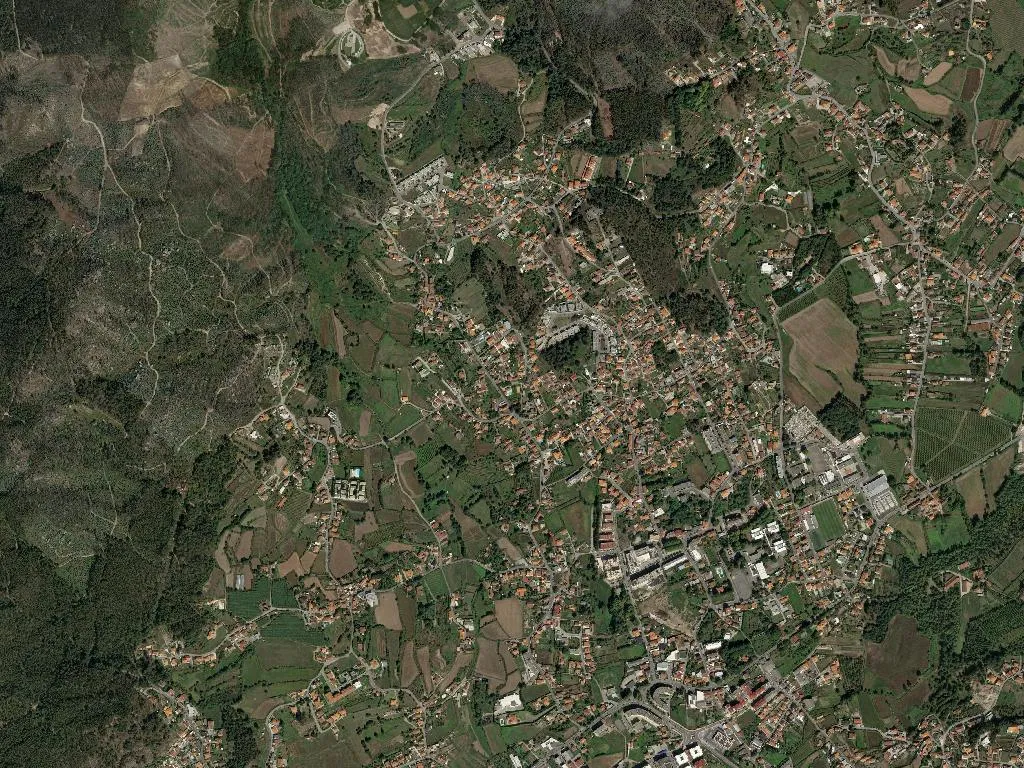
The morning soundtrack is mechanical before it’s birdsong: the bass thrum of lorries on the EN-308, the hydraulic sigh of the Lousil textile gate, a sound unchanged since 1974 when the plant first stitched collars for Marks & Spencer. At 189 m above sea level, Atlantic air funnels up the Ave valley and condenses against granite house-fronts around the church square, all built between Queen Victoria’s last decade and the Great Depression. Joane lost its town status in 1855, yet 7,946 people still fit into 731 hectares – a density higher than Brighton’s. Everything is within a five-minute shuffle: Pastelaria Silva (founded the year Every Breath You Take topped the charts), Café Sport (300 cappuccinos gone before the nine-o-clock news), and the 1967 comprehensive that teaches 650 teenagers the difference between a lathe and a loom.
A tight weave of people and granite
This is not a postcard parish. No castle keep, no Manueline window. Instead, streets widen or contract according to the rhythm of production: first the Linho mill in 1903, then the boxy 1960-80 factories that still occupy nearly a quarter of the land. On Dr José Lopes Street – 1.2 km of cracked pavement and sudden loading bays – 1950s houses rub shoulders with logistics depots. The Minho sky, overcast roughly half the year, throws a pewter light that makes the granite of Casa do Passal (1876) look almost black against fresh concrete.
Ageing indexes here read like a demographic caution tale: 1,048 children under 14, 1,392 residents over 65. At 8 a.m., Rua Central is a slow-motion relay: grandchildren in neon rucksacks heading for D. Maria II primary (opened the same year the first Godzilla film reached Portugal), grandparents shuffling towards the 1998 day centre. Proximity is absolute – 87 % of locals live within 500 m of the parish council – so social capital is measured in espresso spoons: the taxi rank known simply as “a praça” where pensions and football are dissected for four decades; Mota’s grocery, unlocking its shutters at 7 a.m. so São Bento textile workers can buy sliced loaf and pão de milho before the shift whistle.
June, sardines and the scent of bay-leaf smoke
Festas Antoninas, documented since 1897, turn the old cattle fairground into a pine-benched dining room between 10 and 13 June. On night one alone, 2½ thousand sardines are grilled over laurel-stoked braziers, every one bought from Manuel Costa, a third-generation fisherman who still fires a 1978 brick oven. The green wine poured from aluminium jugs comes from Quinta do Outeiro, 12 ha of loureiro across the ridge in Pedome. At 6 p.m. on the 13th, the statue of St Anthony leaves the 1758 mother church, carried 1.8 km to the baroque Senhor dos Passos chapel while a brass band segues from Ave Maria to Girl from Ipanema.
Vine terraces and pilgrim bootprints
Joane has sat inside the Vinho Verde demarcation since 1908. Only 38 ha of vines remain, mostly on the slopes of São Paio and Outeiro where 23 growers – average age 67 – coax 190,000 litres a year, 60 % loureiro, the rest trajadura. Most must is trucked to the co-op in Ponte de Lima, but three hold-outs bottle on site: Carlos Alberto, Quinta do Outeiro and Casa do Trombudo, whose 2022 loureiro tastes like lime zest and Atlantic breeze.
Two St James routes cross the parish. The Central Portuguese enters from the south along a Roman cobble still scarred by cartwheel ruts; the Coastal detours down the EN-308, past the Lousil mill’s loading bay. In 2023 they logged 1,842 overnight stays – modest, but enough to keep a 16-bed hostel, a 24-room hotel and three 2019-licensed guesthouses busy. Pilgrims photograph three 18th-century stone markers, two baroque crosses and the rebuilt 1912 bridge of São Paio where both caminos converge.
A pulse you feel, not photograph
Joane will not reveal itself from a belvedere. Its facts are more insistent: 180 active firms, two-thirds textile, generating 2,300 direct jobs. Inside Lousil, Sulzer shuttle looms from 1978 still clatter out 50,000 m of fabric a month – the sound that lulls children at siesta and greets night-shift workers. Daily life is measured in kilos and minutes: 80 kg of fressura (lungs and heart) sold at Miranda’s butcher by 11 a.m.; 40 coffees served at Central café before the 8 a.m. hooter; the night pharmacy on call for 11 scattered parishes.
Leave north on the EN-308 and the rear-view mirror gives the truest portrait: Quinta do Outeiro’s four hectares of terraced vines, loureiro canopies still green in August, strung between granite posts hewn from the Jorbela quarry, a 1962 Nossa Senhora de Fátima keeping watch in her niche, while the 2017 bypass carries container lorries away from the centre. Joane entire – 7,946 souls, 180 firms, 38 ha of vine, four centuries of un-signposted stories – fits into that single frame.