Full article about Louro: where fermenting Loureiro stains granite and time
Vines outnumber villagers 2:1 in this Braga parish; follow the Ave to a 13-arched pilgrim bridge
Hide article Read full article
The smell of must on the first Friday of October
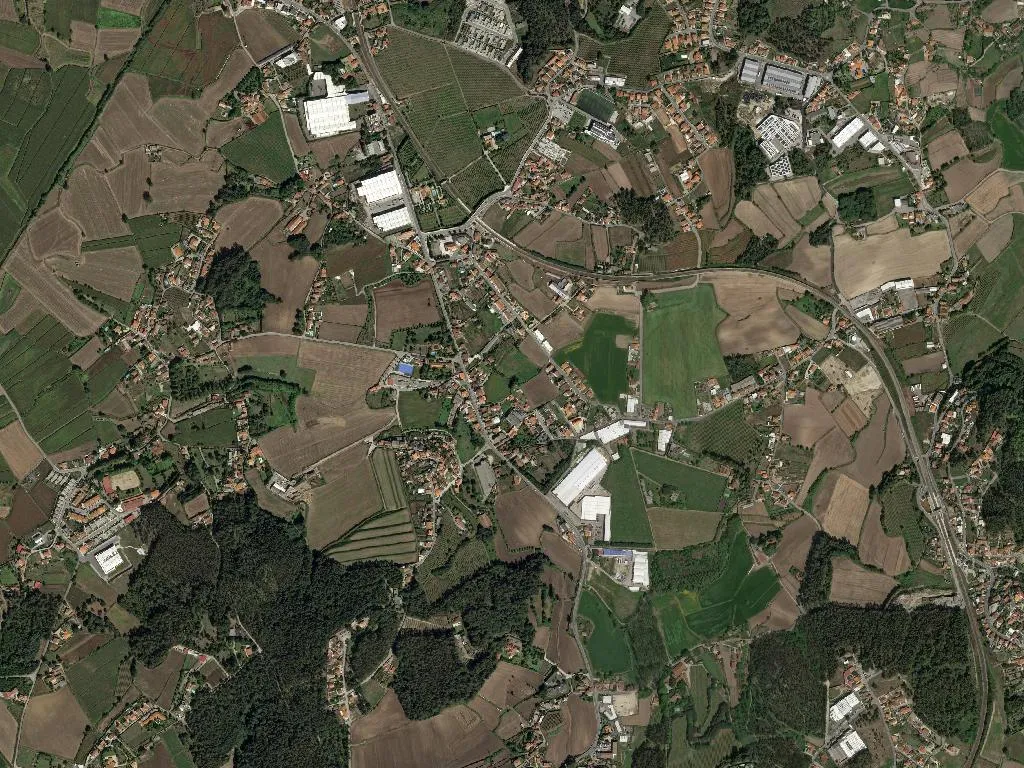
It is not a faint perfume; it is a weight that settles on skin and stone. By seven in the morning the granite walls of the Adega Cooperativa are already sticky with fermenting Loureiro, and the men’s cuffs are violet to the wrist. Louro, a parish of 2,212 souls south-east of Braga, owns 0.45 ha of vineyard for every inhabitant—one of the highest ratios in Portugal—so the harvest here is still the hinge on which the year turns. The cooperative, opened in 1958, never bothered with air-conditioning; the thick single-storey block keeps its own cool even in August, and the must trickles across the same uneven flagstones it always has.
A river that keeps the score
The Ave slides through the valley like a liquid spine, its banks narrowed by ash and willow that filter daylight into an underwater green. An eight-kilometre way-marked trail shadows it west to the village of Calendário, curling between smallholdings of Portuguese kale and pockets of riparian forest. Half-way along, the Ponte de Oito Arcos rises in thirteenth-century stone; boot soles have polished the parapet since the days when this was a branch of the Central Portuguese pilgrimage road to Santiago. Wayside calvaries from the 1700s still point the direction; above them, the squat chapel of São Sebastião was thrown up in 1656 as insurance against plague. On the first Sunday of May the parish brings folding chairs to the river meadow for an open-air mass, followed by dry cake and sharp white wine served from enamel jugs. No microphone, just the wind lifting off the water.
Baroque gold and cobalt inside the parish church
The Igreja Matriz keeps a modest granite face, but step through the door and the eighteenth century shouts back. A single retable climbs to the roof, every inch carved and water-gilded; cobalt azulejos panel the side walls with episodes from the life of St Anthony alternating with Islamic-inspired geometric knots. In a glass case to the left, splinters of bone attributed to St Sebastian—brought home by seventeenth-century pilgrims—rest on crimson velvet. The Festas Antoninas, held the weekend closest to 13 June, close the square to traffic: boys carry pitch-pine torches behind the brass band, a priest blesses geese and terriers in front of the war memorial, and half-carcases of veal rotate over carvalho logs until the fat meets the smoke in a low-hanging cloud that drifts towards the bell tower.
Pork, papas and Vinho Verde that bites
Minho cooking is built on the assumption that you will work a 10-hour day in the vines. Louro’s version: pork shoulder cubed and marinated overnight in white wine, garlic and bay, then flash-fried so the edges caramelise while the centre stays rose. The meat is tipped over papas de sarrabulho—dark, cumin-scented porridge thickened with pig’s blood. On feast days the wood oven behind the primary school is fired for roast veal and rice studded with grelos (spring turnip tops). Caldo verde is sharpened with local chouriço smoked in attic larders; the orange oil rings the bowl like a halo. Dessert is toucinho-do-céu, a rich almond-yolk confection that translates, bluntly, as “bacon from heaven”. The parish association runs monthly cookery mornings where you learn to keep the rojões juicy: the trick is a single fierce burst, no second chances.
Waterwheels and neoclassic façades
Below the bridge the river still drives a restored water-mill; when the flow is high the wooden wheel creaks like an old soprano, and the granite millstones idle in a haze of damp flour. Cereal farming paid for the Palacete do Quinteiro, a nineteenth-century neoclassical manor that surveys the valley from a low granite ridge—symmetrical windows, wrought-iron balconies, now in private hands but visible from the lane that climbs to the Alto do Viso. From the top (150 m) the view is a ledger of small, steep vineyards stitched between outcrops of grey rock, with the Barroso hills inked on the horizon.
On the first Saturday of each month the square reverts to a medieval market: reused glass garrafões filled with last year’s Loureiro, hand-carved wooden spoons, linen towels woven on home looms. Stallholders keep accounts in their heads; coins are wiped on aprons before being dropped into leather pouches. By noon the tables are folded, the river noise returns, and the church clock strikes one—not to hurry anyone, simply to note that the day has advanced between stone and vine.