Full article about Lousado: Cobbles, Camino & Vinho Verde Whispers
Where pilgrims pass unnoticed and village kids play in a 13th-century churchyard
Hide article Read full article
The tarmac gives way to uneven cobbles and footsteps ricochet in a dry echo off whitewashed walls. Lousado inhales and exhales to the cadence of 3,884 souls – enough for pavement life, few enough that faces still look familiar. Behind walled gardens, neighbourhood garages and zinc-topped cafés where conversation is served at cellar temperature, daily life happens beside, not on, the street. At 86 m above sea level an inland breeze slips over the rooftops; suddenly you remember the Atlantic is only 30 km away, yet tastes of the sea are absent.
Between road dust and unmoved stone
Two medieval itineraries meet here without ceremony: the Central Portuguese and the Northern Camino weave through the parish, delivering walkers whose trekking poles tick like metronomes against granite. No municipal albergue, no blaze of yellow arrows – the routes cut through the ordinary as discreetly as a guest crossing someone else’s dining room. Before the EN105 begins its morning growl you can hear the shuffle of boots on stone. Most pilgrims keep going; the ones who stop push open the door of Café Central where an espresso still costs less than in Barcelos and the owner asks “Going far?” with the same inflection she uses for “Will it rain?”
Lousado’s only listed monument is the 13th-century Igreja de São Tiago, a national heritage site since 1910, though locals simply call it “the old church”. Time has smoked the limestone charcoal-grey and damp has sketched abstract maps on the blocks. Pilgrims, soldiers, processions and now rucksacked day-trippers have all crossed its threshold; the door is usually locked, but the churchyard offers a breather and doubles as a five-a-side pitch for village kids on Saturday afternoons.
Green wine and the liturgical calendar
Vines thread through back gardens in modest pergolas – Lousado sits inside the Vinho Verde demarcation, yet no one here trades on the fact. Grapes ripen over vegetable plots, the juice ferments in five-litre glass demijohns that hibernate in cool cellars. The wine that appears at supper is the same offered to a neighbour: sharp, feather-light, with a faint Atlantic salinity. No tasting menus, no wine shop – just plastic flagons sold over the front wall for five euros and a smile, often better than anything wearing a designer label.
June brings the Festas Antoninas, three days when Santo António sanctions dusk fireworks and sardines char over pyres of eucalyptus bark. The parish never morphs into a folkloric tableau; continuity is the point – the same bunting unfurls, the same tissue-paper arches span the streets, the same bell strikes six. The fairground rides occupy the agricultural-show ground where tractors usually sleep; anyone who can’t find a space leaves the car on the national road and walks up the hill, just like grandmother did.
A place that lives in, not commutes from
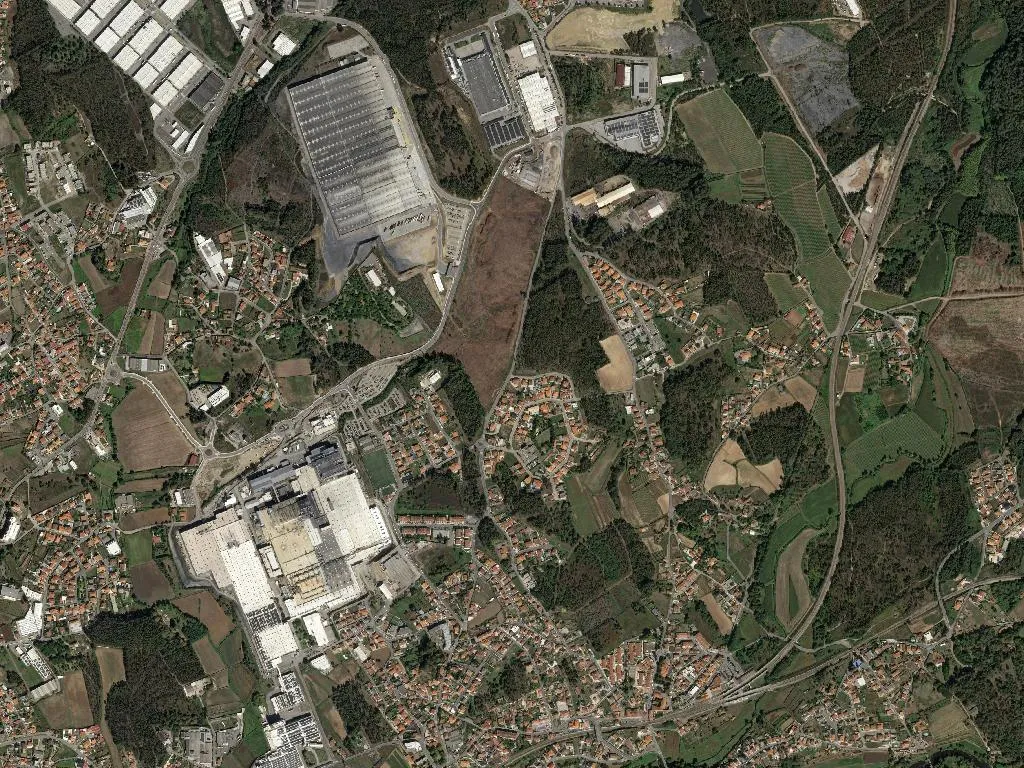
Statistics spell it out: schoolbags at eight, walking sticks at six. Lousado is no dormitory suburb – people are born, clock in and grow old here. The Continental tyre plant keeps half the parish employed; the rest work in shops or catch the 7.05 train to Porto. When the health centre opened in 2017 it ended decades of trips to Barcelos for a prescription. Officially there is one place to stay, but that ignores the rooms Dona Rosa lets behind the bakery – no stars, just sun-dried sheets and breakfast toast made from village bread.
The sound of day’s end
At dusk, when low sun ignites the western façades, Lousado reveals itself in footnotes: the oxidised gate that squeals shut, the cat who owns the crossroads, a wisp of wood-smoke from an unseen chimney. There is no belvedere, no perfect framing. Only the modest accretion of repeated gestures – the same door opened at seven for bread, the same terrier barking at the postwoman, the same dense hush when engines fall silent and only the distant murmur of the EN105 remains. Between that hum and quiet, the village becomes legible: not as a postcard but as a place where time is measured in routines and beauty hides inside the texture of use. “Nothing grand here,” says Zé from the café, “but what’s ours is ours.”