Full article about Mogege: Dawn Light on Zinc & Loureiro Vineyards
Mogege (Vila Nova de Famalicão, Braga) pairs pilgrim footpaths with granite-etched Loureiro wine and June broom-festas.
Hide article Read full article
Where the Dawn Slips into Wool
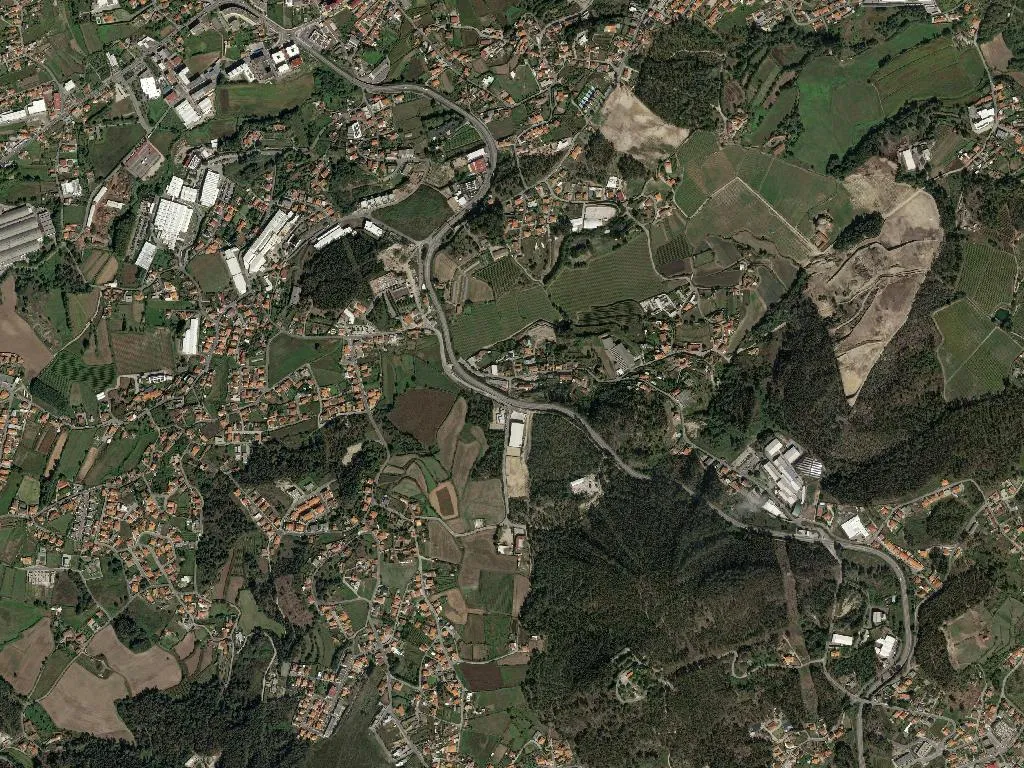
Morning light lands on the zinc roofs of Mogege the way a hand settles on linen already warm from sleep – slowly, deliberately, impossible to brush off. Minho humidity turns that light liquid: it clings to cotton, pearls on eyebrows, and flavours the air the way fresh milk flavours coffee. Within 286 hectares the village organises itself around two converging footpaths and a single tarmac thread that peters out into vines. Nothing here demands your attention; it simply accumulates, like dust that happens to be golden.
Crossroads for the Stubborn
Heavy traffic in Mogege means rucksacks and walking poles. Both the inland Central Route and the coastal Portuguese Caminho swing through the parish on their way to Santiago, and for a few hours each day the cafés fill with blister-plasters and half-formed confessions. Locals recognise the rhythm: a pause at the fountain, a squint at the 209-metre altitude marker, a last lungful before the path tips north-west toward Ponte de Lima. Pilgrims leave, the village exhales, and the only souvenir is the faint jangle of a scallop shell receding down the lane.
Granite, Rain and Loureiro
Forget postcard rows of manicured vines. Mogege’s plots are pocket-handkerchief, wedged between outcrops of granite that drinks February rain and releases it, drop by drop, through July. The result is Vinho Verde with a green-apple bite sharp enough to make your eyes water – the sort of acidity that keeps grandmothers awake for the 10 pm novela. No architect-designed cellars; fermentation happens in the basement beside last winter’s firewood, with spider-webbed demijohns arranged like artillery. Ask for a glass and you’ll get the 2022 vintage, a slice of chouriço, and a ten-minute lecture on why Loureiro hates wet feet.
When the Village Doubles in Size
For four days round 13 June the Festas Antoninas override the usual calendar. Arches of yellow broom and white marguerite turn the lanes into tunnels of pollen, sardines hiss on makeshift grills, and someone’s cousin from Paris ends up singing fado at 2 a.m. The parish council’s census lists 1,874 residents, but during the procession the priest counts closer to 3,000. Nobody minds: extra bodies mean extra hands to carry the saint, and anyway, the bar runs a tab system no one reconciles until morning.
Inventory of an Ordinary Day
There is exactly one holiday cottage, no gift shops, and a bakery that opens when the baker wakes. The postwoman also drives the school run; the grocer doubles as the taxi dispatcher; traffic lights are unnecessary because Arménio’s dog has opinions about strangers and expresses them loudly. Dusk smells of woodsmoke and bruised grass; stars compete with the orange glow from Braga thirty kilometres away. Stay for an hour or a week – Mogege offers no checklist, only a silence so complete you can hear your own pulse negotiating the altitude.