Full article about Novais
Granite lanes, loureiro vines and a Camino watermill—Novais keeps time with thyme-scented festas
Hide article Read full article
The late sun slips down Rua do Cabo, turning the granite walls to flecks of salt. At six the church bell—cracked during Mass in 1978—clangs a semitone flat, but no one flinches; it only means the parish hall has shut and the widows are shuffling to Café Merendas for a bica before dark.
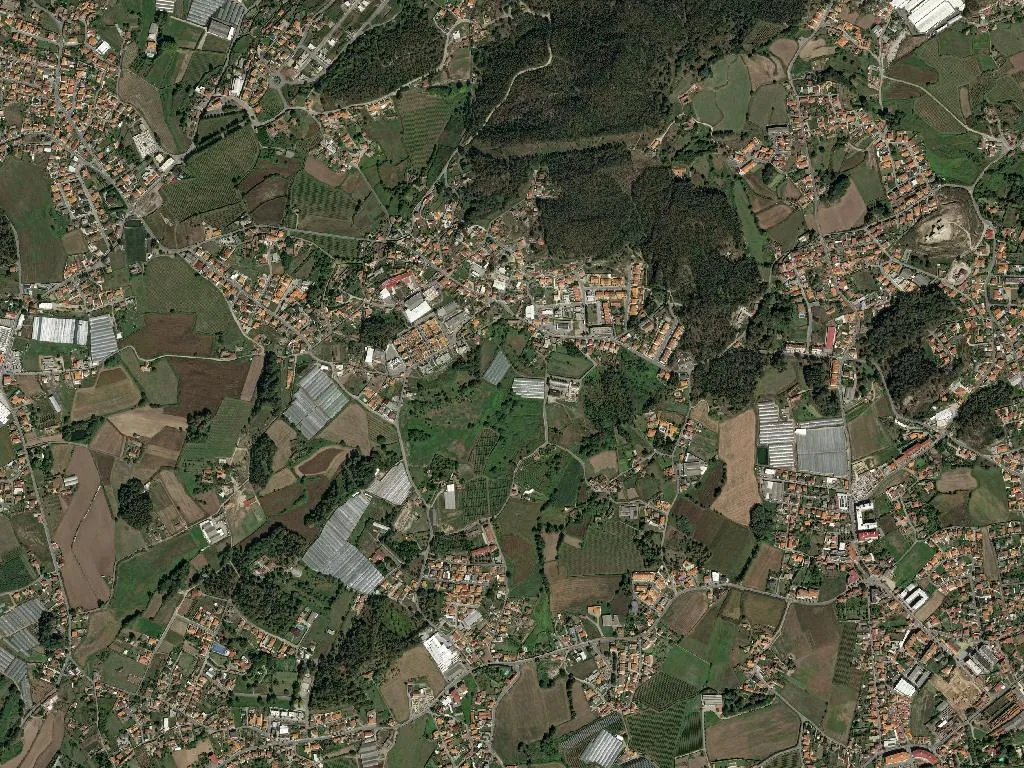
Novais stretches across 140 hectares you can walk in fifteen minutes: from the granite cross of St Anthony to the new cemetery, past the school that lost its last pupil in 2015 and the spring where women still fill five-litre bottles. The village sits at 162 m; the Atlantic is 40 km away, so if you want horizon you climb to Nossa Senhora da Graça in Guimarães. Here the land rolls gently, enough for the white butterflies that skim the loureiro vines to vanish halfway up the slope.
Population 1,403 on paper, 300 of them over seventy. Each morning they queue at the health centre, open only till noon. In 2022 the primary intake was sixteen children. Yet on the night of Santo António the padlocked school creaks open and the festa committee serves kale soup in earthenware bowls inherited from grandmothers.
Three-day party, no microphones
The Festas Antoninas begin on the Saturday nearest 13 June. By nine o’clock the father of Carolina—now working in Shoreditch—is stringing coloured bulbs above the Escada. Fresh-baked cuca appears on the church steps: not for sale, just offered to whoever passes. Evening brings local band Sapo de Abril, but the amplifier is off by 1 a.m.; the parish-council president needs to water his vegetable plot. Sunday’s procession carries Saint Anthony’s throne, cushioned with wild thyme cut at dawn. After Mass the air smells of burnt myrtle—an annual exorcism, the priest jokes, against moths and darker things.
Passing pilgrims, quick lunches
The Central Way of the Portuguese Camino cuts through Novais beside an abandoned watermill, crosses the N104 at kilometre 42. Walkers ask where to eat; they’re directed to Merendas, warned that courato (crisp pork-skin sandwiches) appear only after eleven. In Portela, Dona Alda rents two spare rooms for €15 and slips guests a chorizo roll at breakfast. A handwritten note on the gate: “Closed when the dog is loose.”
Loureiro for the table, not the shelf
Vines grow on schist terraces, lashed to chestnut posts hauled from the Cabreira hills. The loureiro grapes become 300-litre barrels of house white, decanted into three-litre jars that reappear on Sunday tables alongside wood-oven rojões prepared by Zé Mário’s wife. Those without vines plant potatoes: the soil behind the cemetery is iron-red, yielding small sweet tubers perfect for the chicória soup eaten at São Martinho.
Dusk smells of burnt bracken. On Rua de Baixo Sr Ramalho lights his hearth with cork-pine cones, then waits at the gate for the seven-thirty bus from Famalicão that may bring his granddaughter. There are no monuments, no viewpoints, no public wi-fi. Only the hinge on Celestino’s gate that squeaks in the same spot every evening, the scent of new olive oil drifting from the co-op, and the grocery light that stays on until ten—just long enough for Ana to buy milk and hear the neighbour predict a hard year ahead.