Full article about Dawn shadows & scallop shells in Oliveira
Granite lanes, vine-latticed walls and June sardine smoke in Vila Nova de Famalicão’s quiet parish
Hide article Read full article
The granite setts sing underfoot, a dry scrape that tells you the stone has been here longer than any living soul. Dawn in Oliveira throws a lattice of vine-leaf shadows across whitewashed walls; the air carries the Atlantic-fed moisture that keeps Minho green even when August arrives. You feel the damp on your forearms, taste it in the slight petillance of the white wine poured at 11 a.m. in the village café.
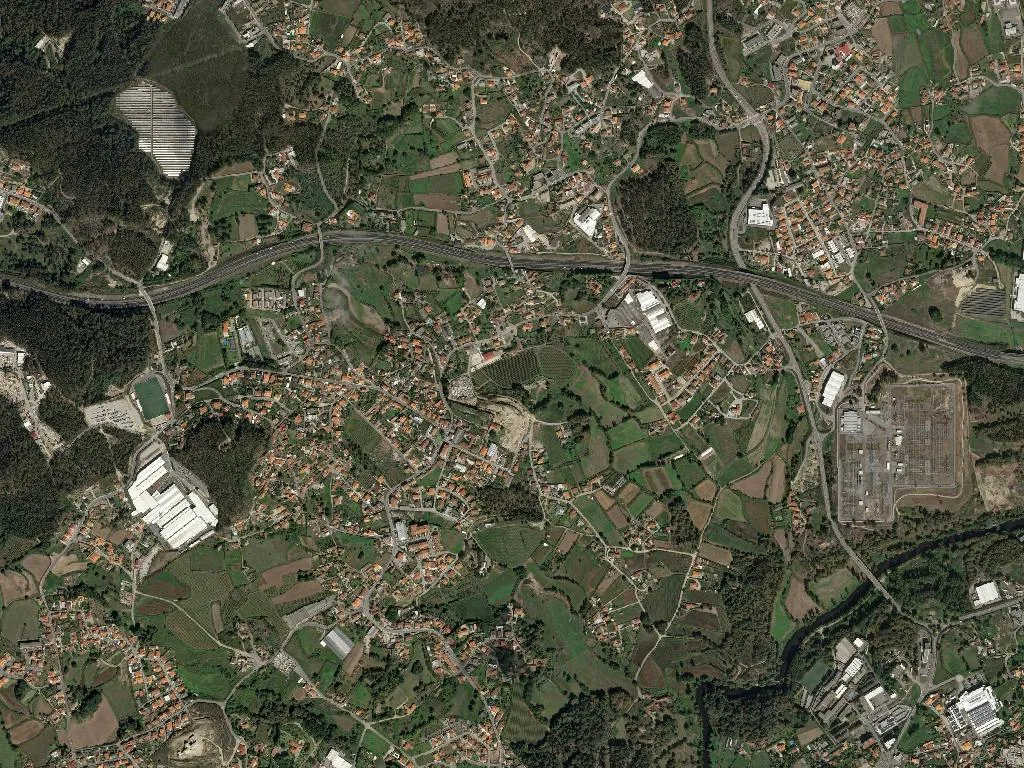
Oliveira occupies a shallow bowl between the Ave valley and the low ridge of Falperra, 451 hectares that sit just high enough – 120 m – to escape the valley fogs. Some 3,300 people live here, enough to keep the bakery busy but never enough to clog the single traffic light. Demographics read like much of rural Portugal: almost twice as many over-65s as under-18s, yet the parish council still runs after-school clubs and the summer philharmonic still rehearses every Thursday in the bandstand.
Footfalls on the pilgrim detour
Two separate Santiago routes slice across the parish: the Central Portuguese and the Coastal Northern. Neither is spectacular; both are honest. You walk between small plots of maize and allotments wired against rabbits, past 1950s houses whose owners have left out garden taps marked “água potável” for thirsty strangers. Yellow scallop-shell waymarks appear on junction walls, hand-painted, the size of a dessert plate. Late afternoon, when the sun skims the ridge, you may spot a lone backpacker marching north, poles ticking like a metronome against the tarmac.
June belongs to the Festas Antoninas, three days of processions, fire-crackers and makeshift grill stalls set up in the school playground. Emigrants fly back from Paris and Neuchâtel; grandparents hand out €5 notes for fairground rides; local teenagers invent dance routines to Brazilian funk beside the wine kiosk. By midnight the square smells of charred sardines and burnt sugar, and the priest has long given up trying to keep the loudspeakers down.
Green wine, green landscape
Oliveira lies inside the Vinho Verde demarcation, a geological sentence written in granite and 1,400 mm of annual rainfall. Vines are trained high on pergolas, leaving room beneath for cabbages or a row of potatoes; the resulting wine is the light, lime-edged kind you chill to eight degrees and drink before the next cloudburst. Quinta da Lixa, five kilometres west, will sell you a bottle for €4.50, but the café simply fills a litre from the tap for three.
Meals follow Minho convention without culinary theatre. Caldo verde appears by 7 p.m.; winter brings papas de sarrabulho, a cinnamon-dark stew thickened with blood and bread. There are no tasting menus, just Tasca do Zé and Café Central, where the dish of the day is announced aloud and the bread arrives still hot in a paper sleeve. Order rojões – nuggets of marinated pork, crisply fried – and you will be asked if you want the optional “uma clara” of regional sparkling to finish.
How to come, when to leave
With only two licensed guesthouses – both converted village homes – Oliveira discourages long stays. The rhythm is: arrive mid-morning, walk the caminho for an hour, drink a glass of loureiro under the plane trees, leave before the church bell tolls six. Risk is minimal, crowds non-existent; phone signal flickers only in the cemetery car park. You depart with granite dust on your shoes and the certainty that the vines, still dripping Atlantic moisture, will be here long after your flight home has taken off.