Full article about Oliveira’s June Sardine Smoke & Camino Crossroads
Bells, charcoal-grilled sardines and two pilgrim paths meet in this granite Braga village.
Hide article Read full article
The bells of Santo António slither downhill and slip through the open lattice, chased by the oily perfume of sardines cremating over charcoal. In June, Oliveira keeps its eyes wide: women unbraid their daughters’ hair on the threshold, men tune guitars that smell of camphor and woodworm, and barefoot children pursue paper flags trembling in the furnace air. Two thousand four hundred and eighteen souls, but the square swells until the trestle tables nudge the medieval cistern and every stranger is offered a seat.
Crossroads of stone and dust
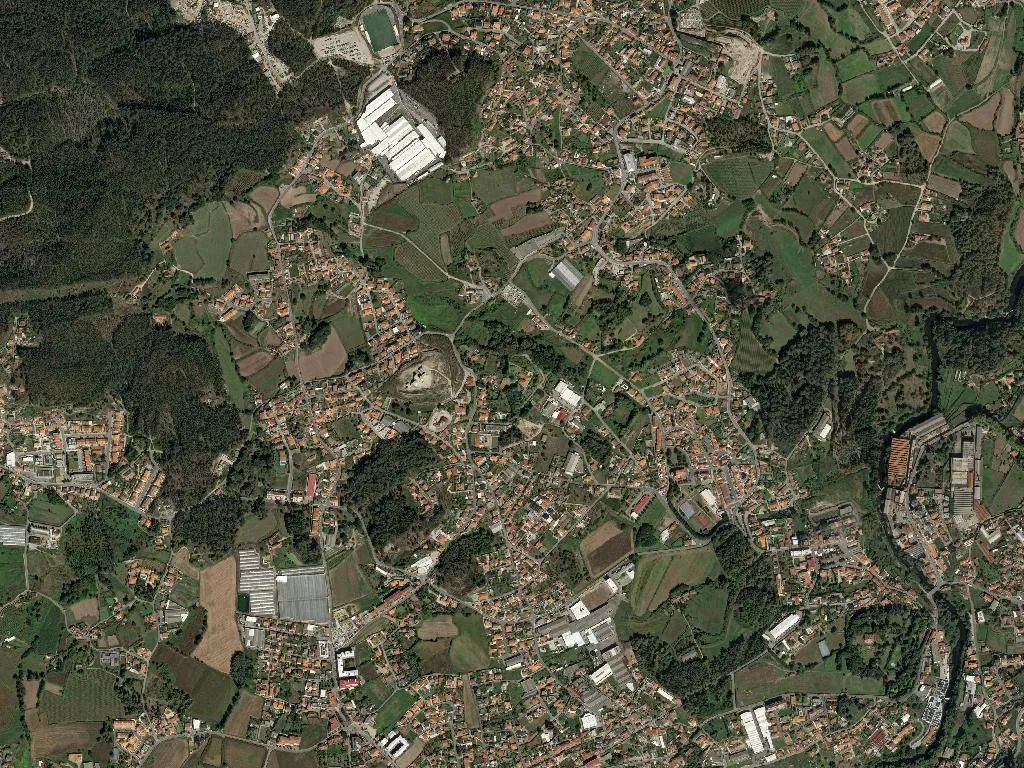
Two Camino routes kiss here, yet most walkers never realise they have stepped into Oliveira. The Central arrives on the municipal road, flanked by walls where ivy clings with burglar determination; the Northern drops down Rua do Calvário, past doors built for shorter centuries and windows still barred with walnut-dark slats. Two square kilometres is all, but lift your gaze and, on rinsed mornings, Gerês glints iron-blue on the horizon.
Below the village the vine terraces keep to their ancient arithmetic. The green here is lighter, almost lime, and the trellises lean on granite posts that, according to José-of-the-tavern, arrived by train from Guimarães back when Pedome station still breathed. The wine has no brand: it is poured into red clay bowls or rinsed plastic bottles, wakes the tongue with a fizz that begs for a hunk of corn bread and dripping.
Ledger of departures
The primary school shut five years ago. Desks are stacked in the classroom where teacher Amélia once chalked verbs that smelled of dust and Marie biscuits. Now the children leave before eight on the bus to Famalicão, returning with playground sand in their satchels. Meanwhile the square fills with cap-wearing men at ten o’clock sharp: they speak of rain, of milk prices, of the back pain that refuses exile. Six hundred and sixty-two are over sixty-five—almost a third of the roll-call—and they know one another only by ancestral nicknames: the Farrier, Rosa-of-the-Corner, the Boys of São Lázaro.
June, unextinguished
Sometimes it rains. Even then the coals glow beneath tarpaulin stretched between houses. Chouriço is bought from Zé-of-the-Farm, who still slaughters in January and hangs his smoked hoard in the loft from bamboo poles. The women ferry boiled cod in aluminium pans swaddled in crochet. Men lever corks with pocket-knives, pour first for guests, then neighbours, finally themselves.
When the litter of Santo António crosses the church threshold, the candles gutter in the night breeze and are left to die where they fall. The procession inches downhill, past the cobblers where crushed strawberries bleed onto stone—sweet scent braided with incense and crowd-heat. In the square the concertina strikes up a vira no one quite remembers, yet everyone dances. At three a.m. the last glass is drained, the sardine fire collapses to embers, and someone croons half-remembered lines: “St Antony, send me a good lad; if you can’t, leave me as I am.”