Full article about Requião: Dawn bells over vineyard terraces
Camino pilgrims, Loureiro vines and June sardines in a granite Braga hamlet
Hide article Read full article
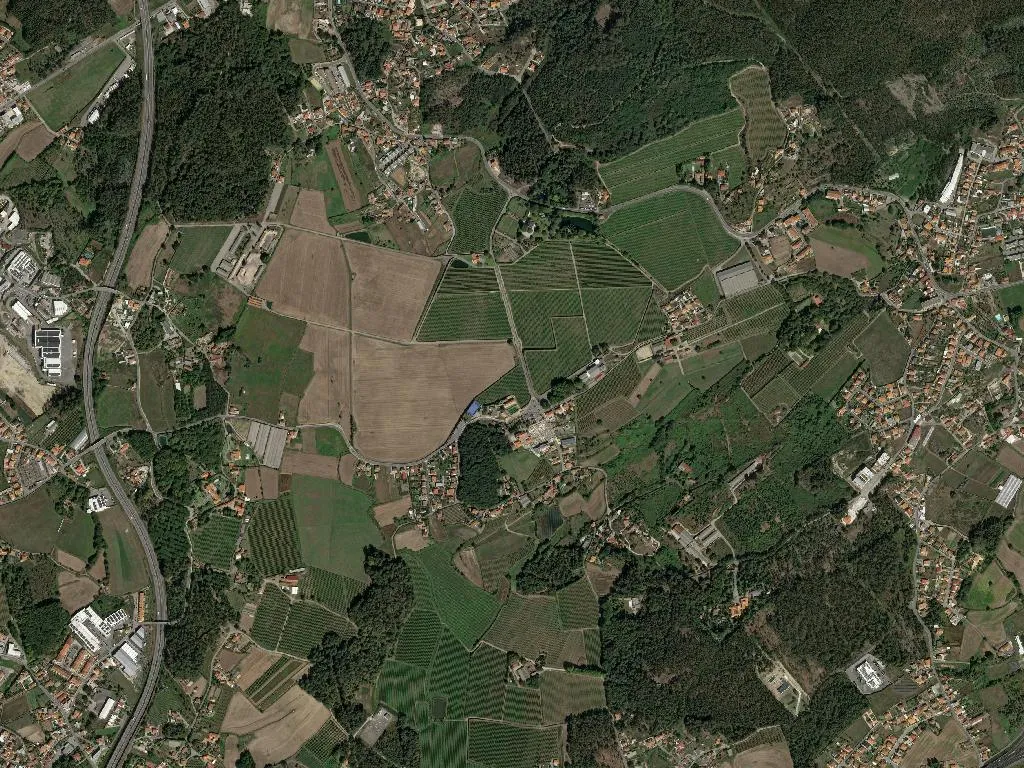
The bells of Santo António strike 7.30 a.m. while the air still holds the night’s chill. At 108 m above sea level, the sound ricochets through Requião’s granite terraces and moss-padded walls, carrying the smell of newly turned earth and the faint metallic trace of leaf-mould from the vineyards that stripe every slope.
Two Routes, Same Stone
Both the Central and the Northern branches of the Portuguese Camino de Santiago cross the parish. The calcada in the centre is scalloped by centuries of pilgrim staffs; the granite is polished smooth exactly 1.5 m from the ground—breast-height of a walker leaning on a bordão. Five wayside chapels punctuate the itinerary; the one dedicated to São Bento is the practical choice—stone bench, drinking spout, shade.
3,197 people occupy 7.5 km² here, and the land-use pattern is medieval in its logic: vines on the crest, house in the middle, vegetable plot below. There are no monuments, only continuity—rows of espaliers, trellises of Loureiro and Arinto, and the occasional scarecrow wearing a faded Euro 2016 T-shirt.
June, Three Days
The Festas Antoninas anchor themselves to the weekend closest to 13 June. Rockets go up at 6 a.m. on Saturday; by 5 p.m. the statue of St Anthony leaves the church and processes downhill to the parish square. That night the sardine count is ruthless—€3 buys charcoal-black fish, potatoes, pepper salad and as much Vinho Verde as you can keep in a small plastic glass. Stalls shutter at 2 a.m.; on Sunday at 11 a.m. the picnic tables appear and everyone produces their own casserole, their own bread, their own story.
Outside those seventy-two hours Requião reverts to a hush broken only by the pneumatic hiss of a pruning gun. Five legal beds are scattered through three private houses; if you want to taste the wine you knock on the co-op cellar door (opens 9 a.m., closes for lunch at noon). A 50 cl tumbler costs 80 cents and comes straight from the stainless-steel vat—sharp, lightly sparkling, the colour of pale apple peel.
What lingers after you leave is the acrid green scent that clings to jumpers and the silence that settles after 10 p.m.—a reminder that here the calendar is still drafted by rainfall and the turning of vine shoots, not by any tourism department.