Full article about Vale São Cosme: mist, granite & pilgrims’ boots
Walk Minho’s twin Santiago trails through vineyard-wrapped Vale São Cosme, Telhado e Portela.
Hide article Read full article
Where earth and granite meet
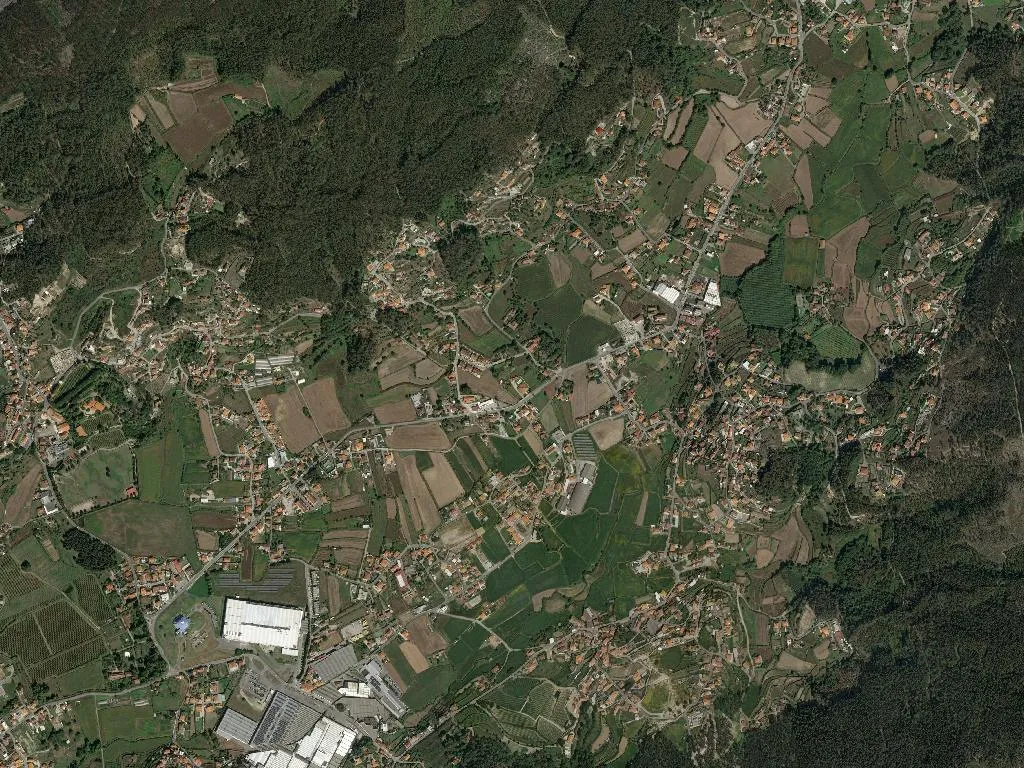
The smell of turned soil arrives before any signpost. It is Minho’s signature: damp clay, last year’s leaves, moss that silver-stones every dry-stone wall. At 173 m above sea-level the night’s chill still clings to the vines; low mist erases the margins between plots. A cockerel throws its complaint across the valley; closer, the scrape of a hoe on granite answers back. You have crossed into the civil parish that Lisbon’s paperwork calls Vale (São Cosme), Telhado e Portela, but the land itself filed the deed centuries earlier.
Pedigree in stone
The toponym “Vale” carries the dedication to St Cosmas, proof that medieval churchmen drew the map. More telling are the granite escutcheons set into manor gates—Ataíde, Noronha, Coutinho—families who bankrolled the 15th-century caravels and, in return, were granted these slopes. Their influence is legible in the geometry of the countryside: long, straight muros dividing wheat from vine, a chapel placed exactly where labourers’ feet converge at noon, the square-court farmhouse that always faces southeast. Even the ironworks that cooled here in the nineteenth century—Minho’s brief flirtation with heavy industry—were arranged along the same grid.
Two pilgrim roads, one village bar
Very few corners of Europe host a double confluence of Santiago routes. The Central and the Northern Portuguese Ways slip into the parish on parallel ridges, exchange glances in the hamlet of Telhado, then diverge again. Spring and autumn bring the nylon swish of rucksacks, scallop shells clacking against Leki poles. Seven discreet guest rooms—no boutique signage, just a zinc bucket of hydrangeas by the door—absorb the demand. Walk fifty metres with the pilgrims and you adopt their cadence: uphill exhale, downhill shoulder-roll, boots clocking the same schist the Romans quarried.
Iron, pork fat and green fire
Order the arroz de sarrabulho and the waiter first asks if you have a free morning; the blood-rice is dark, viscous, insistently metallic, calmed only by the acid snap of just-pressed white. The pork arrives as rojões—cubes flash-fried so the rind crackles while the interior stays rose. Between mouthfuls the caldo verde steams in a hand-thrown bowl, kale sliced filament-thin so it dissolves into potato liquor. The wine is youthful Loureiro, barely 11.5 %, bottled the previous February; its prickle shears the fat and resets the tongue for the next assault.
When every street belongs to St Anthony
On the eve of 13 June the parish’s three villages stage rival Festas Antoninas. In Vale the brass band strikes up at dusk; in Telhado the procession detours past the old forge so the saint can bless the anvils; in Portela children drag tin-can floats wired with LEDs. Sardine smoke drifts through the incense, and grandmothers—1,020 residents are over sixty-five—guard plastic chairs like theatre royalty. Administrative merger dissolves for twenty-four hours; each hamland insists its fireworks were loudest, its sangria sweetest, its Anthony most delighted.
The weight of what is still green
Late afternoon, sun flat across the rows, a grower cups an unripe bunch. The berries are marble-hard, weeks from véraison, yet already fragrant—crushed tomato leaf, green apple skin, something peppery that sticks to the palm long after the hand is withdrawn. It is the scent of a harvest that has not happened, a place that keeps its future in the present tense. You leave with it under your fingernails, proof that the Minho does not release you; it signs its name in acid and chlorophyll until you return.