Full article about Vermoim
Board-marked civic centre, candle-smoked chapel, home-made nata for passing pilgrims
Hide article Read full article
The council wall still holds the sun
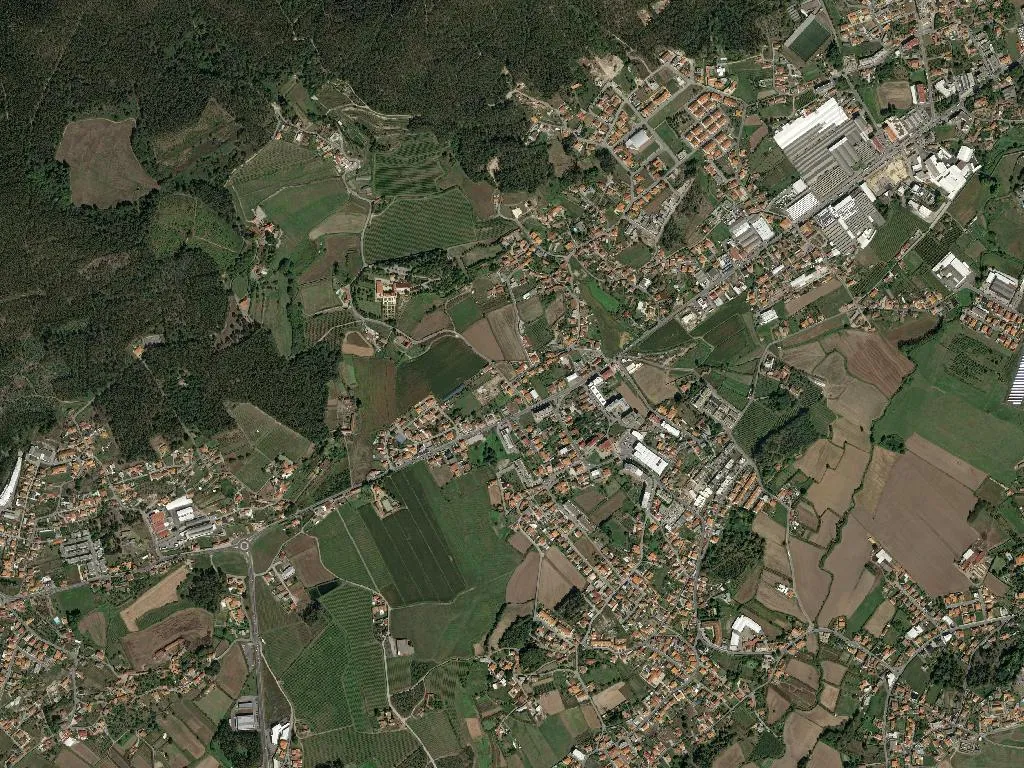
At 139 metres above sea-level the parish council’s raw-concrete façade hoards the last heat of the day, the kind that only arrives after six. Around it, vines survive on plots once earmarked for cul-de-sacs, their trellises like deckchairs on a battlefield. The building beside them—Rui Mendes Ribeiro’s 2019 civic centre—was fêted on ArchDaily for its board-marked concrete and black-brick honesty, yet it wears the ridge like an old shepherd’s coat: tailored, but comfortable with cow dung on the cuffs. Vermoim has 2,947 inhabitants; few enough that you’ll meet the same eyes twice, enough that the bakery queue still forms.
Chapel, council, crust of bread
The chapel of São Sebastião is a one-room whitewash rectangle with a door built for 18th-century shoulders. Inside, the hush is thick as wet oilskin—centuries of candle-smoke and unamplified prayer. Three strides away, the council chambers glitter with glazing. They coexist without irony: the bell marks the hours, the router keeps the minutes. Both pour coffee from the same machine; only the cup changes.
Pilgrims, walkers, dogs that swear in Galician
Here the Central and Coastal routes of the Camino split like trouser seams, crossing the parish as if cutting through an open kitchen. Pilgrims stop at the granite fountain, refill plastic bottles and ask about pastel de nata. The answer is yes—home-made, handed over in a plain bag, eighty cents. On the town hall’s night hike the same mongrel that daylight barked in Portuguese now sounds suspiciously Galician. Eight kilometres of stone walls later you reach Famalicão, but down here the satnav sulks and locals still give directions via long-dead grocery shops.
Santo António’s party without a hashtag
June arrives in strings of coloured bulbs slung between balconies like washing. The philharmonic band launches into the same medley it played in 1987; sardine smoke settles on shirt collars; a grandfather dances with his granddaughter to “Onda Onda”. Of the 593 residents over sixty-five, half once carried Saint Anthony’s statue when the procession still used mules. No tickets, no wristbands, no one live-streaming. The only selfie is a father lifting his son onto his shoulders to see the bangers fizz.
Worms, vines, green that isn’t emerald
Local etymologists swear Vermoim derives from vermis—Latin for worm—though whether earthworm or bookworm is unresolved. What matters is the vineyard below, where Loureiro and Pedernã are pruned to crew-cut discipline. In August the grapes pick up the same sharpness as a schoolboy who’s dunked his lunch in too much vinegar: perfect for vinho verde, the lightly spritzed white that needs no cocktail flourish. If you want shop windows, drive to Famalicão; if you want tendrils, stay.
Eight kilometres and a coffee with two cinnamon sticks
Among the parish’s six guest rooms there are no infinity pools or concierges. There is linen smelling of sun, a window onto the threshing floor and a tabby that treats the place as a members’ club. The run into town takes the same twenty minutes you’d spend queuing at the supermarket—back before the crema collapses. As you leave, the chapel bell strikes once, an acoustic full stop. The vines darken, the council flicks off its lights, and the smell of warm topsoil—August’s farewell note—rises to meet the road home.