Full article about Coucieiro: Where Oak-Smoke Meets Granite
Sunken tannery lanes, June pig-roast haze and September pilgrim horns in Vila Verde’s Coucieiro.
Hide article Read full article
The scent of smoke and saints
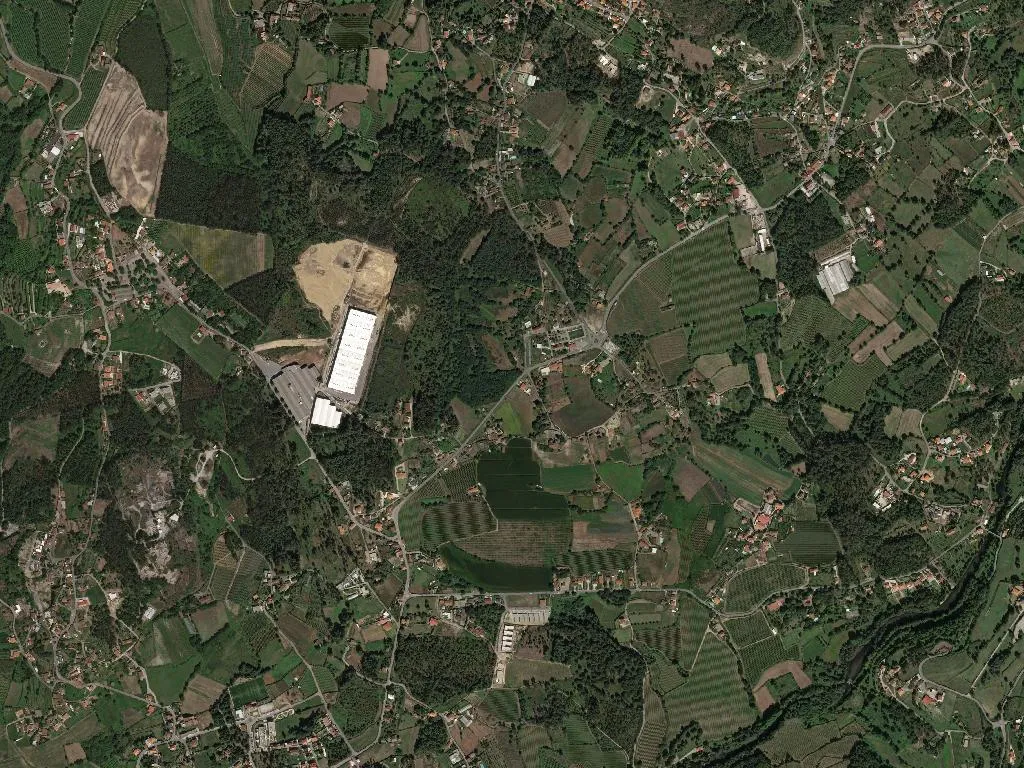
At 101 metres above the Minho valley, the air in Coucieiro carries a perfume of smouldering oak and Sunday roast. Come June, when the village’s 526 inhabitants stage the Festa de Santo António, the haze thickens: whole pigs turn on iron spits in front gardens, dripping fat onto the embers while brass bands rehearse in the narrow lanes between granite houses. Within 4.2 km², life is still paced by the agricultural calendar and the steady rhythm of parish processions.
A name tanned into the landscape
Coucieiro derives from the Latin cucurio – literally, leather house. A 1541 royal charter already lists “the parish of Coucieiro” with 40 hearths, and the trade left tangible scars. Beside the 17C granite cross in Largo do Cruzeiro, the old drove road from Braga’s tanneries to the summer pastures of Peneda is still visible as a sunken lane. Down in the hamlet of Paredes, rectangular stone tanks once used for curing hides now irrigate vegetable plots, their sides moss-soft and warm to the touch.
Processions that mark the year
Religion sets the metronome. On 13 June, Santo António turns the village into Vila Verde’s temporary capital: a 17:00 procession leaves the Romanesque mother church, swings past the modern parish hall on Rua Eng.º Adelino Amaro da Costa, and returns for open-air Mass beneath fairy lights strung between plane trees. The bigger draw, though, is the romaria of Nossa Senhora do Bom Despacho on the second September Sunday, when pilgrims hike in from Arcos de Valdevez and Ponte da Barca. Since 1953 the local brass band has struck up a hymn composed by native son Joaquim da Silva; older residents still mouth the cornet solo from memory.
Tastes with postcodes
Dona Lurdes’ grocery receives Carne Cachena da Peneda DOP every Friday – chestnut-coloured beef from the upland cooperative at Castro Laboreiro. Whole legs disappear into clay ovens for weekend roasts; diced shin flavours Monday’s caldo. The counter also holds Quinta da Raza’s Vinho Verde: 11 % alcohol, schist-granite soils at 250 m, acidity sharp enough to slice the fat. Dessert is Coucieiro’s own sponge, the Gomes family recipe deposited at the Braga Chamber of Commerce in 1923: twelve eggs per kilo of sugar, 45 minutes in a wood-fired oven, the crumb the colour of burnished ivory.
Four rural houses take guests – Casa do Forno (6 beds), Quinta do Cruzeiro (8), Casa da Eira (4), Casa do Rio (5). June rates hover around €50 a night, firewood and newly laid eggs included.
The texture of an ordinary Tuesday
Sixty-two children under 14 and 125 residents over 65; the population has fallen a third since 2001. Yet the primary school still teaches Minhot dialect – 18 pupils in 2023/24 – and the mobile grocer parks on the church square every Tuesday and Friday. Potatoes from S. Pedro do Sul (80 c/kg), onions from Barcelos (€1.20). At noon the bell tolls the Angelus; labourers down tools. When the agricultural co-op’s tractor rattles along the EN308 at 18:00, cows know it is time to leave the meadow for the byre, and the smoke of dinner fires begins to rise again.