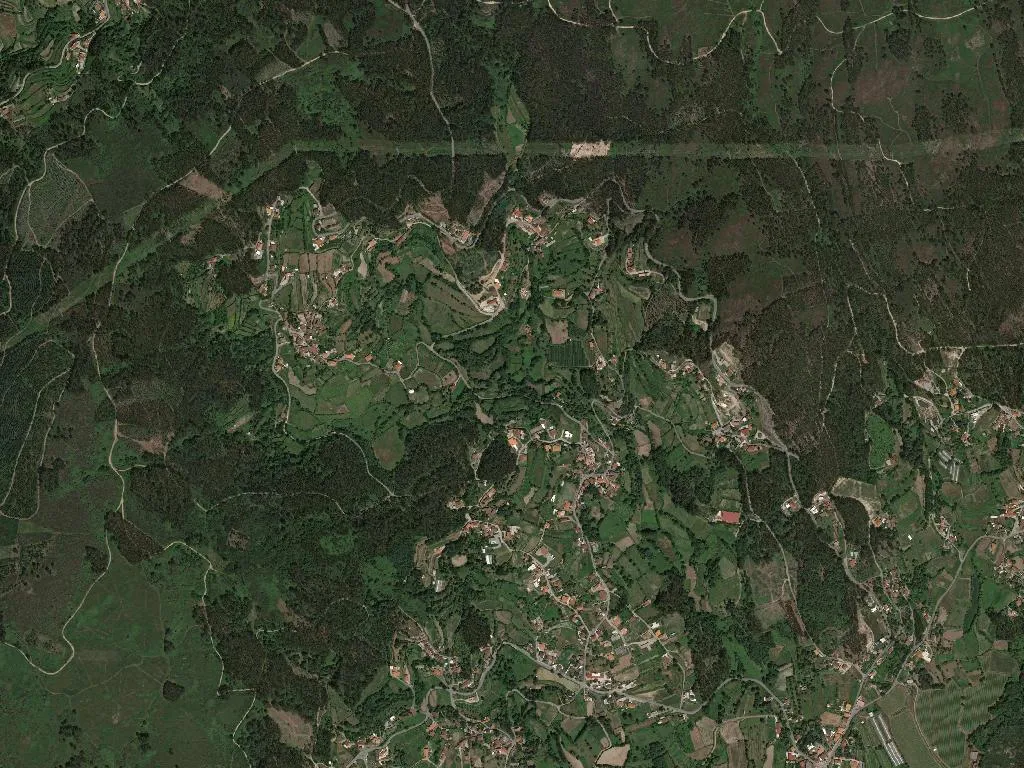
Full article about Dossãos: Where the Eight-O’Clock Bell Rules the Valley
Stone lanes, sardine feasts and cow-bell Mondays in Vila Verde’s tiny schist hamlet.
Hide article Read full article
The Eight O’Clock Bell
The bronze bell of Santo António strikes eight times—never nine—and the sound rolls down the schist slope like a gentle reprimand. In Dossãos, 235 m above the Ave valley but feeling higher, this is the only timepiece that matters. When it rings, women straighten from the lettuce beds, men lean hoes against granite walls still holding yesterday’s sun. The stone, charcoal-dark at dawn, blisters the fingers at dusk; heat lingers like a slow-burn memory.
Three square kilometres, 424 inhabitants. The census is polite fiction. What exists are two cafés (one shuttered since 2019), a mercearia selling UHT milk and dusty packets of powdered Nescafé, and four lanes that echo with the squelch of wellingtons after irrigation. Of the 120 residents over 65, a third live alone: water jug on the bedside table, TV remote aligned with the right hand. The 54 school-age children learn quickly that the 07:10 bus to Éntula does not wait; miss it and your mother rings Dona Alda, the only pensioner who still keeps her licence and a full tank.
June Weekend
When the feast of Santo António arrives, the parish council commandeers Sr Aníbal’s maize-drying terrace. Tables are borrowed from Celeiró, plastic chairs from the town hall, a stage cobbled from two planks and four beer barrels. Viana do Castelo supplies the sardines, already cleaned; the baker of Prado delivers bread still steaming; tio Fernando fills five-litre garrafões with loureiro-scented Vinho Verde at the Pico cooperative. At 22:00 a single firework cracks like a whip; Dona Lurdes’ spaniel barks once, then crawls under the trestle. Returning emigrés from Paris wear trainers too white for the dust. They greet one another with two kisses, the third abandoned mid-air, a hand left resting on a shoulder.
Monday Meat
On Mondays the butcher receives half a Cachena cow, its flesh the colour of damson skin, smelling of wet fern and autumn. Dona Odete braises it with bay and a trickle of her last harvest’s loureiro. Potatoes arrive in 50 kg sacks that her son swings down from the Peugeot like Atlas unloading the sky. Sunday lunch is already underway: wood-oven roast, then the pig’s blood stirred with an olive-wood spoon into sarrabulho porridge, the iron bowl set in the embers until it quivers like black custard.
Between Vines and Clouds
Sr Joaquim’s vineyard terraces number four; his neighbour’s, five. A dry-stone wall, collapsed twice, channels April rain like espresso dripping through sugar. Pruning is done with a red-handled knife; in August three alvarinho berries crushed on the tongue decide the harvest date—if the palate tingles, the sugars are ready. Picking starts at six while dew still welds the grapes to the wicker; at eleven the crew breaks for bread, home-cured chouriça and a glass of wine that tastes of green apple and granite smoke.
In the fumeiro above the hearth, a ham has been curing since St Martin’s Day, when the pig was killed in the threshing floor and a neighbour traded belly fat for a fat hen. Oak smoke exhales slowly, settles on the thatch, drifts back down again, so that the house seems to breathe winter through its pores.