Full article about Oak smoke & shale-scented Esqueiros dawn
Vine-ribbed terraces join three stone villages in Vila Verde parish
Hide article Read full article
The scent of wet shale and oak smoke
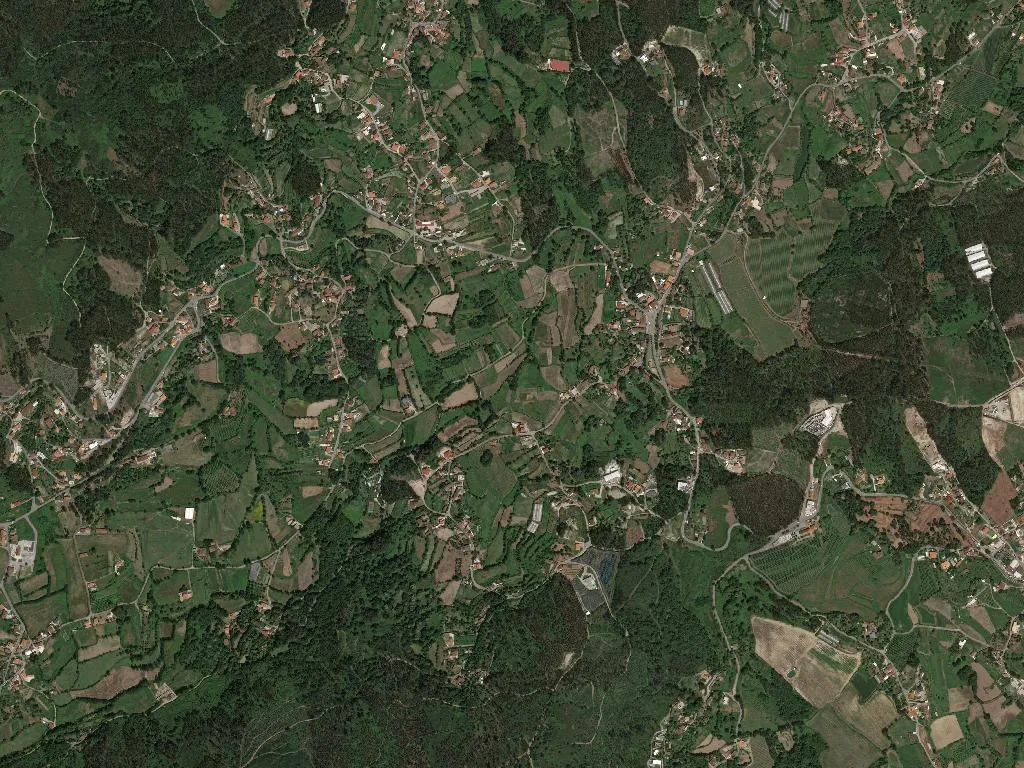
At 158 m above sea level the morning air carries two distinct notes: mineral shale releasing last night’s rain and the low, sweet burn of oak logs settling in kitchen hearths. Between Esqueiros, Nevogilde and Travassós the vineyards are trimmed into ruler-straight terraces that stripe the hillside like corduroy. When the 1729 bell in Esqueiros strikes seven, the sound rolls across barely five square kilometres and is still loud enough for every one of the 922 residents to place themselves in the day.
Three villages, one parish
Paperwork made them a single freguesia in 2013, but the three settlements had already shared a horizon for centuries. Before the mid-19th-century municipal reforms they both belonged to the now-defunct council of Vila Chã. The name Esqueiros itself is a relic of Roman salt-making—Latin scarium, from esca meaning brined fish—evidence that a small salting factory once sat on the stream that still threads the valley. Population density here is almost twice the regional average, yet instead of the usual Minho scatter of isolated quintas, houses huddle tight around each church as if the stone towers still offered protection.
Saints, fireworks and brass bands
The liturgical calendar is crowded, but Santo António owns June. Parish archives show processions in Esqueiros on 13 June dating back to 1897: the same route, the same statue carried shoulder-high through lanes barely two metres wide. Nevogilde’s municipal-style festa fills the same month with daylight fireworks and trestle tables that run the length of Rua da Igreja, jugs of Loureiro wine refilled from foil-capped garrafões. The ecumenical high point, though, is the Romaria de Nossa Senhora do Bom Despacho on the first Sunday of May. At nine o’clock the Travassós congregation lifts its painted canopy; two hours later the cavalcade meets Esqueiros’s own statue outside the mother church for an open-air mass celebrated by Father Joaquim. A single brass band scores the entire choreography.
What the menu is really made of
Forget rustic generalities—here the shopping list comes with certification. Potatoes labelled Batata de Trás-os-Montes IGP grow in Nevogilde’s lower plots, introduced in 1987 by Joaquim “Batateiro” Pinto who brought seed tubers from Chaves. The beef is Carne Cachena da Peneda DOP, deep crimson cuts from free-roaming mountain cattle; the Miranda butcher in Esqueiros receives half-carcasses every other week, each stamped with the slaughter date. Two beekeepers supply the entire parish with Mel das Terras Altas do Minho DOP: António Costa in Travassós and the cooperative Abelhas do Minho in Nevogilde. Lima-sub-region vinho verde—Loureiro and Arinto bottled at 11.5% with a prickle of residual CO₂—washes down plates of salt-cod fritters or rojões fried in toucinho.
Ageing in real time
INE statistics give the game away: 210 residents aged sixty-five or over, only 111 under fourteen. The rhythm of the lanes is set by the retired—shopping baskets swung low, conversations paused to note whose grand-daughter has arrived from Lyon. Tourism is deliberately small-scale: four guest rooms in two carefully restored houses, Casa do Batateiro in Esqueiros and Quinta da Veiga in Travassós (licence 622/2018). Bookings spike 30% every August when the emigrant summer repatriation peaks. Afternoons belong to João’s tractor, the only machine still working all twelve hectares of parish vineyard; by mid-September the communal lagar in Esqueiros will hum with the first Alvarinho ferment. Until then the loudest sound is the hinge of Nevogilde’s wood-fired bakery, opening at seven each morning since 1974 to sell yesterday’s dough baked today.