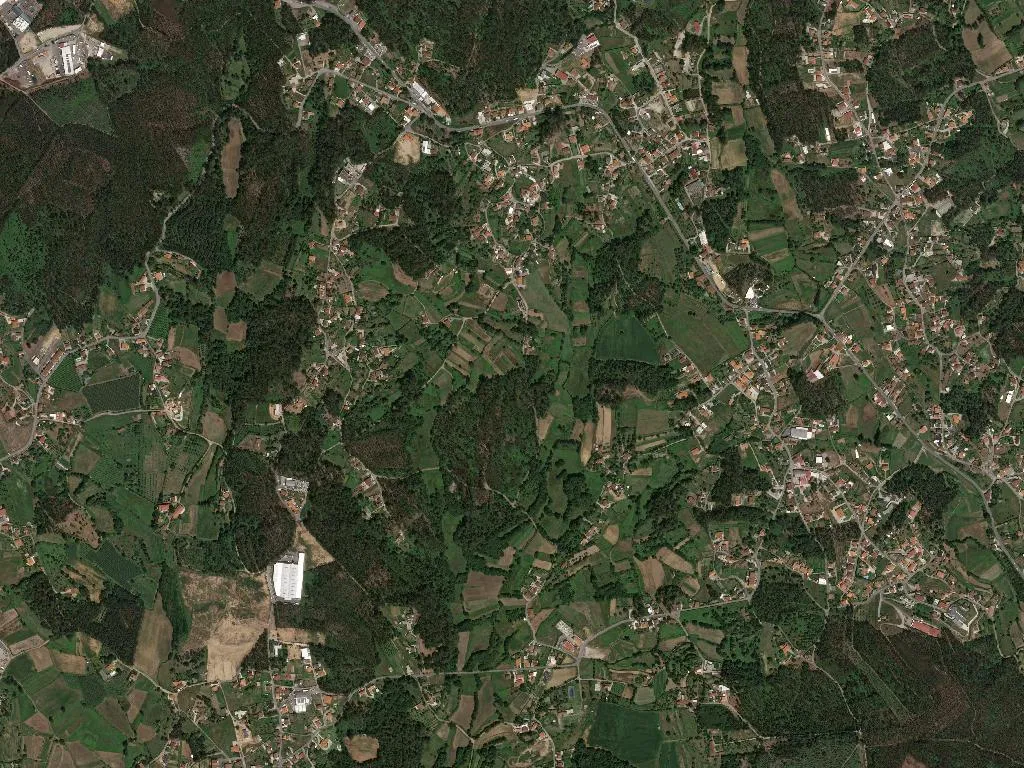
Full article about Freiriz: Bread smoke, honey air & sarrabulho Sundays
In Vila Verde’s granite cradle, every scent, bell-stroke and tumbler of Vinho Verde is village-blood
Hide article Read full article
Woodsmoke coils above the slate roofs every Friday morning while the women of Freiriz climb Rua da Igreja with wheaten loaves swaddled in linen. The scent catches you at the bend by the chapel wall where a black cat lengthens itself in the sun. At seven o’clock the bronze bell still rings—no digital recording, but the same alloy that called Sr Armando’s father to mass and now calls Armando himself, 82, who lives behind the indigo door opposite.
Altitude here is not a figure on a map; it is the taste of late-sunday air sliding into your lungs as heat slips down from the Serra Amarela and turns the village the colour of heather honey. The granite walls beyond the stone cross were stacked by the grandfather of Tonho who keeps the little garage on the corner; every schist slab interlocks like teeth, and from the gaps thyme grows that D. Albertina will snip for tomorrow’s sarrabulho rice.
What you eat (and exactly when)
Vinho Verde is not poured into crystal. It arrives in half-litre tumblers, thick as a wrist, that Zé at the tasca will refill twice for under two euros. The wine is white, faintly pétillant, and slices cleanly through the fat of pork jowl that sputters in his frying pan. Sarrabulho rice is made with chocalho—shoulder meat, not a gourmet choice but the November pig, once the cold has arrived and the animal is fat. Blood morcela hangs in the chimney recess above the hearth; streaky belly goes to the smoke-cupboard Sr Aníbal sealed with old terracotta roof tiles.
The honey belongs to Sr Albano, whose hives stand in the hamlet of Campo. No PDO label on the jar, yet he swears his bees forage as far as the Soajo hills, so the honey carries hints of gorse, strawberry tree and, in mild winters, a whisper of rosemary.
Festa still stitched by hand
June’s Santo António eve begins on the afternoon before, when ten-year-olds troop to teacher Lurdes’s garden to pick marigolds and basil. Willow arches are bent while the men still have soil on their knees; the geraniums come from D. Odete’s 1978 cutting. At nine the heavy processional litter leaves the church: eight men from Lugar de Cima who know by heart which granite step is worn smooth. The village band strikes the same brisk march; the clarinettist is the stonemason’s son, taught by his father, who was taught by his grandfather.
Sunday after the eleven-o’clock mass, caldo verde is ladled from a two-handled iron pot. D. Albertina brings her own home-cured chouriço—not for herself, but to slip into the soup of anyone who hasn’t any. No one asks; no one thanks aloud; that is simply how it is done.
Who stays, who circles back
The primary school now holds barely twenty children, yet the playground still seems to echo with the roar of forty. The elderly occupy the granite bench opposite the former bakery, though bread hasn’t been sold there for years—only biscuits and two-stroke oil. Sr Joaquim, 83, demonstrates the swing of a hand-scythe while his city-university grandson films on his phone for Instagram. Neither quite sees the joke, yet both are quietly pleased.
Nightfall brings a silence that is anything but empty: the single bark of Sr António’s dog, the metallic sigh of Sr Baptista’s tractor cooling, the invisible irrigation channel whose water you can hear but not see. Then the scent of damp earth—no metaphor, simply the clay vineyard Sr Custódio watered at half-past six now drifting through kitchens where the windows remain open to the dark.