Full article about Moure: where church bells taste of fermenting grapes
Vila Verde village keeps time by vines, saints and goat-roast Sundays in the Cávado valley
Hide article Read full article
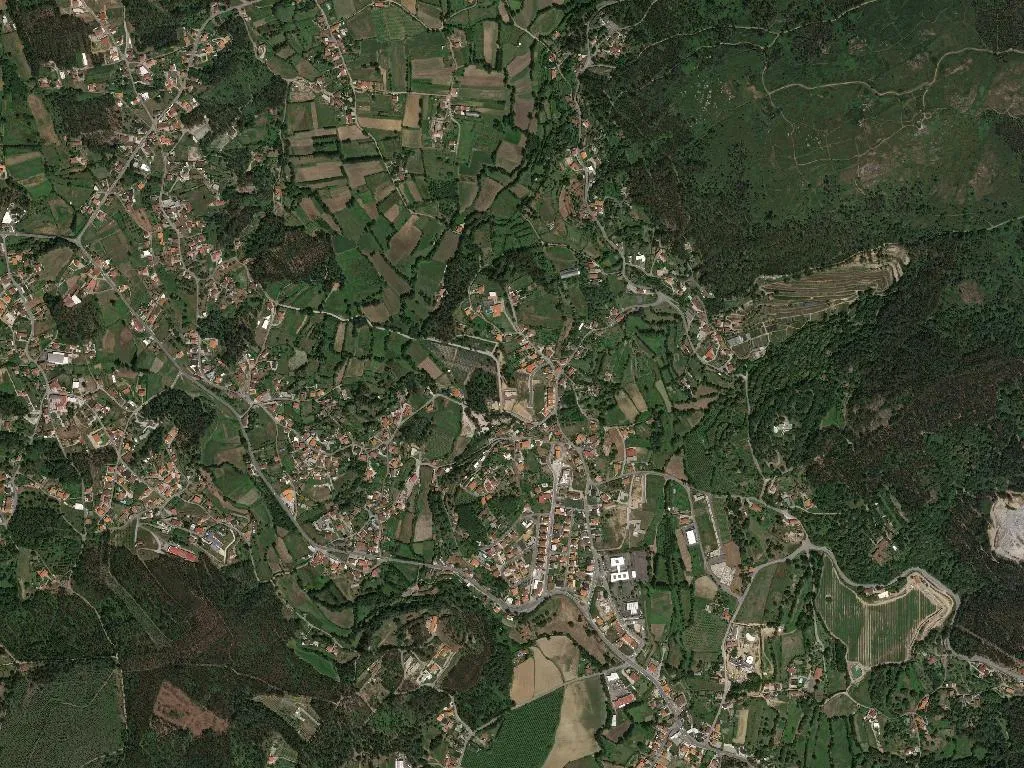
The church bell strikes noon, yet nobody here checks a watch. The note rolls down the terraced vineyards towards the River Cávado, bouncing off galvanised roofs until it reaches the valley floor. On its way back the breeze carries the sour-sweet breath of fermenting marc drifting from garage doors — the first unmistakable announcement that autumn has clocked in.
Faith written into the land
For one week in June the calendar belongs to St Anthony. Candles thicken the air inside the 18th-century igreja matriz; the churchyard overflows with folding tables and whispered bargains with heaven. Ten days later the Festa em Honra de Nossa Senhora do Bom Despacho reruns the script with brass bands hired from across the Minho and a pop-up car showroom in the car park. Between the two events comes the romaria: parishioners walk the five kilometres from Vila Verde in white trainers, rosary alternating with gossip while dust coats their ankle socks.
The village pillory — a plain granite column — stands ignored in the middle of the square. Teenagers boot a scuffed football against it; their grandfathers once learned here that an alqueire of rye was measured at 13.5 litres. Faint whip marks score the stone, but no curriculum or archive records whose back they kissed.
Vines, tables and what the land gives back
When EU maize subsidies dried up, the slopes flipped to vines. Many rows are still trodden by foot: bunches tipped into a shallow concrete lagar, the juice sheeted with muslin to keep the fruit flies out. While the must murmurs through October nights, demijohns squat between the washing machine and the family hatchback. The resulting red is sharp, cloudy and entirely local; anyone who prefers polished labels drives to the Intermarché in town.
Sunday lunch for guests means kid goat reared three doors down. Grandfather descends to the cellar for a cork-topped bottle of bagaceira brandy, strong enough to stun a wasp. Cachena beef — named for the long-horned cattle that graze the nearby Serra do Gerês — appears only at Christmas; at €18 a kilo it is rationed like jewellery. Honey comes in three-kilo tins from José’s minimarket, harvested from hives that spend the summer up in the national park and winter out here warming children’s milk before school.
The demographic pulse
Moure’s roll call stands at 1,378, yet after 9 p.m. the streets feel closer to a dozen. The primary school still manages three composite classes; when the bell rings, pupils sprint to Alda’s café for warm custard pastries. Elders occupy the terrace, knitting while they audit both their grandchildren and the approaching weather.
The pharmacy closed two years ago; for a tube of antiseptic cream you drive to Vila Verde. A GP holds surgery twice a week, but anything serious means the 28-minute dash to Braga’s hospital along the EN103, engine howling at 110 kph.
Still, some come home. Rui traded a Porto flat for his parents’ granite house and planted two hectares of Loureiro grapes. He reckons the mortgage he doesn’t have covers the diesel, and that Minho air tastes of soil, not diesel fumes. At dusk he sits on the bench opposite the church, listening to the absence of traffic, then retreats indoors before the Atlantic damp settles in his bones.
When wood-smoke merges with the manure João has just spread on the lower field, the village knows the day is done. Door by door, lights switch off. Only Remís’s dog keeps arguing with the moon suspended above the black skein of vines.