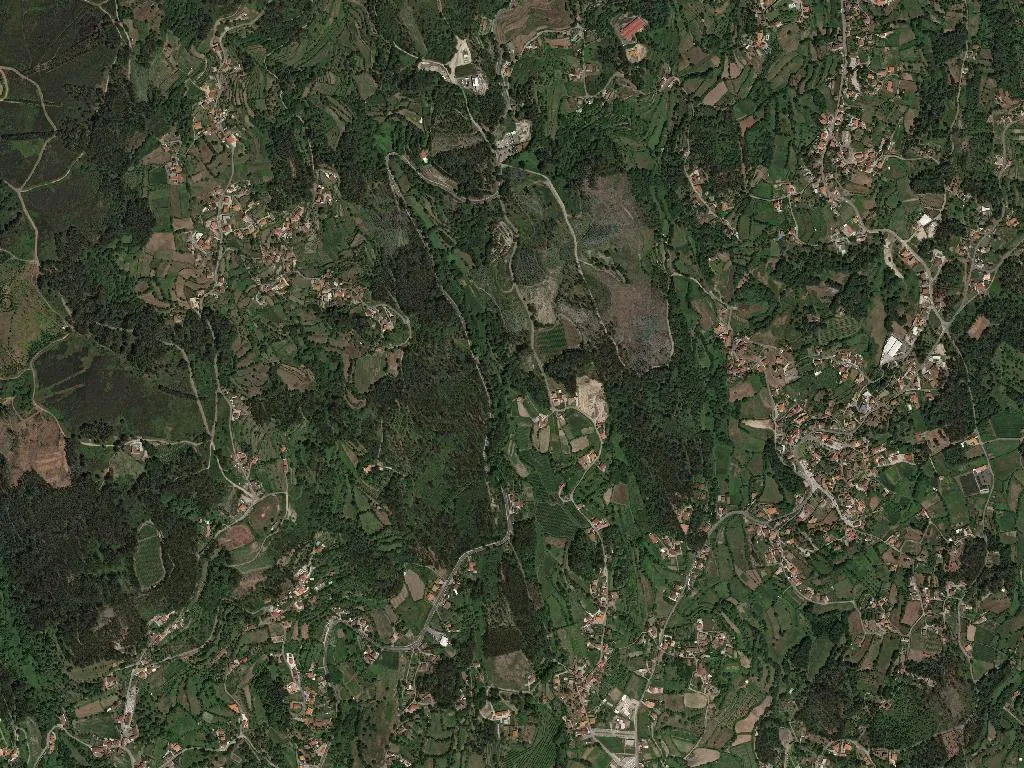
Full article about Woodsmoke & Maize in Pico, Vila Verde
Pico’s terraces, chestnut earth and chestnut-wood chorizo smoke cling to 516 souls
Hide article Read full article
Woodsmoke and Maize
A single thread of woodsmoke needles the dawn air. Between terraces of maize the earth has been turned the colour of chestnut skins; somewhere below, the church bell counts the hour with no regard for your schedule—three strokes, a breath, two more. At 178 m above the Lima valley, Pico’s micro-climate keeps Atlantic mist pressed against the corn leaves long after the sun has burned it off the coast. Only 516 residents remain on these two square kilometres of northern Minho, and every Monday, when the municipal bus rattles down to Vila Verde, the number shrinks further. Those who leave linger only in the yellowing photographs behind António’s counter, where he has pulled espressos since 1978.
Between Vine and Smokehouse
Stone posts that once carried rambling vines now stand sentinel over plots of sweetcorn. The potato drills have crept into the socalcos—stone-walled terraces—that the grandfathers hacked out for Loureiro and Vinhão grapes. Inside Dona Rosa’s fumeiro the November chorizo cycle still turns: pork, paprika, chestnut-wood smoke, the feast-day of São Martinho as deadline. “Always done, always will,” she insists, though her granddaughter can’t master the butcher’s knot that keeps the air pockets out.
In the co-op warehouse, drums of rosemary honey smell of Autumn gorse flowers. The difficulty is finding beekeepers under seventy. Hives sit like abandoned pagodas on the plateau meadows, waiting for arthritic hands that can no longer lift the frames through the thick Minho mist.
Three Saints, Three Calendars
June brings the arraial of Santo António. Children who grew up in Porto or Brussels fly home, the bandstand hires a covers trio, and sardines roast on strawberry-tree skewers just as they did in 1973. At 3 a.m., when the last rocket dies above the corn, Pico reverts to its nightly soundtrack: Manel’s mongrel, the church clock losing its habitual three minutes, the sharp green scent of Dona Amélia’s cabbage plot drifting through bedroom shutters left ajar even in January.
Outside fiesta week, time is measured by the eight o’clock bus to Vila Verde, Sunday mass at ten, César’s café unlocking at seven on Christmas morning. Visitors sleep in Dona Alice’s front bedroom, overlooking the field where her husband sowed the county’s first certified-organic maize in 1994—“though no one remembers now,” she says, pouring coffee that tastes of split logs and vanished decades.
The sun slips early behind the serra. Kitchen lights bloom, caldo verde steams through cracked windows, and every gate recognises the squeak of José Mário returning from the terrace where he has played sueca with the same dog-eared pack for thirty years. Pico falls asleep as it always has: slowly, to the northerly wind that sets the old oaks trembling and reminds the maize to keep growing. Tomorrow the community centre serves turnip-top soup, and Dona Rosa has already soaked the beans.