Full article about Mist & Cockerels: Santa Eulália Before the Sun
Santa Eulália in Vizela, Minho: smoke-scented mornings, 5,400 neighbours, São Bento das Pêras feast—feel real Portugal.
Hide article Read full article
The Breath of the Minho at 181 Metres
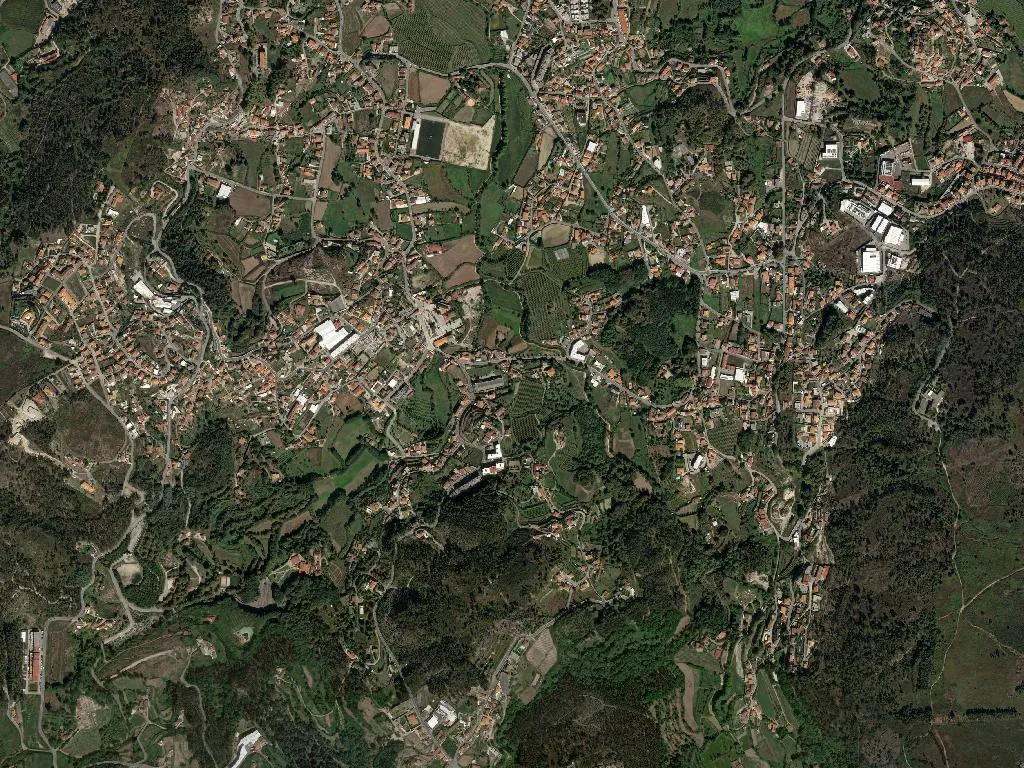
The smell of damp earth rises from the fields before the sun has cleared the ridge, while mist still pockets the slopes and the first thin threads of wood-smoke curl from the chimneys of Santa Eulália. At 181 m above sea level the parish covers barely five square kilometres, yet almost 5,400 people live here—enough density for neighbours to know whether you take one sugar or two, never mind your surname. Houses lean shoulder-to-shoulder along narrow lanes as if for warmth; time is kept by the church bell that rolls three times a day across the valleys.
You will not arrive by accident. There are no viewpoint signs, no tour coaches. Santa Eulália faces inward. At seven o’clock the bakery doors on Rua Dr. José Antunes Pinto swing wide and the street fills with the rasp of crusty pão de mistura cooling on wire racks. Thursday is market day: by nine the churchyard is a chessboard of tarpaulins where cabbages change hands for coins and the price of a cockerel is debated with the solemnity of a treaty.
Living Close
Walk anywhere and you feel the press of proximity. Granite cottages, freshly painted in ochre or eau-de-nil, give way to modest 1990s villas, all separated by a stride rather than a garden fence. In Largo do Cruzeiro, Café Central has served espresso in chipped glass cups since 1953; the marble counter still displays the same upturned glasses, the same wicker-seated chairs that squeak like old floorboards. José—behind the machine since 1982—asks “o de sempre?” before you’ve crossed the threshold, and nobody ever needs to answer.
With 955 residents per square kilometre, anonymity is impossible. When someone dies, pans of scented water begin circulating at three in the afternoon; when a baby is born, neighbours deliver sopa de leite—a milky rice soup dusted with cinnamon—for eight consecutive days.
São Bento das Pêras: the Parish Pulse
For two weekends every July the feast of São Bento das Pêras rewires the village. Emigrants fly in from Paris, Newark, Geneva; houses that appeared shuttered suddenly glow with porch lights and cousins shouting across stairwells. Coloured bunting zig-zags across the streets; the air thickens with charcoal smoke and the minor-key accordion of pimba pop. Sunday afternoon belongs to the procession: widows in black lace step in measured time behind boys in white shirts who shoulder the gilt-painted palanquin of St Benedict. Solemnity complete, night detonates.
On the football pitch behind the primary school, fairground rides throw LED light across the car park. Elderly men play sueca—a four-handed Portuguese game of trumps—inside the parish hall while grandchildren queue for candyfloss. At 1 a.m. the brass band strikes up “Ó Zé, Vai Buscar a Bicicleta” and the concrete trembles under 3,000 feet jumping in unison.
Green in the Glass, Green on the Ground
Vinho Verde is not saved for special occasions; it is the table wine, the visiting-the-sick wine, the “just dropped by” wine. António Ferreira still treads Loureiro grapes in the stone lagar his father built behind the house in Casal, counting the ferment with a wooden paddle scuffed smooth by decades of use. The wine finishes with a light prickle—perfect foil for the salt that arrives in fat pink slabs at lunch.
In Dona Alice’s kitchen, caldo verde is assembly-line green: potatoes from her outhouse, kale shredded the length of her thumbnail, chouriço from the pig killed on the feast of St Thomas. Garlic hits hot olive oil; the room warms by two degrees before the ladle even touches the pot. The wine is poured into tumblers—no stemware, no ceremony—“because what matters is inside,” Alice shrugs.
The Exact Weight of Place
Dusk settles behind Monte de Santa Eulália and the sky bruises to rose. Silence here is not absence but deceleration: the low murmur of Telejornal through open windows, the crack of a birch log as someone stokes a cooker for tomorrow’s bread, the single fork against a plate in Dona Otília’s kitchen—she has eaten alone since her husband died, yet every neighbour still knows the moment she sits down.
Santa Eulália offers no postcard panoramas. Instead it offers ballast: the knowledge that when you meet José tomorrow he will ask after your mother’s hip, that the baker will set aside the crustier loaf because he remembers you prefer it, that the parish will mark your arrivals and departures with soup, with bells, with cards slid under the door.
5,389 people share more than a postcode; they share a unit of measurement for belonging. Here the neighbour is not merely the man next door—he is the archive of your first communion, your adolescent heartbreak, your father’s funeral, and still the person who greets you the following morning as if life were a single, unbroken conversation.