Full article about Noon bell rolls over slate roofs in Santo Adrião, Vizela
Romanesque monastery, pear preserve, July saint-parade—time stands granite-still
Hide article Read full article
The bell strikes twelve
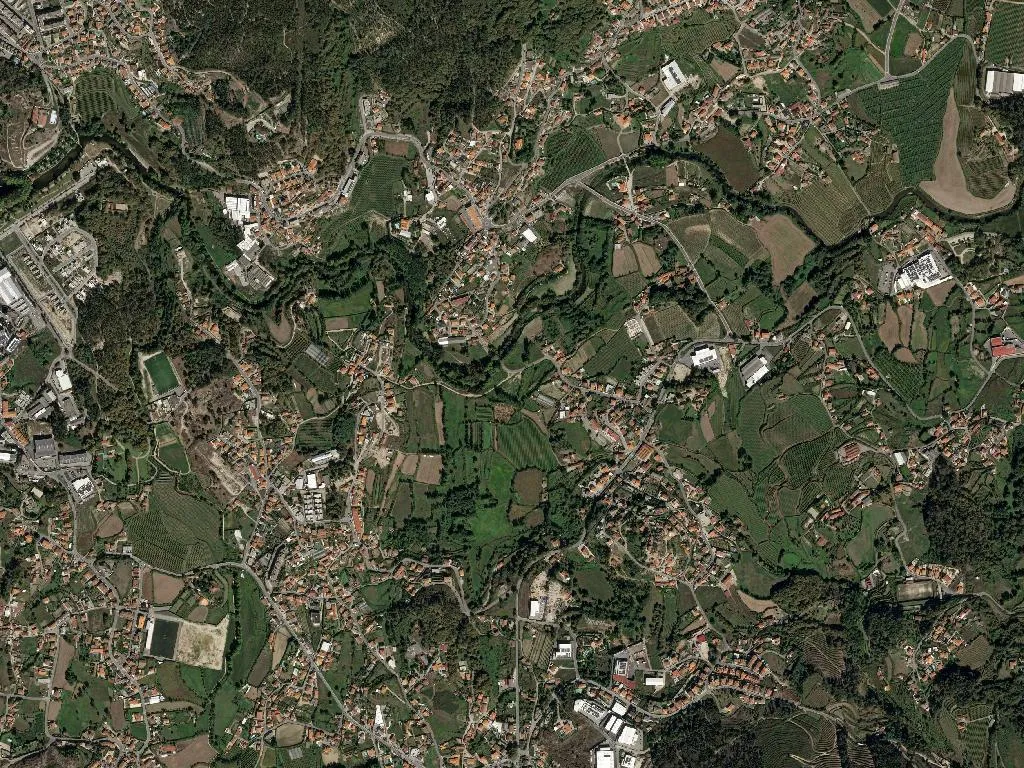
The parish clock strikes noon; the sound rolls down the slate roofs to the Vizela river, slides under the medieval bridge and settles over the pear orchards. In Santo Adrião that single bronze note is a daily census: church still on the ridge, water still sliding over the same granite, potatoes still being rinsed in the current. Nothing has shifted, and everything is alive.
Stone that prays, stone that endures
The Benedictine monastery of São Bento das Pêras has never closed its doors. Its Romanesque nave is built for winter: walls a metre thick, air that tastes of granite dust. Seventeenth-century azulejos in the side chapel narrate St Adrian’s martyrdom in three blue-and-white frames; bring binoculars or climb the two steps carved into the choir stall. The name is literal—monks once grafted and stewed the local pears into perada, a dark, quince-like preserve. Ask for it at Pastelaria Central on Rua da Igreja; Dona Alda still sets a jar aside on Fridays.
Traffic rumbles over the thirteenth-century bridge because the road north has no patience for detours. Inside the parish church the polychrome statue of Santo Adrião—Roman officer, foot pierced by a nail—waits patiently for his annual outing, procession timed to the priest’s diary rather than the liturgical calendar.
July in pilgrimage
On 11 July the tarmac up to the monastery is surrendered to feet and tractors. Mass at 11 a.m. is followed, at five, by a slow parade of the saint through a guard-of-honour of eucalyptus branches. Between services the cloister yard becomes a pop-up tavern: grilled sardines on newspaper (€2), vinho verde in plastic cups (€1), and perada handed out in wax paper while stocks last. Rockets explode without warning; dogs sensitive to gunpowder should bring ear defenders.
September hosts a quieter rerun—strings of bulbs in the square, elderly accordions, tavernas open until 1 a.m. November belongs to chestnuts: one-kilo bags for €3, roasted on the steps of the former town hall.
Flavours that left the cloister
Caldo verde appears at every counter, but the Sunday cozido requires forward planning: order by Friday, pick up at midday, carry home in a dented aluminium pot. Sarrabulho—pork blood, cumin, vinegar and bread—disappears fast at O Tachinho on Wednesdays and Saturdays; arrive before 1 p.m. or negotiate with the cook.
For sweets, Padaria Silva sells toucinho-do-céu, a yolk-and-almond slab, at 10 a.m. sharp. Take your own bottle to Lagar de Santo Adrião for white vinho verde; they’ll fill it from the stainless-steel tank for €1.20 a litre.
Between river and escarpment
The São Bento trail begins at the bridge, way-marked in yellow and red. Five kilometres of riverside alder and schist terraces take ninety minutes; carry water—there is no spring. Trout flick in the deeper pools; if the river is low, blame the previous week’s weather, not the guide.
Those with stamina continue along the Levada do Pisão to the Mosteirinho chapel, an extra three kilometres and 200 m of ascent, ending with a view over the abandoned Carris tungsten mines. Vizela’s thermal spa—38 °C, €5 entry, €1.50 towel hire—is a ten-minute drive if your calves complain.
Monday is market day at the Veiga covered hall: new potatoes still carrying Minho soil (€1/kg), tight heads of Portuguese kale (50 cêntimos). Bring a tote; plastic is frowned upon.