Full article about União das freguesias de Agrobom, Saldonha e Vale Pereiro
Granite presses, wood-smoke linguiça, 211 souls across 32 km² of Trás-os-Montes emptiness
Hide article Read full article
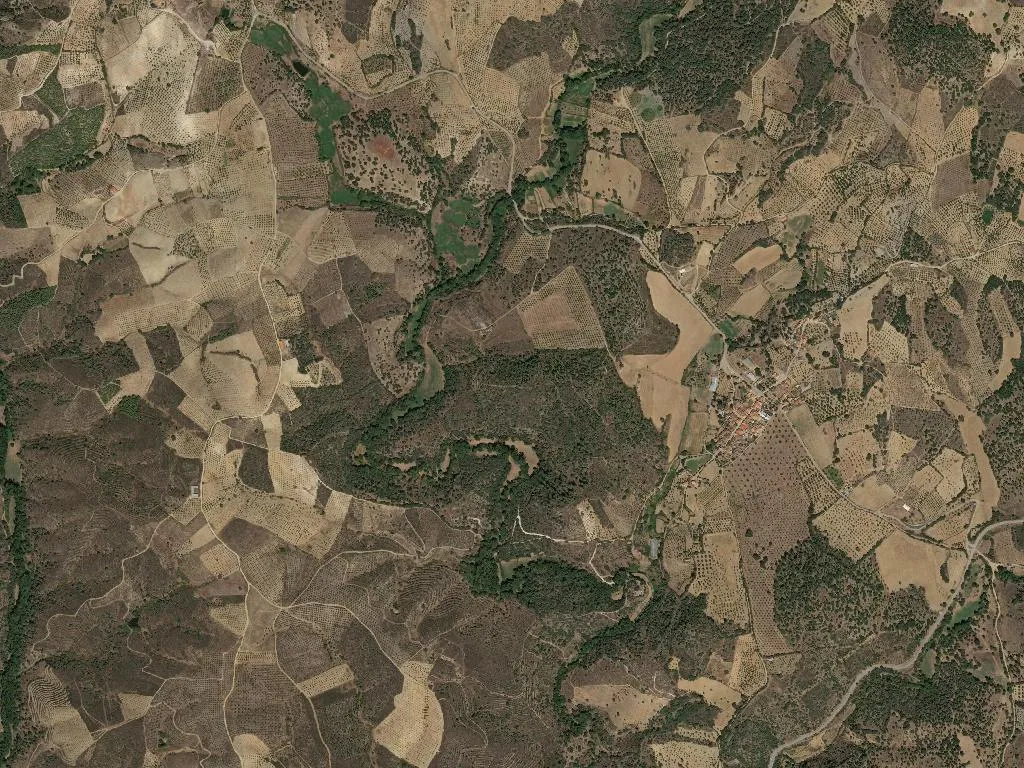
The first light scrapes across schist terraces and the almond groves stand naked, their shadows stretching like charcoal strokes over the stone. In the União de Agrobom, Saldonha e Vale Pereiro, 211 people share 32 km² of northern Trás-os-Montes – a population density so low it feels theoretical. A single dog barks somewhere below the 400 m contour line; a wooden gate creaks, then settles. Nothing else moves.
Three villages, one breathing topography
Since the 2013 parish merger, the triad has pooled municipal budgets yet kept separate heartbeats. Each settlement keeps its own chapel key, its own feast-day banner, its own way of counting the seasons. Winter arrives with hoar-frost teeth; summer bakes the stone until it burns fingertips. Between the extremes, olive trunks thicken to the width of dinner tables and almond branches, black against the sky, chart constellations no astronomer has named.
The 2021 census reads like a whispered secret: 106 residents over 65, only twelve under fifteen. School buses no longer climb the road to Agrobom; the classroom is now a storeroom for olive nets and drying onions.
The taste of Terra Quente
Food here is not performance; it is what the day gives. Olives are taken to the community press in Saldonha where granite millstones still exhale the scent of wet rock and ripe fruit. Almonds are cracked on doorsteps in August, the discarded shells crunching under tractor tyres like brittle porcelain. In the smokehouses, linguiça and salpicão darken to the colour of antique oak, inhaling week-long drifts of carvalho smoke.
Sheep’s-milk cheese, coagulated with thistle, wears a natural rind the texture of river pebbles; inside, it is spoonably soft. Kid goat roasts in a wood-fired clay oven until the skin blisters into glass-thin crackling. Honey, almost black with heather and thyme, tastes of the April hillsides when the air is loud with bees. There is no tasting menu – only lunch, which is the same as yesterday’s and tomorrow’s.
Saints, bells and embers
The year turns on ecclesiastical hinges. On 17 January, fog still clinging to the gullies, Santo Antão da Barca is honoured with pyres of vine prunings outside the chapel; women ladle out cornmeal cake and aguapé – red wine heated with sugar and cinnamon. Mid-August brings Nossa Senhora das Neves: the procession starts at dusk, teenage boys carrying the painted statue barefoot over the flinty lane, their steps timed to the single bell that has tolled since 1892. Fátima and São Sebastião complete the calendar, drawing returnees from Porto and Paris who park rented cars beside haystacks and slip back into the vernacular they never really forgot.
By nightfall the valley smells of dry earth and sun-baked rosemary. A thin plume rises from one chimney, perfectly vertical in the still air. Someone latches a goat-pen, metal grinding on stone, and the silence closes again – thick, definite, like a book snapped shut.