Full article about Sendim da Serra & Ferradosa: Douro’s Forgotten Sky-Village
Cork-oaks hiss round a Visigothic-named hamlet where baroque chapel bells summon Parisian grandkids
Hide article Read full article
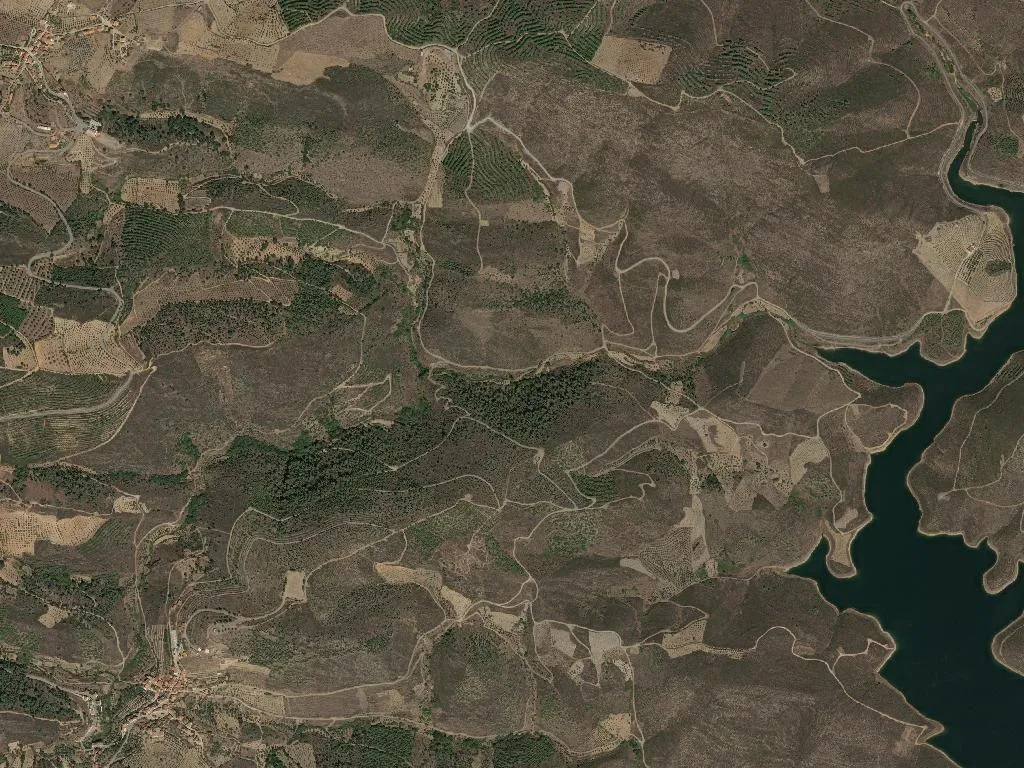
The road corkscrews over the Serra da Gouveia and delivers you to a place that feels like two villages accidentally stitched together. At Sendim da Serra the tarmac first passes a scatter of 1970s bungalows with satellite dishes, then suddenly tightens into a medieval fist around the 18th-century parish church. Between the two halves the air is thick with silence, broken only by wind that lifts from the valley and sets the cork-oaks hissing.
From rye fields to Visigothic ghosts
Ferradosa takes its name from ferraginal – the dark, rye-giving soil that once paid tithes in grain. Today the slopes are calmer, quilted with olives and almonds that qualify for Douro DOP status. Sendim da Serra carries an older echo: Sandini, a Visigothic personal name still circulating in northern Iberia during the sixth century. The suffix “da Serra” is geography, not decoration; the Gouveia massif wraps the settlement like a cloak. Tiny Picões, absorbed into the parish in 2013, was once independent, and until the 1950s you crossed the Douro to Torre de Moncorvo by row-boat from the now-vanished hamlet of Silhades.
Three kilometres east, the bells begin
Our Lady of Jerusalem chapel sits alone on a ridge planted with olives. On the last Sunday of May the track becomes a pilgrimage: engines are left at the foot of the hill, and the only sound is the chapel bell carrying on the wind long before the white façade appears. Inside, six late-seventeenth-century oil paintings – attributed to court painter Bento Coelho da Silveira – narrate the life of the Virgin in saturated baroque colour. The yearly calendar is still governed by feast days: snow-white Neves on 5 August, Fatima on 13 May, Saint Sebastian on 20 January. Each brings back emigrants who left for France in the 1970s and now return with Parisian number-plates and entire households of grandchildren.
A larder with altitude
Trás-os-Montes means “behind the mountains” – and the pantry behaves accordingly. At 288 m the air is dry enough to cure hams that develop the ruby translucence of Presunto de Vinhais IGP. Olive oil carries the peppery DOP stamp of the region; almonds whiten the hills each March and reappear in October as marzipan sweets. Lamb is Terrincho DOP, kid is Transmontano DOP, sausage is smoked over holm-oak in the village of Vinhais. There are no restaurants, only kitchens: bread baked in cylindrical loaves, wine drawn from the cask, almonds crushed into trout caught in the Sabor river. Dessert is chestnuts from the Terra Fria DOP zone, sweetened with honey from the warmer Douro escarpment.
Layers of granite and absence
Walk the old quarter after four o’clock and you read the village like stratigraphy: schist doorjambs worn into hollows, granite corners rounded by 300 years of ox-carts, a sudden baroque balcony that once belonged to the village judge. The parish church of Sendim da Serra, dedicated to the Assumption, contains gilded carving that survived the 1755 earthquake only because the shock waves lost strength in these eastern ranges. Ferradosa’s church, locked except for Sunday mass, keeps its Manueline font and a side-altar to Saint James carved from a single block of local oak. The entire parish covers 2,705 hectares; only 169 people remain, six per square kilometre. Ninety of them are over sixty-five; three are under fourteen. The primary school closed in 2013, its playground now a threshing floor for almonds. Afternoon smells of cork burning on open hearths, a resinous perfume that clings to coats long after the road twists back down the mountain.