Full article about Gebelim & Soeima: Hush on Alfândega da Fé’s Edge
Where silence outweighs people—299 souls, 31 km² of almond-scented air and stone crosses.
Hide article Read full article
The Weight of Silence
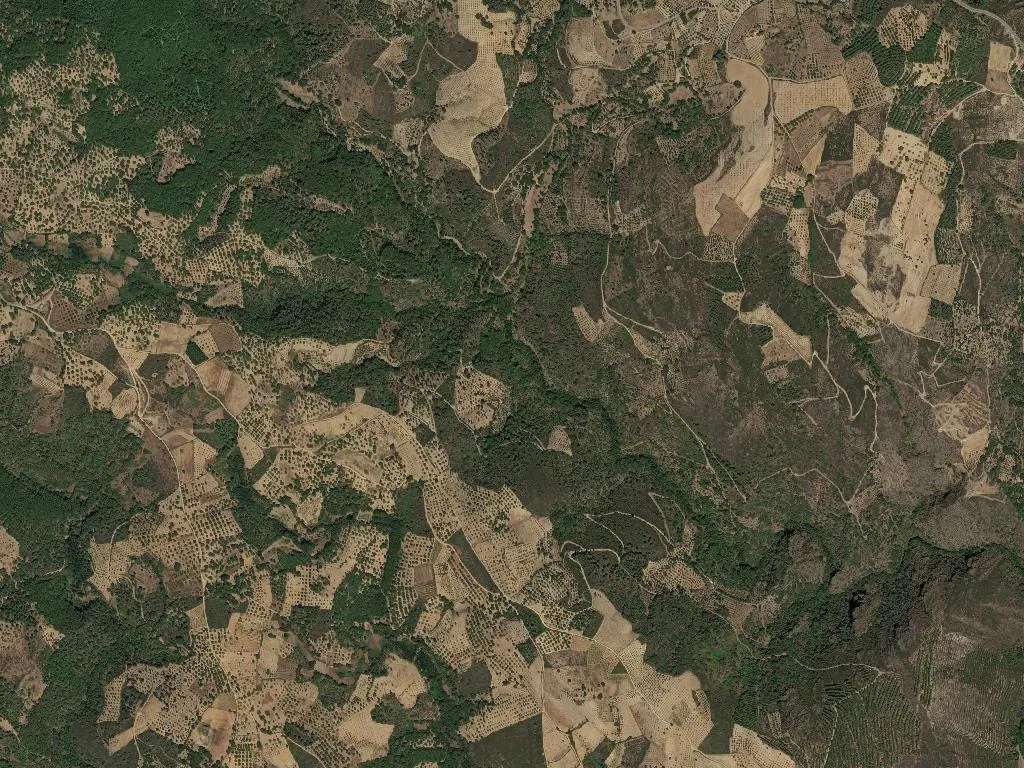
You reach Gebelim and Soeima on a lane so slender the hedges brush both wing mirrors at once. The engine stops, and what floods in is not noise but its opposite: a hush dense enough to feel on your sternum. Almond blossom scrapes the wind like tissue paper; somewhere below, an iron gate drags across schist. Only 299 souls occupy 31 km² of Alfândega da Fé’s northeastern escarpment—an altitude of 600 m that turns conversation into slow, deliberate gestures.
Arithmetic of Absence
Seventeen teenagers, 122 pensioners: the parish roll reads like a census from another century. Density is nine residents per square kilometre—space enough for a voice to vanish before it reaches the next terraced plot. Hamlets still orbit their chapels—Our Lady of the Snows, St Sebastian the Martyr, St Anthony of the Boat—whose feast days temporarily re-inflate the map. On those weekends, locked shutters open, smoke climbs cold chimneys, and the population doubles with returning emigrants who fly in from Paris or Neuchâtel for a 48-hour dose of belonging.
The architecture offers no postcard bombast; only one building carries public-interest status. Instead, there is the monumentality of use: slate walls that store the afternoon heat, ox-heart threshing floors polished by wooden flails, stone crosses at crossroads no bus route will ever reach.
A Larder Called Trás-os-Montes
Food here is an inventory of what refuses to disappear. Sheltered valleys fatten the Douro almond; granite lagares still press Trás-os-Montes olive oil; black Negrinha de Freixo olives cure in brine thick enough to spoon. In smoke-blackened attics hang IGP-certified sausages from Vinhais—chouriça, salpicão, presunto—scented with weeks of oak fumes. Terrincho lamb grazes the broom-covered slopes; kids are reared on clover until they become Cabrito Transmontano. Wheels of raw-milk Terrincho cheese sleep in granite cellars while, come October, Terra Fria chestnuts thunk onto corrugated sheets at dusk.
Four registered houses receive guests—none pools, none spas, just the luxury of a blank diary. Wake when the sun hits the eaves, walk to an olive grove planted before the Peninsular War, sit on a wall until the Sabor valley turns copper.
What Remains
At the day’s tipping point the low sun ignites the schist roofs and every almond trunk becomes a bar of light. Then even the wind pauses. No dog, no distant tractor, only the scent of dry earth and a single invisible hearth starting its evening shift. You breathe it in, aware that when you rejoin the wider road tomorrow this particular silence will travel with you—lodged behind the sternum, a private counterweight to whatever noise waits downstream.