Full article about Pombal e Vales: smoke-cured hamlets above the clouds
In Alfândega da Fé’s forgotten folds, oak-smoked sausages swing beside 13th-century schist cottages
Hide article Read full article
The Slow Rise of Smoke
A skein of oak smoke coils above the roofline, sketching calligraphy against the pewter January sky. Beneath it, on chestnut poles slung across the back terrace, long salpicões and chouriços shift from ox-blood to liquorice as the days pass. At 586 m the air is sharp enough to make ears sing; the only interruptions are a dog barking somewhere beyond the shale-stone wall and the tinny clank of a goat bell on the slope below.
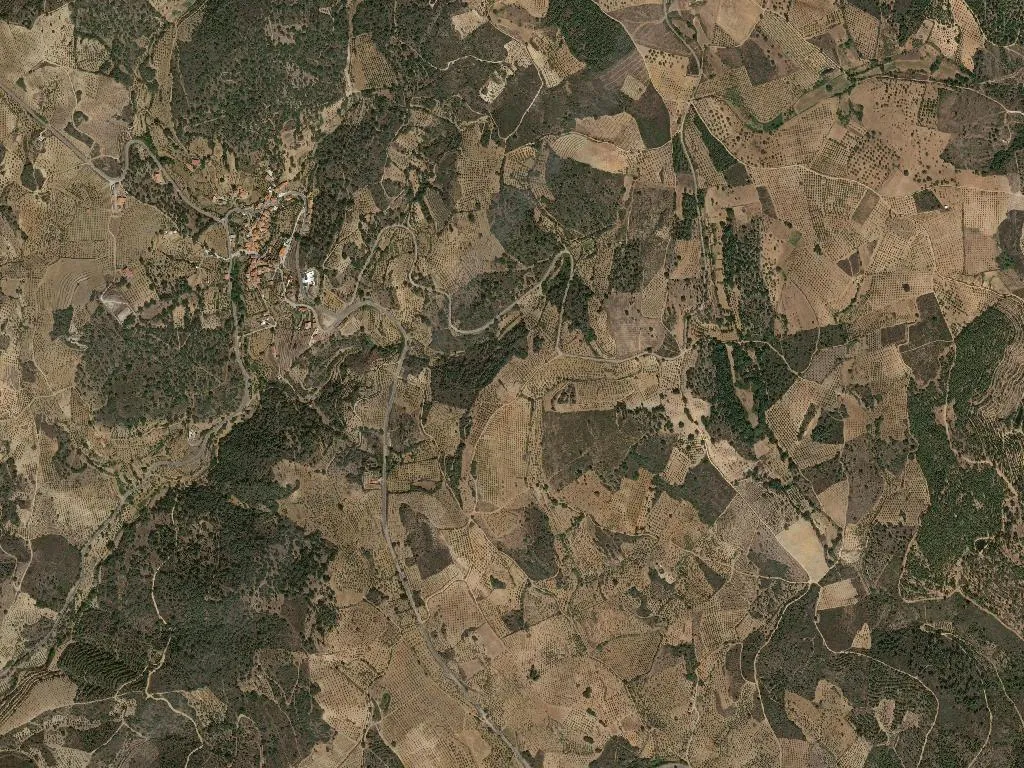
This is the civil parish of Pombal e Vales, created in 2013 when two medieval hamlets were stitched together by administrative decree. Pombal first appears in a 1258 charter as “Pombar”; Vales is named in a 1294 clerical roll as “Vallis”. Both were catalogued two decades later in King Afonso III’s royal survey—proof that, for eight centuries, people have been coaxing a living from the same craggy schist and from the folds of land that give Vales its name. Today 147 souls occupy 15.24 km²: a human density lower than the surrounding heather, a memory density higher than most capital cities.
The Concentrated Taste of Terra Fria
Transmontano cooking here is not a slogan. It is Terrincho lamb—PDO-protected, reared on the high commons—roasted in a wood-fired oven until the skin tents and crackles. It is kid goat braised with sun-dried potatoes that have been rehydrated in the gravy, and Terrincho cheese aged until it squeaks between the molars with the tang of sun-baked hay. Salpicão from Vinhais and chouriça de carne spend weeks in smoky outhouses, emerging almost black, their paprika and garlic notes concentrated by oak vapour. Olive oil from Trás-os-Montes—golden, viscous—meets dense rye bread; desserts arrive as roasted chestnuts from the “Terra Fria” IGP zone, or spoonfuls of honey from the warmer valleys that sweeten January nights measured not in hours but in log-lengths.
A Calendar of Invocation
Four feast days still organise life. On 17 January Santo Antão blesses the animals; three days later São Sebastião is marched through the lanes to ward off plague. The 13 May procession for Nossa Senhora de Fátima slips between hedgerows of flowering yellow broom, while 5 August belongs to Nossa Senhora das Neves, when the tiny primary school empties and the village band strikes up before an open-air Mass. On each occasion the elderly—64 of the 147 are over 65—take the front benches; the nine resident under-25s stand at the back, checking phones, waiting for the evening dance where a single concertina still commands the floor. August also pulls back emigrants from France and Switzerland, tripling supper tables for seventy-two hours.
Late afternoon light ricochets off whitewashed walls, throwing long shadows across uneven slabs. Beyond the last house the serra de Bornes cuts a jagged silhouette against a sky now the colour of gunmetal. In the communal adega someone siphons last year’s red into a cracked glass, winces, nods approval. The almond-green bite of new Douro wine lingers. Up on the ridge the smoke keeps rising, patient, deliberate—the only hurry this parish allows.