Full article about Vilares de Vilariça: where silence weighs more than people
Hear shale doors scrape, taste Terrincho lamb cured in olive smoke and join 132 villagers marking vine, frost and faith in Vilares de Vilariça
Hide article Read full article
The Silence Has Mass
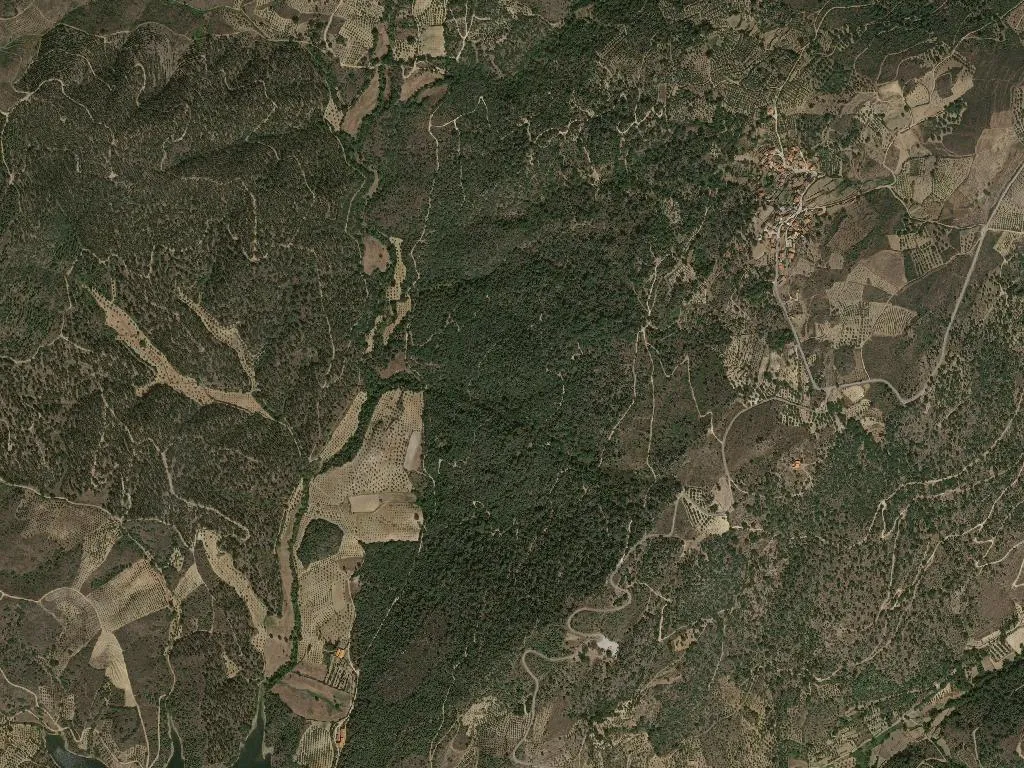
At 497 metres above sea-level, sound behaves differently. In Vilares de Vilariça the morning air strips audio to its bones: the slow scrape of a pine door across shale, a dog barking somewhere below the treeline, the iron bell of the 18th-century Igreja Matriz measuring the hour in three blunt notes. One-hundred-and-thirty-two voices occupy 14.9 square kilometres of north-east Trás-os-Montes—fewer than the resident herd of Terrincho sheep—yet the parish feels crowded with quiet.
Calendar of Four Feasts
The year turns on liturgy. January opens with São Sebastião, whose martyrdom is still recruited as insurance against blight; effigies of the saint are carried past almond groves that will flower six weeks later. In May, Santo Antão da Barca—Anthony the Boatman—reminds older parishioners of the time when the Vilariça stream was wide enough to ferry barrels of wine downstream. July brings Nossa Senhora de Fátima, followed in August by Nossa Senhora das Neves, patron of the harvest. Snow is a theoretical concept here—thermometers regularly lick 40 °C—so her invocation works as sympathetic magic: imagine frost and you might survive the fire.
What the Pantry Remembers
Cooking is an annual audit. Legs of Terrincho DOP lamb rotate slowly in wood ovens fired with pruned olive limbs; the meat tastes of wild thyme and the smoke that seasons every jumper in the house. Next winter’s chouriça hangs in pairs, mahogany-dark, absorbing oak vapour for a minimum of sixty days. The cheese—also DOP—ripens in a subterranean room cut from schist; grandchildren learn to scrape off the geotrichum crust without complaint. November’s almonds are dried on corrugated-iron roofs, then cracked open while the afternoon light still burns. Chestnuts, honey the colour of burnt orange, a dribble of late-harvest olive oil traded with the neighbour for two kilos of dried beans: everything earns its place by lasting until the next crop.
Arithmetic of Survival
Drive the N316 east from Alfândega da Fé and the dashboard thermometer drops; mobile reception flickers out. The parish’s population density—8.8 souls per square kilometre—makes a Mongolian aimag look busy. Fifty-six residents have already qualified for a pension; only six are under fourteen. Those numbers are recited like a catechism in the single café, conversation pausing when outsiders appear. Two guesthouses—both converted small-holdings—offer nights scented by woodsmoke and by the faint sweetness of cured pork that never quite leaves the walls. There are no signposted trails, no craft markets, no Wi-Fi. Instead, you get the rasp of a wrought-iron gate at dusk, the valley exhaling cold air like a cave, and the lights of Alfândega twinkling four kilometres away—close enough to remind you that urgency exists, far enough to make it irrelevant.