Full article about Marzagão: Where Schist Walls Guard Douro Altitude
Stone chapels, smoke-cured lamb and 672 m vines cling to Trás-os-Montes
Hide article Read full article
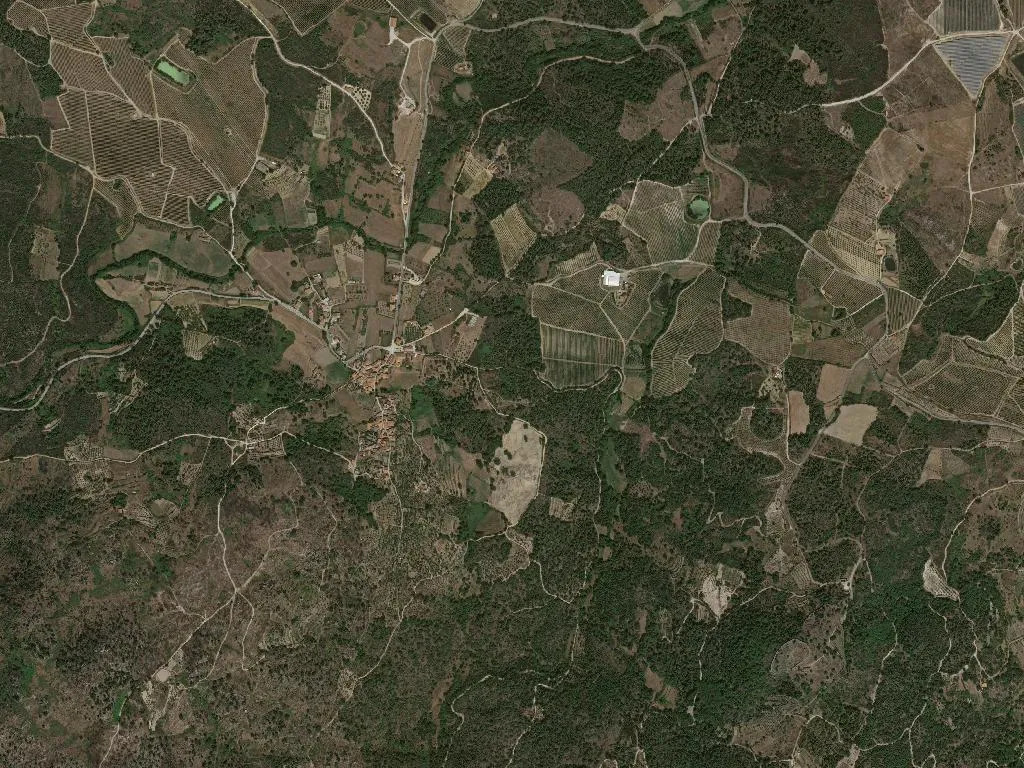
The cobbles scold your soles. Not the polite hush of city mosaics, but a dry, abrasive rasp—schist grinding against rubber, granite that refuses to budge. Marzagão perches at 672 m, half-way between the Tua valley floor and the sky, and the altitude registers immediately: the air thins, dusk arrives early even in August, while the sun still scorches the stone houses. Three hundred people share sixteen square kilometres of north-east Trás-os-Montes, where vines grip the slope with the obstinacy of those who know no Plan B.
Stone that prays, stone that protects
Five listed monuments punctuate the parish—three of them National Monuments, an absurd density for a settlement this size. Here stone is not backdrop but archive: every lintel is a ledger, every wall a chronicle. The mother church of Santa Eufémia is kept locked; you must ring the priest in Carrazeda de Ansiães for an audience. Locals use the 1742 calvary on Rua do Calvário as an al-fresco parlour when the sun climbs high enough to warm arthritic knees.
The Douro that doesn’t pose
Marzagão lies inside the Alto Douro Vinhateiro UNESCO site, yet the terraces refuse to perform for cameras. Vines descend in irregular staircases, propped by dry-stone schist walls that ignore gravity. In midsummer the palette narrows to dark-green leaf against ochre earth, the geometry broken only by the occasional olive or almond. The average age of the smallholders hovers around 75; when their wrists give out, no one knows who will take the pruning shears.
Smokehouse and flock: the taste of height
Altitude dictates the larder. Trás-os-Montes DOP olive oil is not a finishing drizzle but the foundation. Terrincho lamb and Transmontano kid graze the thin pastures where little else will grow. In the smokehouses, Vinhais blood sausage and salpicão darken over slow-burning oak, while Queijo Terrincho—firm, butter-yellow—carries the tang of wild thyme and long patience. Cooking is built for winter survival, not theatre. O Celta, on the N15, serves chanfana (goat stew braised in red wine) every Wednesday—reserve or go hungry.
Feasts that recall what time scatters
Santa Eufémia (16 September), Nossa Senhora da Assunção (15 August) and the romaria of Carrazeda draw the diaspora home. For forty-eight hours the head-count triples; folding tables colonise the lanes; Swiss-registered cars line the verge. Only thirty-four residents are under fourteen; ninety-six are over sixty-five. The numbers read like an obituary, yet during the festa the equation briefly flips. Emigrants book annual leave a year ahead; the third Sunday in September is non-negotiable.
Evening wind combs the alleys, carrying resin from the moor and wood-smoke from hearths. Marzagão offers no boutique comfort, no selfie payoff. It offers schist, altitude, silence clipped by a single bell—and the certainty that here stone will outlast every hurry.