Full article about Pereiros: olive oil, wine and moonlit vines in Trás-os-Monte
Stone terraces, 19th-century presses and unlabelled DOP cheese above the Douro
Hide article Read full article
October oil
The first press releases a slow ribbon of green-gold, thick as custard, flooding the stone tank with a scent that makes stomachs growl even when they’re already full. It is mid-October in Pereiros and the 19th-century beam-and-gear olive mill is turning at the pace of a village that has never kept time with anyone else. Beyond the doorway the stripped terraces glow like fired terracotta, their schist walls climbing the slope in neat right-angles – an Escher drawing in dry stone.
A parish that lives above the river
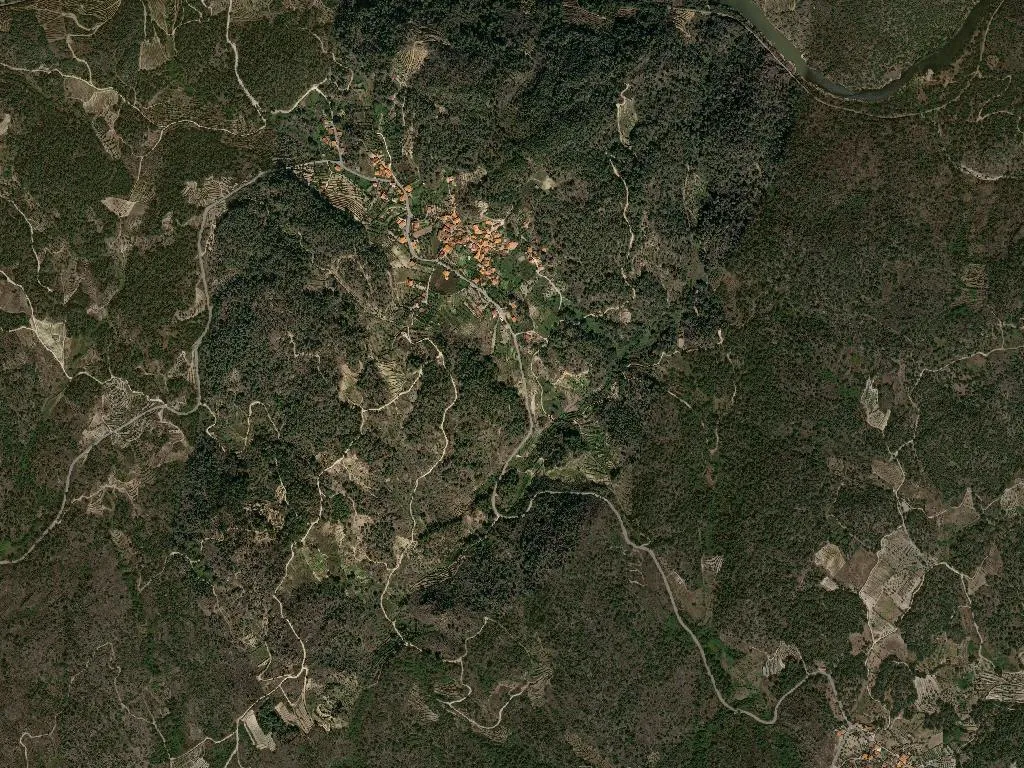
At 370 m the Douro becomes a silent ribbon; Pereiros balances just above it, 60-odd houses swallowed by vines so old they remember phylloxera. Medieval tax rolls list the settlement as belonging to Ansiães, a town that later slid down-river to Carrazeda in 1734, but the name stuck to the hill. ‘Pereiros’ once marked a stand of pear trees; today the only fruit that counts is the tiny olive, each hectare wrested from granite and schist with picklocks and generations of patience.
Between mill and harvest
The communal press opens for eight weeks only. Bring your sack of olives and you leave with a plastic jerry-can of cloudy oil that scratches the throat like peppercorns. In September the same co-op becomes a field station for grapes: baskets bent double under Touriga Nacional, boots purple to the ankle. One 1927 parcel yields 400 bottles a year, pre-sold to French expats in Porto and the village diaspora in New Jersey. No label, no website; the wine travels by word of mouth and carry-on luggage.
A Transmontanan table
Wood-oven kid, Terrincho lamb crusted in rock salt, Vinhais smoked shoulder with corn broa. The DOP Terrincho sheep’s-cheese arrives on a slate, a cube of dark fig jam perched on top – the sweetness unlocks the curd’s barnyard bite. Wine is poured from unmarked carafes the colour of bishops’ socks; conversations lengthen until the only light comes from the embers and the moon on the vines.
Festas that haul the absent home
Santa Eufémia, first weekend of September: mass at ten, procession at eleven, sardines on paper plates by noon. An 80-year-old in a flat cap coaxes a two-step out of a concertina; younger feet relearn the dance after three decades away. Two weeks later Nossa Senhora da Assunção draws the summer returnees – airline pilots from Luxembourg, plasterers from Marseille, vineyard PhDs from Davis, California. At dawn on the following Sunday half the village walks the medieval lane to Carrazeda, exchanging news over shale that still holds yesterday’s heat. An eagle circles above the Douro; somewhere a bell tolls for a funeral, or a christening, or simply the hour.