Full article about Pombal’s harvest: schist, smoke and Douro moonlight
Walk schist terraces, sip flinty reds, soak in 28 °C Roman springs—Pombal, Carrazeda de Ansiães.
Hide article Read full article
The scent of must and smouldering stubble
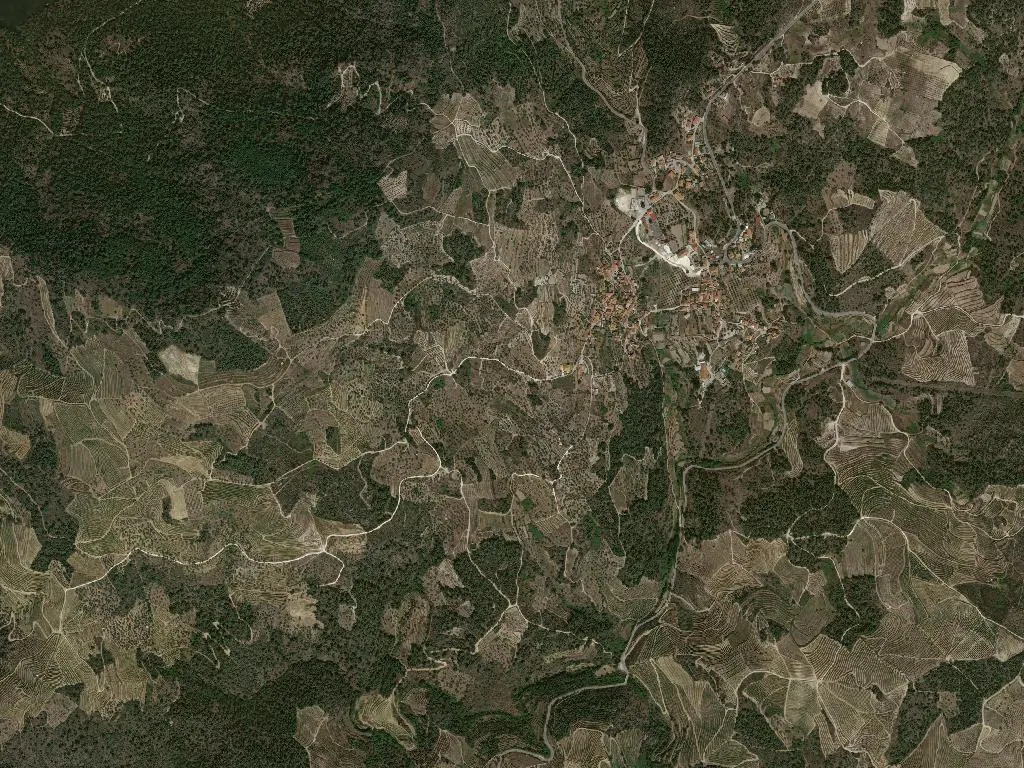
The first week of September drags the perfume of crushed grapes up the terraces and knots it with the smoke of still-burning stubble. In Pombal, population 230, the vindima is debated like Premier League form: everyone—winemaker, postman, retired teacher—has a theory on sugar levels and skin thickness. Schist shelves retain the day’s heat, gifting the reds a flinty snap that sommeliers in London call “minerality” and locals simply call “taste of place”.
Stone that props both vine and memory
The Ponte do Torno has always been there—a single granite arch the guidebooks date to the 14th century, to residents merely “the bridge”. Coach parties photograph it at dusk when the Torno river doubles the arch into a perfect O. Winter mornings are better: mist unspools from the water and the bridge seems to dissolve mid-span.
Beside it, a Roman paving slab launches a three-kilometre footpath to the thermal spring. Dry-stone walls of olive trees, older than any living memory, funnel you towards water that bubbles at a steady 28 °C. The Victorians came for rheumatism; modern walkers come for the silence.
Inside the granite church, gilt glints over dark wood. On 15 September the romaria of Santa Eufémia still follows a medieval score: bass drums, gaita drones, an octogenarian intoning the Latin Loa. After the open-air mass, bottles of last year’s reserve are uncorked, suckling pig is levered from wood-fired ovens, and desafio singing duels carry on until the Milky Way clocks off.
Terraces that climbed into UNESCO
Since 2001 the hillside maze has worn World Heritage blue-and-white badges; prices rose, tour buses appeared. The six-kilometre Caminho das Vinhas loop is gentle enough for an 80-year-old with a cane. From Cabeço do Fojo the Douro meanders like a procrastinating guest.
António José—nicknamed “Bordeaux” after he pioneered French-oak barriques—has the medals and the scarlet Ferrari to prove it. Yet foot-treading in stone lagares and hand-destemming persist; patience remains the only non-negotiable ingredient.
Schist tables and slow fire
O Cantinho is exactly that: six tables wedged into a former hay store. Chanfana—goat braised in red wine and wild marjoran—arrives in a black clay pot, bread in a woven basket. The bode was killed yesterday, the cheese was ladled the day before, and the fig-and-walnut jam comes from the cook’s mother—conversation ends there.
Across the lane, Gloria’s grocery still weighs Terrincho DOP cheese on twin-pan scales and records sales in a ledger. The oozy Terrincho smells of toasted hazelnut; a single chouriça de Vinhais IGP can fuel a week’s harvest.
When night finally inks the valley, the galaxy scratches chalk across the sky. The river’s murmur and the church door’s groan are the only sounds. Pombal offers no blockbuster sights—only the ones that linger long after the last glass is emptied.