Full article about Dawn over Vilarinho da Castanheira: chestnut mist & granite
Walk slate-roofed lanes where 1598 charter, 1692 church & UNESCO terraces meet
Hide article Read full article
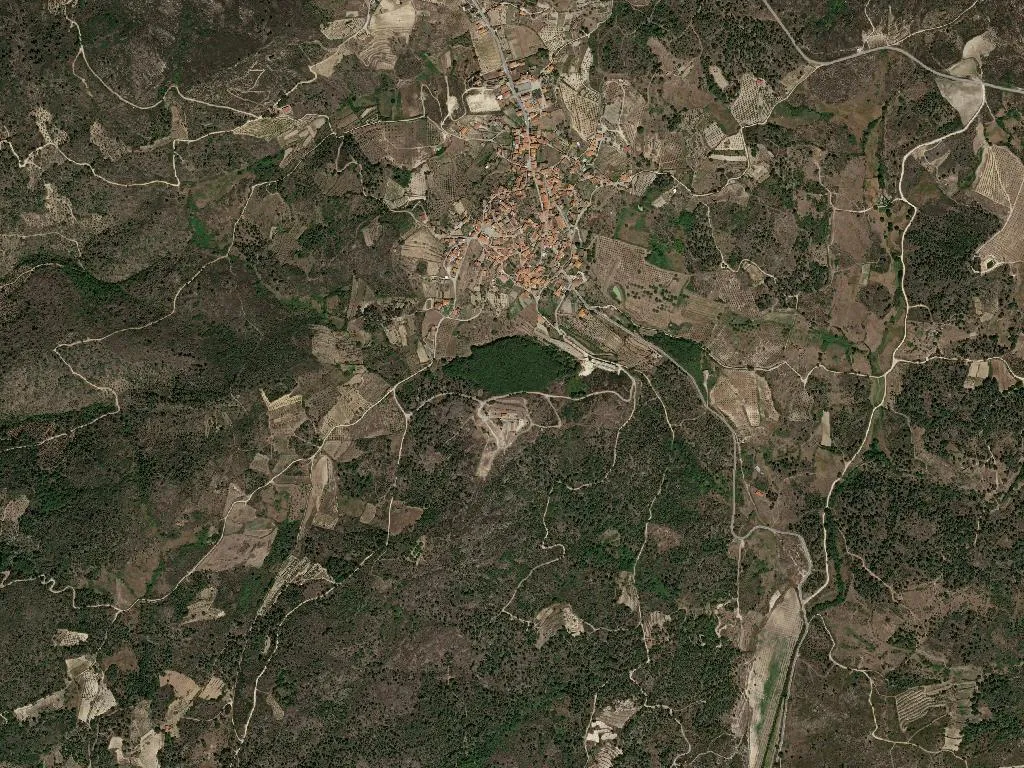
The first light of morning strikes the crest of Marco, then slides downhill until it reaches the slate roofs of Vilarinho da Castanheira. At 813 m the air still carries a pine-edge coolness even in August, laced with resin from the chestnut groves that gave the village its name. The vineyards of Soeiro, stitched into granite terraces half-way down the slope, wake more slowly; their toes are in schist, their heads still in mountain shadow.
Sixteenth-century foundations
A parish charter of 1598 spells it out in full: “Villarinho da Castanheira com suas castanheiras e vinhas em socalco.” The settlement was carved from the larger municipality of Carrazeda in 1567, a deliberate act of repopulation after the plague of 1554. The earliest written reference—1559, Torre do Tombo, royal register book 20—already calls it “lugar”, a place with recognised borders rather than a scattering of huts. Vineyards arrived later: records in the Bragança archive show that only after the 1756 demarcation of the Douro did terraces climb this far uphill. UNESCO declared the landscape World Heritage in 2001; for anyone born here it had been “the world” for centuries.
Granite and faith
The church of Santa Eufémia is not in the village; it is the village. Consecrated in 1692—the date is chiselled into the sacristy stone—it stands on a cobbled platform where three lanes converge. Its bell tower is visible across the Tua valley; the cemetery presses against the north wall as if seeking the last of the day’s heat. Granite blocks came from the Vilarinho do Marco quarry; the gilded baroque altarpiece inside was paid for by drought-stricken farmers after the disastrous summer of 1945. Classified monument status followed in 1982, but the building had long since passed into local folklore: children are still told that the chestnut tree beside the porch was planted the day the last stone was set.
Calendar of gatherings
- 16 August – Santa Eufémia. A brass-and-drum band from Miranda leads the procession down to the Carvalheira cross, then back up the incline. At eleven o’clock the priest blesses the sick in the churchyard; lunch is sarrabulho (blood-stew) followed by chestnut sangria.
- 15 August – Nossa Senhora da Assunção. Mass at 09:00 in the hillside chapel of Fonte Longa, home to a 1783 statue that survived the 1926 blaze which gutted the roof.
- Last Sunday in May – pilgrimage to Carrazeda. Three hay-cart floats decked with yellow broom set off from Vilarinho; they pause at the crossroads bar for a tot of bagaço distilled by Zé Mário before rumbling on to town.
On these days the resident population of 362 (2021 census) swells to well over a thousand as Lisboa and Porto number plates nose along the A24 and spill out of Transit vans.
Tastes with papers
Dona Alda’s village shop stocks Terrincho DOP cheese no. 124, made by João de Soeiro from the milk of eighty Churra da Terra Quente ewes. His lamb goes to the wood-fired oven at restaurant “O Tua”, roasted over turnip-greens rice; kid from Zé Mário in Parada do Tua is always scented with a single sliver of garlic slotted against the backbone. Mr Aníbal’s 2022 ham—7.3 kg, sea-salted in January, cold-smoked with chestnut leaves until Easter—hangs beneath the house in darkness. After August he will slice it at €35 a kilo, but only for visitors who ask in the right accent.
Terraced land
The parish spreads across 2,825 ha, yet the municipal road 528 reveals only three settlements: the village itself, the vineyards of Soeiro and the olive terraces of Fonte Longa. The rest is upland scrub—gorse, heather and umbrella pine—rising to the 968 m marker on Marco. Population density: 12.81 people per km². By 9 p.m. the only light comes from kitchen windows; the only sound is the keeper’s dogs at Quinta do Moura. No signed hiking loops, no ticketed monuments—just an unmarked earth track before the bridge over Ribeiro de Soeiro that climbs to a belvedere. From the granite outcrop you watch the Tua carve its tight oxbow round Carvalhal, the same bend where teenagers used to park a three-litre bottle of tinto and an ’87 Fiat Uno radio tuned to Rui Veloso before the valley was flooded.
When the harvest tractors fall silent and the wind lifts the sweet-sour smell of fermenting must from Sr Aníbal’s oak casks, you realise Vilarinho needs nothing more: the weight of stone underfoot and the hush that follows work completed are already enough.