Full article about Ligares: Where Douro Cliffs Meet Wind-Sculpted Silence
Ligares, Freixo de Espada à Cinta hides stair-stepped vineyards, centenarian olives and a stone-marten in its abandoned press.
Hide article Read full article
The wind takes the uphill track
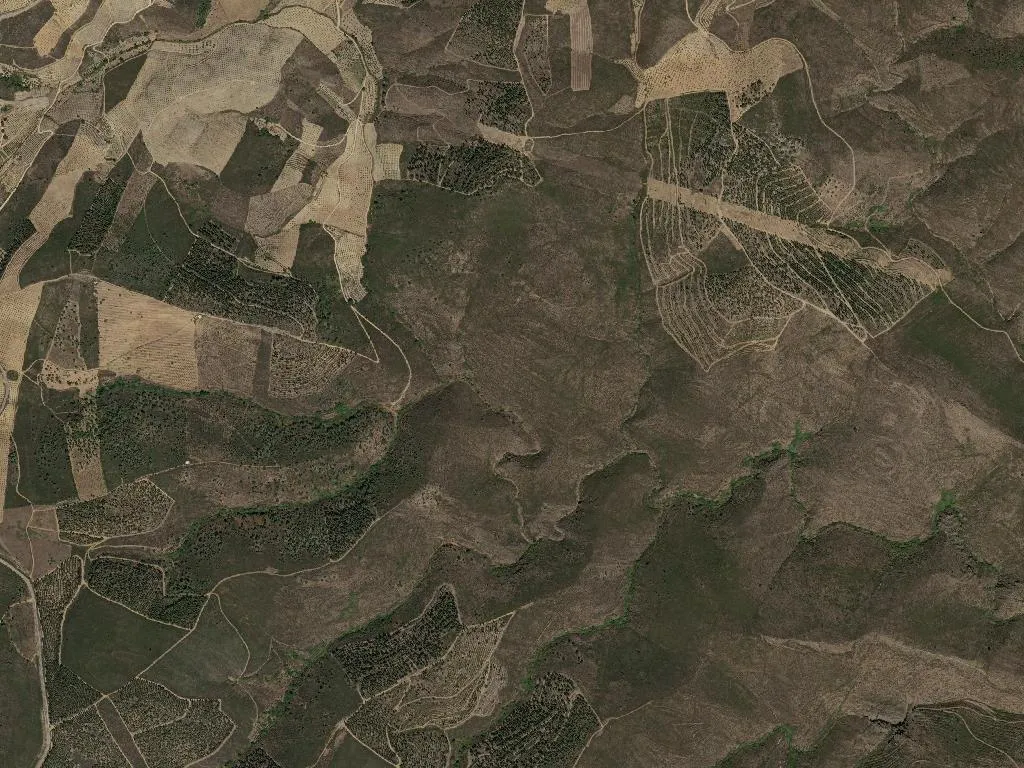
The wind races up the unpaved lane that links the shuttered primary school to the Carreira spring and, without bothering to knock, slips inside your collar. It carries the scent of sun-baked earth, bruised rock-rose and the ghost of eucalyptus smoke curling from Adelino’s bread oven. From the crest you look straight down a staircase of schist terraces that seem to step into the Douro itself, each riser planted with vines no wider than a dining table. Beside them, the ruined olive press where Zé Murtido once trod grapes now houses a sleepy stone-marten; the grapes, locals like to say, travelled farther than most men ever did.
Ligares sits at 486 m, its 4,569 hectares welded to grey schist. No charter ever declared it perfect; people simply stayed. The name derives from the old Galician “lugar de encontro” – meeting place – and still obliges. The EN221 sweeps through, a smaller road tumbles north to the river Sabor, and for centuries chestnut sellers from Mizarela have bumped into smugglers heading up from Sendim. There is no illuminated town plaque, only a waist-high dry-stone wall that separates the Pimentel smallholding from the Sequeira farm – two families who, since 1689, have negotiated boundaries to the clink of harness buckles and the single bell of Santo António, the only church whose tower has never collapsed.
Vine, olive, almond – the calendar in colour
Life here is colour-coded: vineyard green, olive yellow, almond pink. The reds – bastardo and marufo – cling to staircases cut by hand into the precipice that rubs shoulders with the Douro International Natural Park. Joaquim do Carmo, 72, four children in Paris, farms two-and-a-half hectares with a 1979 Fiat 415 that coughs like an old comrade. His olive oil begins with three centenaries at the 400 m contour: negrinhas de Freixo DOP, small and iron-rich, trucked to the Sequeira mill where granite millstones have given way to a centrifuge but the woven mats his grandmother once lined with paste still hang like tapestries.
Come March, almond blossom turns the ridge white. The Douro DOP variety – queijó – dries on Rosa’s threshing floor before she drives the sacks to Mogadouro’s co-op for shelling. Between these crops graze Terrincho DOP lambs on the Contenda plateau, Serrana kids on Marco hill and churra ewes whose milk becomes the cheese Amílcar sells door-to-door, each wedge wrapped in crinkled foil still bearing his fingerprints.
What you’ll eat (and drink) without garnish
Wednesday at eight the Bar O 25 unlocks its door – the village’s unofficial parliament. Order a bica (short, fierce coffee), a toasted sandwich of Vinhais ham cured in Zé Murtido’s cellar and a nip of Velha de Santa Comba aguardente to “lay a trail” down to the orchard. If Adelino slaughtered a kid on Friday, the wood-fired oven at O Moinho restaurant – five minutes beyond Vilar bridge – will roast it. Bring your own wine; they supply the table and a front-row seat over the Sabor gorge.
August brings the Festa dos Sete Passos (actually nine, but nobody wants to show off). Emigrants fly in from Geneva; grandmothers water geraniums. The procession inches down Rua do Calvário to the chapel of Nossa Senhora da Saúde where Father João flakes live salt cod into communal soup. After dark the primary school becomes a dance hall: Nuno, Adelino’s Lisbon-returned son, wires up speakers and spins pimba until three. Beds run short; the Casa do Professor has reliable Wi-Fi, or you can pitch a tent by the Carreira spring – ice-cold water, zero light pollution, Perseid meteors that look like sparks from a giant Zippo.
People and the spaces they leave
Of 333 residents, 155 are over 65; 22 children still catch the 07:00 bus to Mogadouro from the cemetery bend. Density: 7.3 per km². The meaningful figure is distance – 42 km to Bragança, 27 to Freixo on a national road that doubles as a cow lane. You’ll notice shiny new padlocks, gardens reverting to broom and, in the old primary school, the council-funded Craft Hub where Sílvia weaves wicker hampers and António re-canes rocking chairs. A hand-sized souvenir costs €20 and fits in the glove box.
When the sun drops behind Castelo hill the schist still radiates like an oven door left ajar. The wind returns – it always does – bringing the eight-o’clock bell, the Sequeira dog’s bark, the sweet smoke of oak that is, in the end, Ligares’ only perfume. The village never asked to be “authentic”; it simply asked not to be left to die. If that warrants a detour, fine. If not, Joaquim will still prune his vines tomorrow, audience or none.