Full article about Cortiços: granite village breathing Azibo valley air
At 475 m, Macedo de Cavaleiros hamlet keeps 237 voices, stone paths & DOP cheese alive
Hide article Read full article
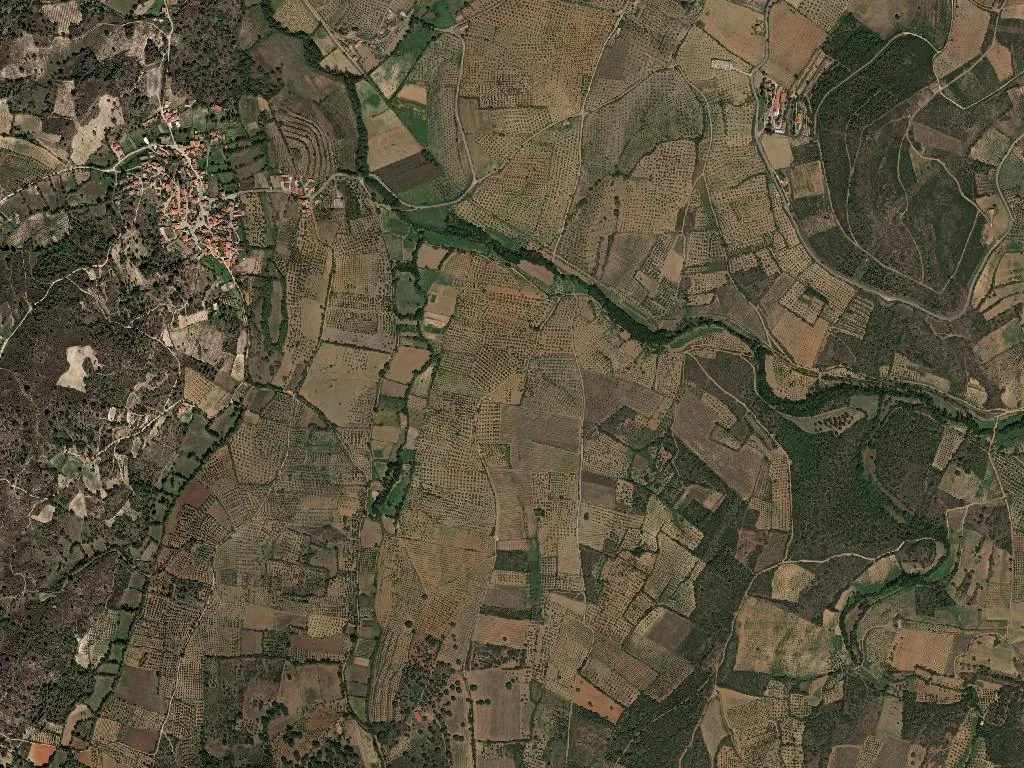
The morning light lingers at 475 m, the exact altitude where Cortiços clings to the northern slope of the Serra de Bornes. Two-hundred-and-thirty-seven souls remain, few enough that every echo is personal: the irrigation channel’s murmur, the creak of Toninho’s gate, Dona Amélia’s slippered shuffle across granite slabs she can no longer clearly see. When the wind lifts from the Azibo valley it carries the scent of freshly turned earth—Adão was ploughing yesterday—and the sweet, resinous promise of the woodpile Zé has already stacked for winter.
Stone & water shaped us
Cortiços slips into the Azibo reservoir the way one enters a front room. The water mirrors a sky wide enough to make even the chest-high schist houses feel miniature; the stones themselves are pages of a geology textbook the Geopark only recently footnoted, though the elders recite the chapters by heart. These paths aren’t leisure loops for Strava badges—they are the same tracks Joaquim’s father trod to fetch goats, the short cut someone’s mother climbed with a copper pot for spring water. Population density: nine neighbours per square kilometre; horizons stretch, voices carry.
Feasts that still draw us home
Two days a year the village bar bursts at the seams: the feast of St Ambrose and the eve of St Peter. The single-nave chapel fills as it did in the 1940s, its tiny churchyard doubling as the annual census of who still breathes and who has joined the granite plaques inside. António’s smoke-cured sausages, hung in December, vanish first; at the rear table nine local children chase crumbs alongside 116 residents over pension age. The hand-forged bell rings, its note rolling down the valley longer than the stories swapped afterwards.
What the table gives back
No dress code required for DOP excellence. Lourdes fetches yesterday’s bread from the communal oven; thick Trás-os-Montes olive oil pools in its torn crumb. Terrincho, the region’s sheep’s-milk DOP, bites back with a lanolin finish that outlasts conversation. Carne de Vinhais choiriço demands a gulp of tawny red and unhurried time. Chestnuts burst on the salamander stove exactly as they did in your grandmother’s hearth. Every ingredient carries a address: Azibo olives, Mirandela grapes, Vinhais pigs—here, terroir is still a living contract.
Staying is the hard part
Walk the lanes and you clock summer-only homes—Lisbon shutters flung open in August—yet pockets of daily refusal survive. Senhor Domingos’ vegetable beds are ruler-straight; Manuel’s grandson has sworn the family olive grove will never revert to scrub; at seven each evening smoke rises from Dona Alice’s chimney like a semaphore. Opening a gate, watering a vine, lighting the hearth—each gesture is a quiet manifesto that drowns out the demographic charts.