Full article about Granite solitude of Espadanedo parish
Six souls per km² share schist ridges, osprey skies & black-clay *cozido*
Hide article Read full article
Granite, Silence and Six People per Square Mile
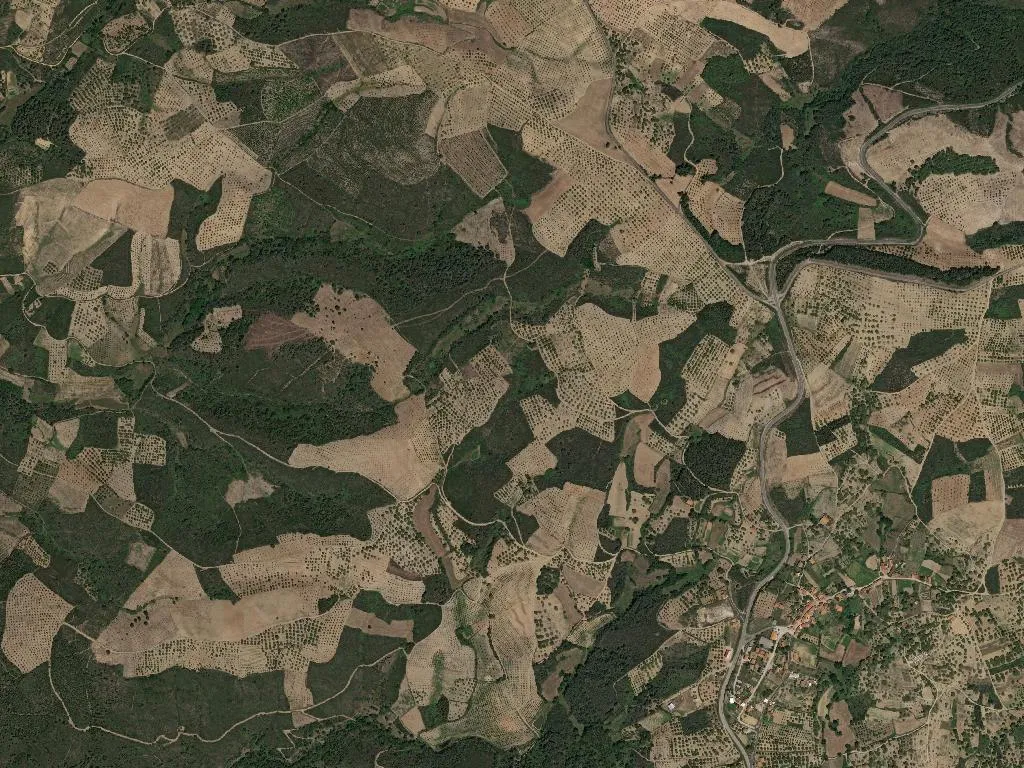
The grey granite rises from the slope like the earth’s own vertebrae, burnished by Atlantic winds and the wrists of men who levered it into terrace walls. At 870 m the air is Alpine-thin, sharpening every scent: bruised heather, woodsmoke, the sour-sweet tang of rye left too long in the threshing barn. Sound travels strangely here. A church bell three hamlets away lands metallic in the left ear; a shepherd’s whistle curls into the right. The four villages—Espadanedo, Edroso, Murçós, Soutelo Mourisco—were stitched together by a 2013 administrative tidy-up, giving the world a single parish the size of Guernsey with the population of a London Underground carriage.
Four Names, One Breath
Administrative cartographers drew the line; no one consulted granite or weather. Attempts to unpick the marriage failed in 2022 when paperwork arrived seven days late at the Bragança civil court—the only parish in the entire district to try. Meanwhile 386 residents continue to space themselves across 64 km², a geometry of solitude that works out at six neighbours per square kilometre, if you count dogs and the itinerant shepherd.
Where UNESCO Meets the Reservoir
The territory lies inside the Terras de Cavaleiros Geopark, its Ordovician schists catalogued by UNESCO the way other places list restaurants. Trails cut through fossilised beach ripples older than vertebrate life, then drop to the Azibo reservoir, a protected wetland that glints like polished pewter between almond terraces. Ospreys pause here on passage from Scandinavia; canoe blades leave bronze spirals that vanish in seconds.
Lunch in Black Clay
Edroso’s single tavern serves cozido à portuguesa in hand-thrown black clay bowls whose rims are still dusted with the local kaolin. The broth is a slow fugue of shin, chorizo and winter cabbage; the bread, baked in a wood-fired oven built into the hillside, carries a crust audible at ten paces. Drive on to Murçós in January and you’ll find the annual pig kill: hams smoking over oak for three days until the stone walls sweat resin. Ask politely and someone will slice queijo terrincho—raw-milk sheep cheese whose rind is the exact yellow of August broom.
Santo Ambrósio & São Pedro
Festivals obey the agricultural octave. On the last weekend of May, Santo Ambrósio brings processions down gradients steep enough to test calf muscles and brass bands. Tables the length of naval destroyers appear overnight; linen cloths flap like ensigns. You’ll be handed a pottery bowl of feijoada transmontana dense enough to hold a spoon upright, followed by aguardente that tastes of fog and almonds. São Pedro, two months later, ends when the village square is cleared for vira dancing, the accordion keeping 3/4 time while sparks from the bonfire rise into a sky unpolluted by anything brighter than Vega.
What You Carry Home
Leave at dawn and the granite still holds yesterday’s cold, releasing it slowly, like currency, into your palm. By the time you crest the first pass the sun has swapped chill for iodine heat; your shirt carries both. Somewhere on the A4 back to civilisation you’ll notice the scent—oak smoke braided with sheep’s-milk cheese—still tethered to your clothes, a portable argument for low-density living.