Full article about Frost-bitten Lamas: granite, grain & sardine smoke
Lamas, Macedo de Cavaleiros—olive terraces, pig-smoke kitchens, ice-cold fountains and granite houses shoulder-to-shoulder on Portugal's north-eastern plat
Hide article Read full article
Dawn at 765 metres
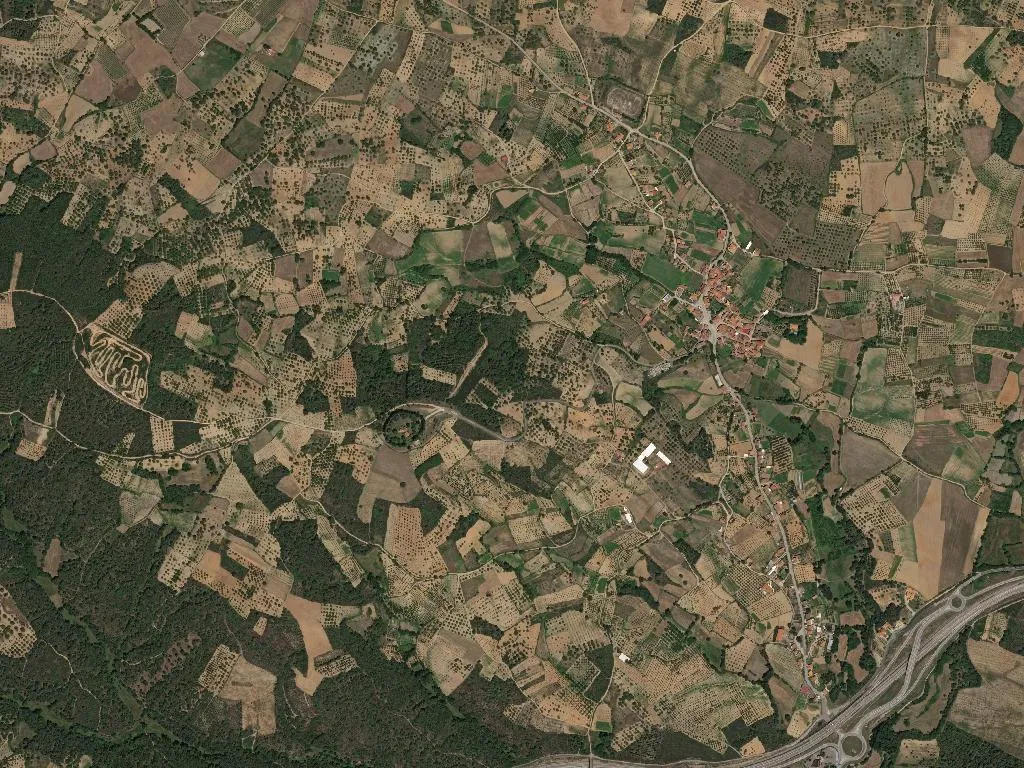
The first breath you take in Lamas feels like swallowing a blade of frost. At 765 metres above sea level, the morning air arrives sharp and wood-smoked, laced with the cool metallic scent of dew on wild grasses. It stings, then settles, leaving a faint aftertaste of last year’s wine that Zé Manel only uncorks when the British bird-watchers reach the end of the lane. Silver-green olive terraces contour the slope like contour lines made flesh; their leaves flicker in the breeze the way women in housecoats flick tea-towels at the café door, half greeting, half reprimand.
Dry-stone walls herd the plateau into narrow strips of property, and every strip has its granary on stilts—miniature timber-and-granite safes where the year’s corn and rye are locked away from mice and inquisitive grandsons. Locals call them the village vaults; no coins, just carbohydrates.
Roots you can stand on
The name is said to come from the Latin lamina—a flat piece of land—though flat is relative in the Planalto de Bragança. With 238 residents, Lamas is small enough that death travels faster than the church bell. The parish priest still recites every saint in the baptistry without notes, and the church of São Pedro doubles as civil registry, wedding hall, and evening news.
June brings the Festas de São Pedro, a three-day suspension of geography: emigrants materialise from France, Venezuela, even Swindon, claiming cousins no one remembers. Santo Ambrósio, in August, turns the churchyard into a haze of sardine smoke; red wine flows faster than the village fountain ever managed.
Houses of dark granite shoulder each other for warmth; thresholds are worn smooth by generations of slippers. In the old fountains the water runs cold even in August, when the sun behaves like a critical mother-in-law.
Smoke, fat and yesterday’s bread
The kitchen calendar is ruled by the pig. January’s matança is less slaughter than neighbourhood summit: every household guards its own ratio of paprika to pork for the annual batch of chouriço, though everyone agrees the neighbour’s is better. The smokehouse scent clings to coats, hair, even mobile-phone conversations.
Rojão—cubed pork shoulder—simmers for hours with garlic, bay and a cautious splash of local red, the way stories are told here: unhurried, circling back on themselves. Kid goat is reserved for the future daughter-in-law’s first lunch; if she survives the colour-hit of paprika and mountain garlic, she may survive the family.
Olive oil tastes of soil and graft. First-timers sometimes cough—supermarket pallor has ruined them. Tear yesterday’s bread into the pan, let it drink the oil, add ribbons of kale: migas de couve. Throwing bread away remains a mortal sin, and the parish council is still the final court of appeal.
Between plateau and reservoir
Walking tracks radiate from the village like veins: they know where they are going, even if you don’t. One passes 500-year-old olives, walls that once hid great-grandparents courting, and arrives at the Azibo reservoir where wind can whip the water into what looks, for a moment, like the sea.
Lamas sits inside the Naturtejo Geopark, but cartography means little when the bedrock is your childhood climbing frame. Zé Manel points to a fold in the schist: “Same creases as my mother’s hands—proof the earth carried the world longer than any of us.”
Evening light pools in the olive terraces; the bell strikes once—village Facebook, announcing it is time to head home. When the wood-smoke returns on the night air you understand that here soil, stone, bread and wine are simply different fibres of the same invisible rope, keeping people anchored long after they swear they’ve left.